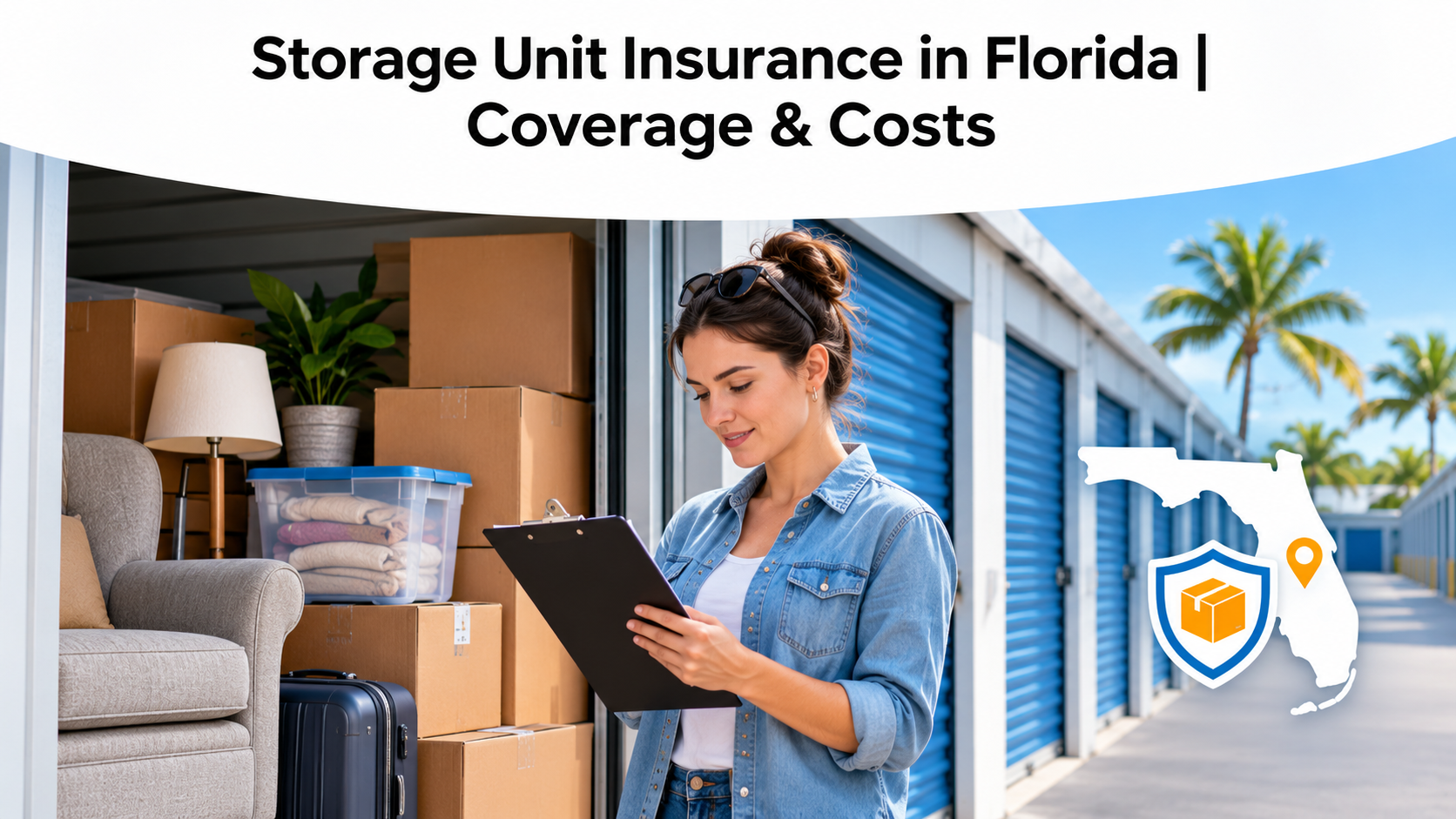
Storing furniture, electronics, appliances, or personal belongings in a Florida storage facility creates financial risks that are not always covered by your existing homeowners or renters insurance. Hurricanes, heavy rainfall, flooding, theft, fire, and unexpected building damage can put stored possessions at risk. Having a storage unit rental agreement does not automatically mean your belongings are insured against these events.
Storage unit insurance in Florida provides contents protection against specific covered causes of loss, subject to policy exclusions, coverage limits, deductibles, and conditions. Before choosing a policy, understand which risks are covered, whether flood protection is included, how much coverage you need, and what the insurance will cost.
Pro Tip
Florida residents should pay particular attention to hurricane, windstorm, and flood exclusions when comparing storage insurance policies. General water damage coverage does not automatically include damage caused by rising floodwater or storm surge. Ask the insurer about these specific risks before purchasing coverage.
Key Takeaways
- Storage unit insurance can protect eligible belongings against specific covered events, including burglary, fire, and certain types of water damage.
- Florida residents should pay particular attention to hurricanes, flooding, storm surge, and moisture exposure.
- Flood damage is not automatically included in general water damage coverage.
- Discount Storage Insurance advertises coverage starting at $7.99 per month, with options up to $10,000 per unit.
- The appropriate coverage amount should reflect the combined value of eligible belongings in the storage unit.
- Always review exclusions, deductibles, property restrictions, and claim requirements before purchasing a policy.
What Is Storage Unit Insurance in Florida?
Storage unit insurance is designed to protect personal belongings kept inside a rented self-storage unit against specified covered losses. Depending on the policy, eligible property may include furniture, household appliances, electronics, clothing, tools, and other personal possessions.
Unlike a storage facility's building insurance, which generally protects the facility owner's property and business interests, contents insurance addresses eligible belongings belonging to the policyholder. You should not assume that the storage company's insurance will reimburse you for damaged or stolen personal property.
Some homeowners and renters insurance policies extend limited personal property protection beyond the insured residence. However, off-premises coverage can have restrictions, lower limits, and different conditions. Check your existing policy before assuming it provides sufficient protection for everything stored elsewhere.
Why Is Storage Insurance Important for Florida Residents?
Florida's weather and environmental conditions make it particularly important to evaluate the risks associated with long-term storage. A facility can have security cameras, gated access, and climate-controlled units without eliminating every possibility of property damage or loss.
Hurricanes and Windstorms
Hurricanes can produce powerful winds, hail, falling debris, and structural damage. If a storage facility's roof or walls are damaged, stored belongings may become exposed to additional hazards. However, hurricane-related protection depends on the specific cause of damage and the insurance contract. Do not assume every loss occurring during a hurricane is covered.
Heavy Rainfall and Flooding
Heavy rainfall can contribute to water intrusion, drainage problems, and rising surface water around storage facilities. Ground-floor units and facilities in low-lying locations may face additional exposure. External flooding and rain entering through storm-damaged structures can receive different treatment under an insurance policy.
Read more about whether storage insurance covers flood damage before assuming your stored property has protection against rising water.
Humidity, Mold, and Moisture
Florida's humid conditions can make moisture management especially important when storing furniture, clothing, documents, and other sensitive belongings. Poor ventilation and prolonged moisture exposure can cause deterioration. Climate-controlled storage, suitable protective packaging, and regular inspections can help reduce these risks, but they do not guarantee that every moisture-related loss will be insured.
Theft and Burglary
Even facilities with controlled access can experience burglary or unauthorized entry. Insurance can provide financial protection when the circumstances satisfy the policy's theft or burglary requirements. Keeping an inventory, photographs, and purchase records can also make it easier to establish a claim after a loss.
What Does Storage Unit Insurance Typically Cover?
Coverage depends on the insurance product and its policy wording. Discount Storage Insurance describes protection for qualifying stored contents against several types of loss, including burglary, fire, lightning, smoke, vandalism, hail, falling objects, and certain water-related events.
| Coverage Category |
What It May Protect Against |
| Burglary |
Eligible belongings stolen during a qualifying burglary. |
| Fire and smoke |
Stored property damaged by a covered fire or smoke-related incident. |
| Lightning and explosions |
Eligible property affected by specified electrical or explosive events. |
| Vandalism |
Damage caused by qualifying intentional acts of vandalism. |
| Wind and hail |
Eligible damage caused by covered windstorm or hail events. |
| Water damage |
Certain qualifying water-related losses, subject to policy exclusions and definitions. |
| Falling objects |
Damage resulting from covered falling objects or debris. |
These are coverage categories, not a guarantee that every incident will qualify. The exact policy defines covered causes, eligible belongings, exclusions, and claim conditions. For more information, review how storage insurance covers natural disasters and why different weather-related losses can receive different claim decisions.
What Does Storage Insurance Not Cover?
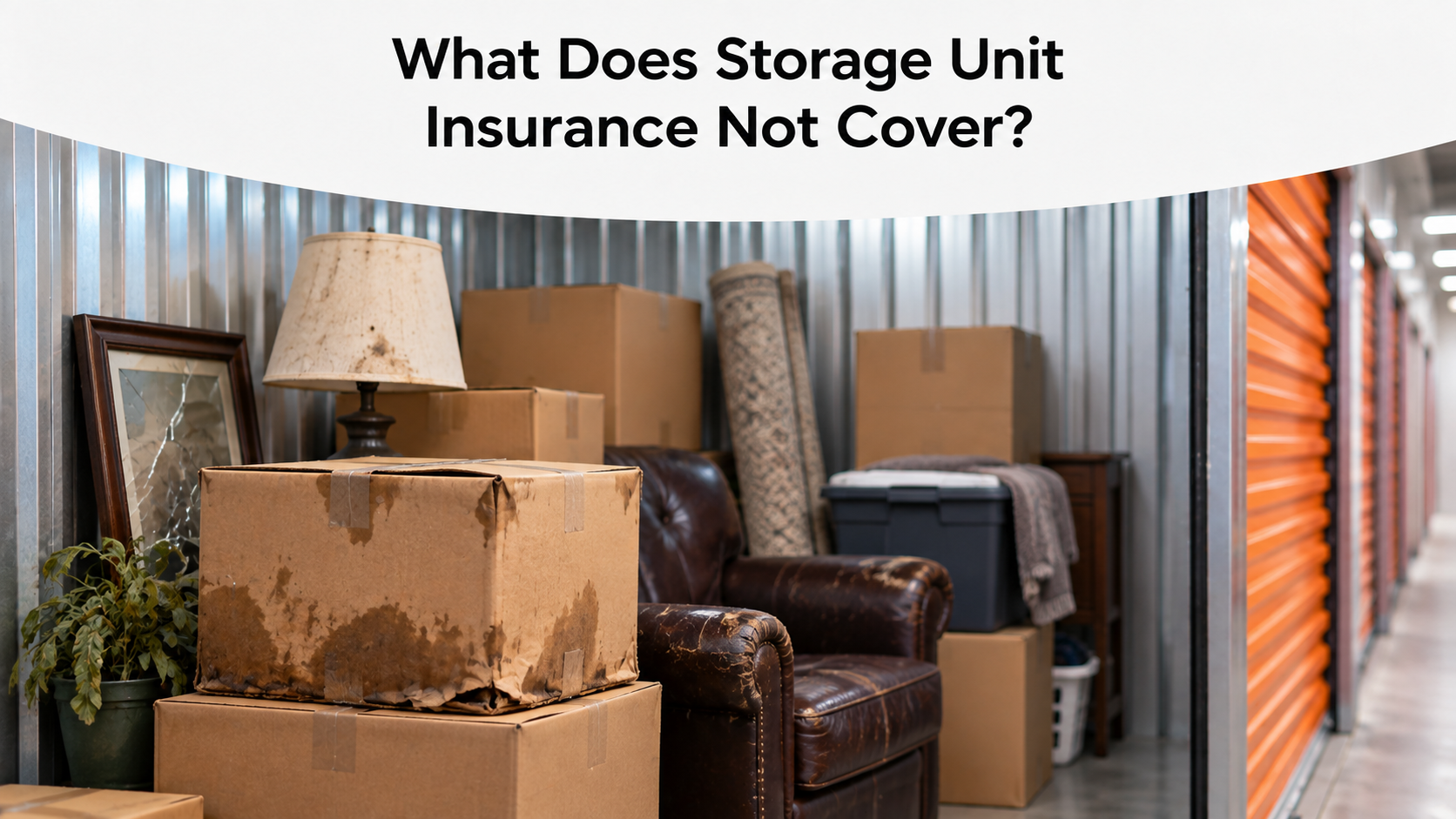
One of the biggest mistakes when purchasing storage unit insurance is assuming that every type of damage is automatically covered. Policies generally identify specific insured events and exclude or restrict certain causes of loss and property categories.
Depending on the policy, restrictions may apply to:
- External flooding, rising surface water, and groundwater.
- Mold and mildew resulting from gradual moisture exposure.
- Rodent, insect, and pest-related damage.
- Normal wear, corrosion, and gradual deterioration.
- Damage caused by inadequate packing or improper storage.
- Cash, important documents, vehicles, hazardous materials, and certain valuable belongings.
Some property may be subject to individual category limits rather than being completely excluded. Review common storage insurance exclusions to understand how restrictions can affect the protection available for your belongings.
How Much Does Storage Unit Insurance Cost in Florida?
The cost of storage insurance depends on the coverage amount, deductible, insurance provider, and available policy options. Choosing a policy based only on its advertised starting price may result in insufficient protection if the selected coverage does not reflect the value of your stored belongings.
Discount Storage Insurance advertises self-storage contents coverage starting at $7.99 per month, with available coverage options up to $10,000 per unit. Its service page also identifies a $100 deductible for coverage amounts up to $10,000. These are advertised program figures, not a guaranteed individual quote or a Florida-specific rate. Confirm current availability, eligibility, and pricing when obtaining a quote.
| Pricing Detail |
Advertised Information |
| Starting monthly price |
$7.99 per month |
| Maximum advertised coverage |
Up to $10,000 per unit |
| Deductible for coverage up to $10,000 |
$100 |
The monthly premium and deductible are different expenses. The premium is the amount paid to maintain the policy, while the deductible affects the amount payable when an eligible claim is settled. Read about self-storage insurance costs and pricing factors to understand what influences the total cost of protection.
How Much Storage Insurance Coverage Do You Need?
The appropriate coverage amount should reflect the combined value of the eligible property you keep inside the storage unit. Choosing an amount that is too low can leave you financially exposed if a major covered loss occurs.
Start by preparing an inventory of your belongings. Include furniture, televisions, computers, appliances, clothing, tools, kitchenware, and smaller boxed possessions. Estimate realistic replacement values rather than counting only the largest or most expensive items.
For example, a storage unit containing a sofa, bedroom furniture, two televisions, kitchen appliances, clothing, and several boxes of household goods may hold considerably more value than expected. A policy limit should account for the combined eligible contents, subject to property-specific restrictions.
Also remember that a coverage limit is not a guaranteed payout. The insurer evaluates the eligible loss, deductible, valuation provisions, and applicable policy terms. Learn how storage insurance coverage limits work before choosing the amount that best reflects your stored property.
How to Choose the Right Storage Insurance in Florida
Before purchasing a policy, compare more than the monthly price. Your decision should account for the risks associated with the storage facility, the type of belongings you intend to store, and the protection actually provided by the insurance contract.
1. Check the Covered Causes of Loss
Identify whether the policy includes protection for burglary, fire, smoke, windstorm, hail, and qualifying water damage. Ask specific questions about hurricanes, external flooding, storm surge, and groundwater rather than relying on general statements about weather protection.
2. Review the Deductible and Coverage Limit
Compare the deductible against the amount of coverage and the value of your possessions. A low monthly premium is less useful when the policy limit is insufficient or the deductible makes smaller claims financially impractical.
3. Check Property Eligibility and Restrictions
Confirm that your stored belongings qualify for coverage. Expensive electronics, collectibles, artwork, business equipment, jewelry, and other specialized property may have separate restrictions or limits.
4. Confirm Florida Availability and the Insured Location
Before purchasing, confirm that the insurance program is available for your Florida storage facility and that the correct facility address and unit details are included in your coverage information. Verify the applicable policy documents rather than relying solely on an online payment confirmation.
5. Understand the Claims Process
Find out how to report a loss, which documents may be required, and how the insurer evaluates damaged or stolen belongings. Clear documentation requirements and an accessible claims process can make managing an unexpected loss easier.
What Should You Do If Your Stored Belongings Are Damaged?
When a loss occurs, report it promptly and follow the insurer's instructions. Documenting the incident properly can help establish what happened and which belongings were affected.
- Notify the storage facility and obtain an incident report when available.
- Photograph the storage unit, damaged belongings, and visible signs of the incident.
- Prepare an itemized list of missing or damaged property.
- Collect receipts, purchase records, photographs, and other ownership evidence.
- Contact your insurer and submit the claim according to its reporting requirements.
- Keep copies of all submitted documents and respond to additional information requests.
Avoid throwing away damaged belongings or making unnecessary changes to the affected area before documenting the evidence and checking the insurer's instructions, unless immediate action is required for safety. Understanding how storage insurance claims work can help you prepare for the review and avoid common documentation mistakes.
Get Storage Insurance for Your Belongings
Protecting belongings in a Florida storage unit starts with understanding the risks and selecting coverage that reflects the value of your stored property. Compare available protection, review policy exclusions, and make sure you understand how hurricane, windstorm, and water-related claims are handled before making a decision.
Explore storage contents coverage through Discount Storage Insurance. Review the available self-storage insurance options, confirm eligibility for your Florida storage location, and choose a coverage amount based on your belongings rather than the lowest advertised price alone.
Frequently Asked Questions
Is Storage Unit Insurance Required in Florida?
There is no single requirement that makes every Florida storage renter purchase the same insurance policy. However, individual storage facilities may require tenants to demonstrate financial protection for stored belongings under their rental agreements. Check your facility's requirements before moving in.
Does Storage Insurance Cover Hurricane Damage in Florida?
Some policies may cover specific hurricane-related losses, such as qualifying wind or hail damage. However, flooding, storm surge, groundwater, and rain entering through structural damage can receive different treatment. Check the policy's covered causes and exclusions before assuming hurricane protection applies to every resulting loss.
Does Storage Unit Insurance Cover Flooding?
Not necessarily. Some policies cover certain types of water damage but exclude external flooding, rising surface water, or groundwater. Always check the specific flood provisions rather than assuming general water damage coverage includes every flooding event.
How Much Does Storage Unit Insurance Cost in Florida?
Discount Storage Insurance advertises self-storage coverage starting at $7.99 per month, with coverage options up to $10,000 per unit. Actual pricing and eligibility should be confirmed when obtaining a quote for your storage arrangement.
Does Homeowners Insurance Cover Belongings in a Storage Unit?
Some homeowners policies provide limited off-premises personal property coverage. However, limits, exclusions, deductibles, and eligibility requirements can differ. Contact your insurance provider to establish whether your existing coverage extends to your rented storage unit and whether the amount is sufficient.
Can I Insure Furniture and Electronics in a Florida Storage Unit?
Furniture and electronics are common types of personal property that may qualify for storage insurance. However, individual items can be subject to eligibility requirements, valuation rules, and category-specific limits. Check the policy before storing particularly expensive equipment or electronics.
Does Climate-Controlled Storage Replace the Need for Insurance?
No. Climate-controlled storage can help manage temperature and humidity, reducing certain environmental risks. It does not eliminate the possibility of burglary, fire, structural damage, or other unexpected events. Facility features and insurance provide different types of protection.
Can I Purchase Storage Insurance Without Homeowners or Renters Insurance?
Certain standalone storage insurance programs do not require an existing homeowners, renters, or commercial insurance policy. Confirm the eligibility and application requirements of your chosen provider before enrolling.