Businesses often need extra space to store inventory, office furniture, equipment, documents, and other valuable items. Whether you run a small business, manage an online store, or operate a large company, finding enough space can become a challenge as your business grows. Renting a business storage unit can provide a practical way to manage these items without moving to a larger commercial property.
Business storage units offer flexible space for keeping business property that is not needed every day. They can be useful during office relocations, seasonal changes, renovations, inventory growth, or periods when you need to free up valuable workspace. However, storing business belongings also comes with risks that should not be ignored.
Before choosing a storage unit, it is important to understand what you can store, which items may be restricted, and how to reduce the risks of theft, fire, moisture, and damage. You should also review your insurance arrangements to understand whether your business property is eligible for coverage while it is stored away from your main premises.
What Are Business Storage Units?
Business storage units are rented spaces that companies use to keep inventory, equipment, furniture, supplies, and other business belongings. These units are usually located within self-storage facilities and come in different sizes to meet different storage needs.
Some businesses use traditional indoor or outdoor storage units, while others choose portable storage containers that can be delivered to a business location. The right option depends on the type and quantity of property you need to store, how often you need access, and whether transportation is part of your storage arrangements.
A business storage unit is not the same as a warehouse or commercial office. It is generally intended for storing belongings rather than conducting daily business activities. Before signing an agreement, review the facility's permitted uses, access rules, security arrangements, and restrictions.
Why Do Businesses Use Storage Units?
Businesses use storage units for different reasons. Some need additional space because their inventory is growing, while others need a temporary place for equipment during an office move or renovation. Renting storage can help businesses manage their space without committing to a larger commercial property.
1. Extra Space for Business Inventory
Retailers, wholesalers, and online sellers may need additional space for products, packaging materials, and seasonal stock. A storage unit can help keep excess inventory organised when the main business premises do not have enough room.
2. Office Relocations and Renovations
During an office move or renovation, businesses may need somewhere to keep desks, chairs, computers, filing cabinets, and other equipment. Temporary storage can help prevent these items from taking up space at the new or existing workplace while work is being completed.
3. Seasonal Storage Requirements
Some businesses experience changes in demand throughout the year. For example, retailers may need extra room for holiday products, while event companies may store equipment between events. A storage unit can provide space for items that are only needed during certain periods.
4. Keeping the Main Workplace Organised
Businesses can use storage units to move unused furniture, spare equipment, archived materials, and excess supplies out of their main workspace. This can help create a more organised working environment without having to dispose of useful property.
5. Supporting Business Growth
A growing business may need more room before it is ready to move into a larger commercial location. Storage can provide additional space for inventory, supplies, and equipment while the business evaluates its longer-term needs.
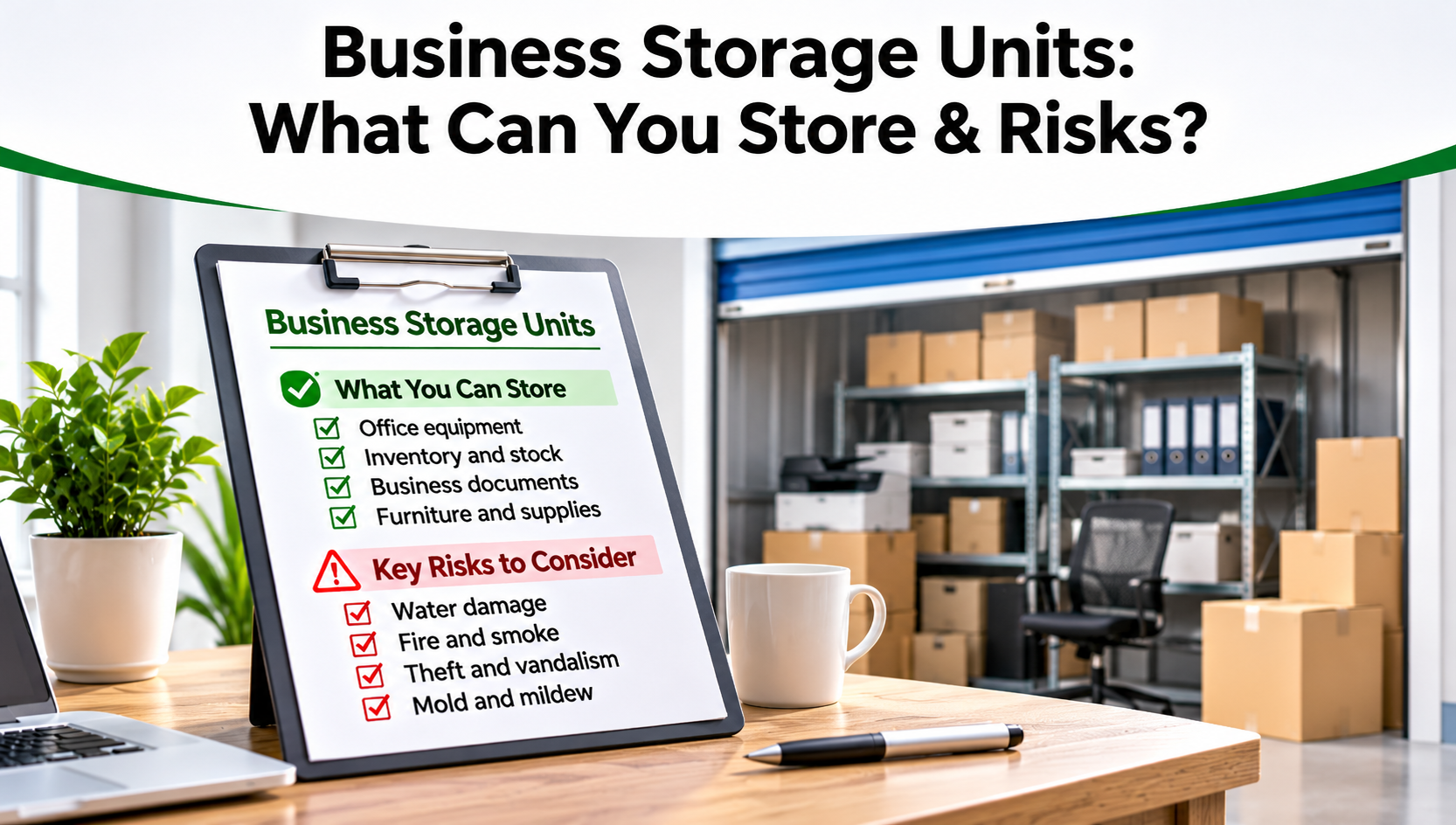
What Can You Store in a Business Storage Unit?
Most storage facilities allow a range of business belongings, provided they meet the facility's rules and do not create safety risks. The items you can store will depend on the unit type, facility agreement, and any applicable insurance conditions.
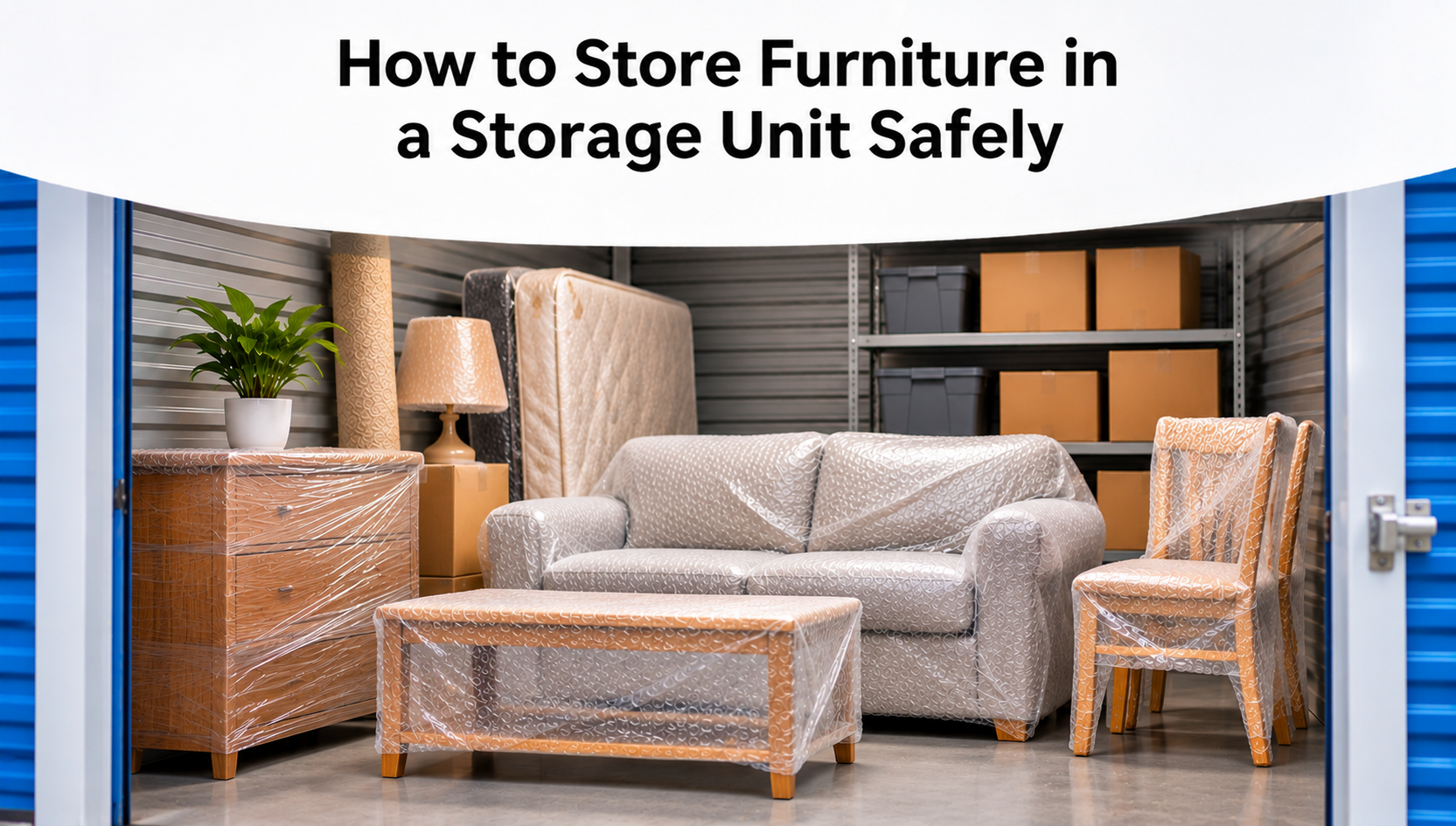
1. Office Furniture and Fixtures
Desks, chairs, filing cabinets, conference tables, shelves, reception furniture, and office partitions are common items stored by businesses. These belongings may be kept in storage during office renovations, relocations, or changes to the workplace layout.
Before storing furniture, clean it and make sure it is dry. Disassemble larger items where practical, protect delicate surfaces, and use suitable covers to help prevent scratches and dust buildup.
2. Business Inventory and Retail Products
Retail businesses, wholesalers, and online sellers may use storage units to keep products, packaging, and excess stock. This can be helpful when a business has more inventory than its main premises can hold.
Organise products by category, size, or stock number. Keep an updated inventory record so you can track quantities and identify which products are stored in each area. Check whether the facility allows your specific type of merchandise, particularly if it is valuable, temperature-sensitive, or subject to special handling requirements.
3. Computers and Office Electronics
Businesses may need to store computers, monitors, printers, scanners, networking equipment, and other electronics. These items can be expensive to replace and may be sensitive to heat, moisture, dust, and physical impact.
Back up important business data before storing electronic devices. Remove batteries where the manufacturer recommends it, use suitable original or protective packaging, and avoid placing heavy objects on top of delicate equipment. Check whether the storage environment is appropriate for the equipment you plan to keep there.
4. Tools, Machinery, and Equipment
Construction companies, contractors, maintenance businesses, and service providers may need storage space for tools, machinery, spare parts, and work equipment. A unit can help keep these items organised when they are not being used regularly.
Clean equipment before storage and follow the manufacturer's instructions for preparation. Remove fuel or other hazardous substances where required, and check facility rules before storing machinery or powered equipment.
5. Documents and Business Records
Some businesses need to keep paper records, archived files, invoices, contracts, and other documents for operational or legal reasons. Storage units may provide extra room for records that are not required every day.
Use labelled document boxes and keep a digital index of stored records. Paper documents should be kept away from moisture, pests, and direct contact with floors. Sensitive information should be secured appropriately, and businesses should consider whether a general storage unit is suitable for confidential or regulated records.
6. Marketing and Event Supplies
Businesses that attend trade shows, exhibitions, conferences, and promotional events may need to store banners, display stands, branded materials, tables, lighting, and event equipment. These items can take up a large amount of space when they are not in use.
Pack reusable display materials carefully and label each container according to the event or campaign. Store delicate signs and printed materials in protective packaging to reduce the risk of bending, tearing, or other damage.
7. Seasonal and Spare Business Supplies
Businesses may also store spare uniforms, packaging materials, seasonal decorations, unused fixtures, and other supplies. These items can be organised in labelled boxes or shelving to make them easier to find when needed.
What Should You Never Store in a Business Storage Unit?
Although business storage units can hold many types of property, not every item is suitable for storage. Facilities have rules to protect customers, employees, buildings, and stored belongings. Some restrictions may also affect insurance eligibility.
Commonly restricted or unsuitable items include:
- Flammable liquids, fuels, and combustible materials.
- Explosives, fireworks, and other dangerous substances.
- Hazardous chemicals, toxic materials, and certain industrial products.
- Perishable food and other items that can spoil.
- Live animals or plants.
- Wet or damp belongings that may develop mold.
- Items that are illegal to possess or store.
- Goods that the facility agreement specifically prohibits.
This is not a complete list. Storage restrictions vary between facilities, and certain products may require special approval or storage conditions. Read your rental agreement and ask the facility before placing any unusual or potentially hazardous item inside the unit.
What Are the Main Risks of Using Business Storage Units?
A business storage unit can provide useful extra space, but storing company property away from your main premises creates risks. Understanding these risks can help you choose a suitable facility, prepare your belongings correctly, and review your insurance arrangements.
1. Theft and Burglary
Business inventory, electronics, tools, and machinery can be valuable. If someone gains unauthorised access to a storage unit, stolen property could result in financial losses and interruptions to business operations.
To reduce this risk, choose a facility with suitable security measures, such as controlled entry, surveillance cameras, perimeter fencing, and well-maintained access points. Use a strong lock where permitted, limit access to authorised employees, and avoid sharing unit details unnecessarily.
2. Fire and Smoke Damage
Fire can damage or destroy business belongings stored inside a unit. Even if the fire starts in another part of the facility, smoke and heat may affect nearby storage spaces and their contents.
Avoid storing prohibited flammable or hazardous materials. Follow the facility's safety rules, keep electrical equipment in suitable condition, and do not overload power outlets if the unit has electricity. Ask about the facility's fire safety arrangements before renting space.
3. Water and Moisture Damage
Leaks, flooding, condensation, and high humidity can damage business property. Paper records may become unusable, electronics may stop working, and furniture or inventory may develop mold or other moisture-related problems.
Inspect the unit for visible signs of water damage before moving items inside. Use pallets or shelving where appropriate to keep belongings off the floor, and consider climate-controlled storage for property that requires more stable environmental conditions. Keep in mind that climate control does not eliminate every risk of water or moisture damage.
4. Pest Infestation
Rodents and insects can damage packaging, furniture, documents, fabrics, and other stored belongings. Food residue, unsealed containers, and unsuitable packing materials can increase the risk of attracting pests.
Clean items before storing them, avoid keeping food or perishable goods inside the unit, and use sealed containers where suitable. Check the facility for signs of pest activity and report any concerns promptly.
5. Damage Caused by Improper Packing and Stacking
Poor packing can cause damage even when a storage unit is secure. Boxes may collapse, fragile equipment may break, and heavy items may damage belongings placed underneath them. Overpacking can also make it difficult to access items safely.
Use strong boxes, suitable protective materials, and clear labels. Place heavier items at the bottom and avoid stacking boxes beyond their safe weight limits. Keep a clear walkway so employees can access stored property without moving unstable piles.
6. Limited Access and Business Disruption
Some storage facilities have restricted access hours, appointment requirements, or rules about vehicle entry. If your business needs inventory or equipment at short notice, these restrictions may delay operations.
Check the facility's opening hours, access arrangements, delivery rules, and holiday schedules before renting. If you need frequent access, choose a location and unit type that suit your business operations.
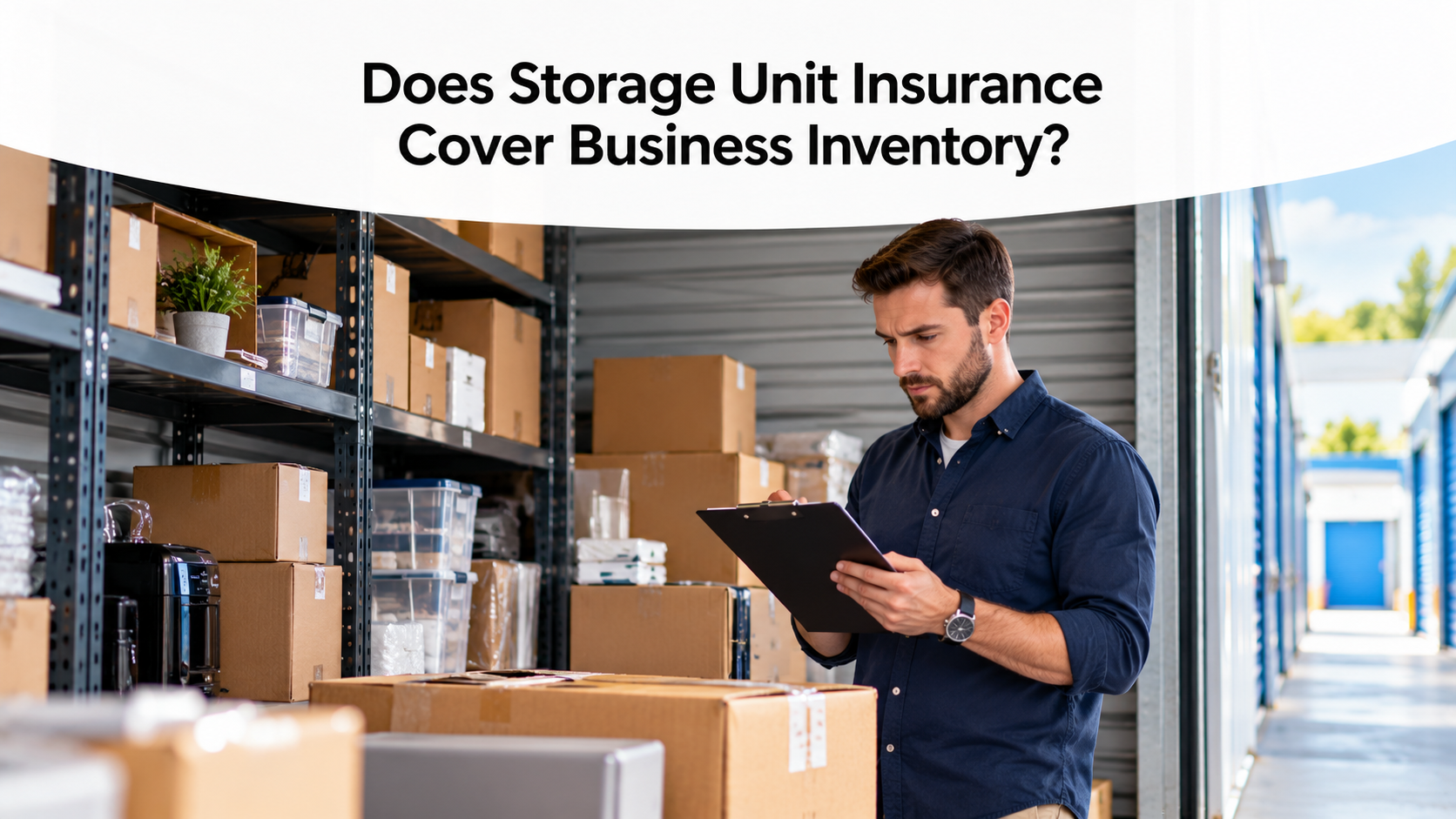
7. Inadequate or Unclear Insurance Coverage
One of the most important risks is assuming that business belongings are automatically insured while they are in storage. Your existing commercial property policy may have limits or conditions for property kept away from your business premises. A storage facility's agreement may also require you to arrange separate coverage.
Review your existing policy and confirm whether it applies to the property you intend to store. Check the covered risks, insured locations, coverage limits, deductibles, exclusions, and any conditions relating to business inventory or equipment. Do not assume that a storage unit's security measures replace insurance protection.
How to Choose the Right Business Storage Unit
Choosing a business storage unit involves more than comparing monthly prices. The unit should be suitable for the type of property you need to store and the way your business operates.
1. Select the Right Unit Size
Estimate how much space your furniture, inventory, equipment, and supplies will need. Make a list of larger items and consider how they can be arranged. Avoid renting a unit that is too small, but do not pay for significantly more space than your business requires.
2. Check Security Features
Ask about entry controls, surveillance cameras, lighting, perimeter security, and the facility's procedures for handling unauthorised access. Visit the location if possible and inspect the condition of the storage area before signing an agreement.
3. Consider Climate-Controlled Storage
Some business property may be sensitive to temperature and humidity changes. Electronics, paper records, furniture, and certain products may need a more controlled storage environment. Compare the facility's environmental conditions with the manufacturer's storage recommendations for your belongings.
4. Review Access and Location
Choose a facility that is practical for your business. Consider travel time, vehicle access, loading areas, opening hours, and how often employees will need to visit. If you store inventory that must be collected regularly, convenient access can save time.
5. Understand the Rental Agreement
Read the rental agreement before making a commitment. Check the monthly fees, payment terms, access rules, prohibited items, cancellation conditions, and responsibility for damage or loss. Ask the facility to explain any terms you do not understand.
6. Check Insurance Requirements
Find out whether the facility requires proof of insurance and whether it specifies minimum coverage limits. Ask what documents are accepted and whether your existing business insurance meets the requirements. If separate coverage is needed, arrange it before storing your property.
How to Prepare Business Property for Storage
Preparing business belongings properly can help reduce the risk of damage and make it easier to manage stored property. Use the following steps before moving inventory, furniture, equipment, or records into a storage unit.
Create a Business Storage Inventory
Record every major item you plan to store. Include descriptions, quantities, serial numbers where available, purchase dates, and estimated replacement values. Photographs can also help document the condition of valuable equipment and furniture before storage.
Clean and Prepare Equipment
Remove dust, dirt, and residue from equipment and furniture. Make sure items are dry before packing them. Follow the manufacturer's storage instructions for machinery, electronics, and other specialist equipment.
Use Protective Packaging
Use suitable boxes, covers, padding, and protective materials. Keep fragile equipment in secure packaging and use labels to identify items that need careful handling. Where possible, keep original packaging for electronics and specialist equipment.
Organise Items by Category
Group similar belongings together, such as office furniture, inventory, documents, and tools. Use clear labels and keep a record of where items are placed. This can make stock checks and retrieval easier for employees.
Keep Records of Storage Access
Limit access to employees who need to handle stored property. Keep track of keys, access codes, and visits where practical. A simple access record can help your business manage responsibility for valuable items.
Business Storage Insurance: Does It Cover Your Stored Property?
Business storage insurance is an important consideration when keeping company property away from your main business premises. Depending on the policy, eligible belongings may receive protection against specified risks while they are stored at an insured location.
However, not every policy covers every type of business property. Some policies may have restrictions relating to inventory, electronics, machinery, documents, high-value items, or particular storage conditions. Coverage also depends on the insured location, selected limits, exclusions, and other policy requirements.
What Should You Check Before Choosing Coverage?
- Eligible property: Confirm whether the business belongings you plan to store are eligible under the policy.
- Coverage limits: Check the maximum amount available and whether individual item limits apply.
- Covered risks: Review the specific events or causes of loss included in the policy.
- Exclusions: Understand which items, situations, or types of damage are not covered.
- Deductibles: Check whether you must pay a deductible when making an eligible claim.
- Storage location: Confirm that the correct facility, unit, or container meets the policy requirements.
- Coverage dates: Check when protection starts and whether it remains active for the full storage period.
- Documentation: Keep an inventory, photographs, receipts, and any other records that may be needed.
If your business uses portable storage containers, review the specific insurance considerations for mobile storage containers. The type of container, its location, and whether it is being transported may affect the coverage available under a particular policy.
Does Business Insurance Automatically Cover Storage Units?
Not always. A business insurance policy may cover certain property away from the main business premises, but this depends on the policy wording and any applicable conditions. Coverage may be limited by location, property type, time period, or the cause of loss.
Contact your current insurer and explain exactly what you plan to store. Ask whether your business inventory, equipment, furniture, and other belongings remain covered at the selected facility. If you need additional protection, compare the available options before moving your property.
Does Storage Insurance Cover Items During Transportation?
Coverage during transportation should never be assumed. A policy designed for belongings kept at a storage location may have different terms from protection that applies while a container or its contents are being moved.
If you use a portable storage container, check the policy wording and confirm whether transit is included. This is particularly important when a container is collected from your business premises and transported to a storage facility or another location.
You can also review the guidance on maintaining insurance arrangements while a storage container is in transit before planning a move.
When Does Storage Insurance Coverage Begin?
The start and end dates of coverage depend on the policy and its conditions. A storage reservation or rental agreement does not necessarily mean that insurance protection has started. Check the effective date shown in your insurance documents and make sure it matches your storage arrangements.
For more details, read about storage insurance effective dates and coverage periods before moving business property into a unit.
What If Your Business Changes Storage Units?
If your business moves its belongings to another unit or facility, contact your insurance provider before making the change. Your policy may require updated location details or approval before coverage applies to the new storage space.
Review the requirements for updating insurance when changing storage units so that your business does not rely on outdated policy information.
Traditional Business Storage vs. Mobile Storage Containers
Businesses can choose between traditional self-storage units and portable storage containers. Both options can provide extra space, but they work differently. The right choice depends on where your property needs to be kept, how often you need access, and whether transportation is required.
| Feature |
Traditional Storage Unit |
Mobile Storage Container |
| Location |
Usually located at a storage facility. |
May be delivered to a business location or kept at a storage facility. |
| Loading |
Business staff usually transport items to the unit. |
Items can often be loaded at the business premises. |
| Transportation |
Usually requires separate transport to and from the facility. |
The container may be transported by the service provider. |
| Access |
Depends on the facility's access hours and rules. |
Depends on the container location and service agreement. |
| Insurance Considerations |
Check coverage for the insured storage location. |
Check location requirements and whether transportation is included. |
A traditional unit may be suitable if your business needs regular access to a fixed storage location. A mobile container may be more practical when you need to load belongings at your premises or move items as part of a relocation. Compare the service agreement and insurance requirements before choosing either option.
Business Storage Checklist: What to Check Before Renting
Use this checklist to review the main points before moving business belongings into a storage unit.
Protect Eligible Business Belongings with Discount Storage Insurance
Business storage units can help companies manage inventory, equipment, furniture, and other property without using valuable space at their main premises. However, storing business belongings away from your workplace means you should review how those items are protected.
Discount Storage Insurance offers storage insurance options for eligible belongings kept in storage, subject to the applicable policy terms, conditions, limits, and exclusions. Businesses should review the available coverage details and confirm whether the property they intend to store meets the policy requirements.
Before selecting coverage, prepare an inventory of your business property and estimate its replacement value. Check the insured location, eligible items, covered risks, exclusions, and effective dates. If you have questions about whether particular business belongings qualify, review the policy details before purchasing.
When you are ready to arrange coverage, you can review the details and proceed through the online insurance purchase process. Make sure the information you provide matches your storage arrangements and that you understand the policy conditions.
Frequently Asked Questions About Business Storage Units
What is a business storage unit used for?
A business storage unit is used to keep company belongings such as inventory, office furniture, equipment, tools, documents, and supplies. Businesses may use storage during relocations, renovations, seasonal changes, or periods of growth when they need additional space.
Can I store business inventory in a storage unit?
Many facilities allow business inventory, but the permitted items depend on the facility's rules. Check whether your products require special storage conditions and whether the facility allows the type of merchandise you plan to keep there. You should also review any applicable insurance restrictions.
Can I store office furniture and computers in a business storage unit?
Office furniture and computers can generally be stored if the facility permits them. Clean and pack these items properly, protect delicate equipment, and consider environmental conditions such as temperature and humidity. Back up important data before storing computers or other devices.
Can I use a self-storage unit as a business office?
Most self-storage units are intended for storing belongings, not for conducting regular business activities or operating as an office. Rules vary between facilities, so check the rental agreement before using a unit for any purpose beyond storage.
Are business storage units insured?
A storage facility's own insurance does not necessarily protect customers' belongings. You should check the rental agreement and ask whether you must arrange separate insurance. Your existing business insurance may offer some protection, but coverage depends on its terms and conditions.
Does business storage insurance cover theft and fire?
Some storage insurance policies may cover eligible belongings against specified risks such as theft or fire. However, coverage depends on the policy wording, limits, exclusions, and any conditions that must be met. Review the documents carefully before relying on a particular type of protection.
Can I store business documents in a storage unit?
Some businesses store archived paper records in storage units. Use suitable document boxes, keep records away from moisture and pests, and maintain a digital index of stored files. Sensitive or regulated records may require additional security and storage controls.
What are the biggest risks of business storage units?
Common risks include theft, fire, water damage, moisture, pest infestation, poor packing, and limited access. Businesses should also consider the risk of inadequate insurance coverage. Choosing a suitable facility and preparing belongings properly can help reduce some of these risks.
How much storage space does a small business need?
The required unit size depends on the amount and type of property you plan to store. Make an inventory, measure larger items, and consider how the belongings can be arranged. A storage facility can help you compare unit sizes based on your requirements.
Can a business use a mobile storage container?
Yes, some businesses use portable storage containers to keep furniture, inventory, equipment, and supplies. These containers can be useful during relocations, renovations, or when a business needs temporary space at its premises. Check the provider's service terms, permitted uses, and insurance arrangements before choosing this option.
How can I keep business belongings safe in storage?
Choose a suitable facility, use appropriate locks and packaging, keep an updated inventory, restrict access, and inspect the unit regularly. You should also review your insurance arrangements and keep copies of relevant documents, receipts, and photographs.
Business storage units can provide valuable extra space for inventory, equipment, furniture, and other company belongings. However, businesses should understand facility restrictions, prepare stored property carefully, and consider risks such as theft, fire, moisture, and inadequate insurance. By choosing the right storage space and reviewing suitable insurance arrangements, you can manage your stored business property more carefully.