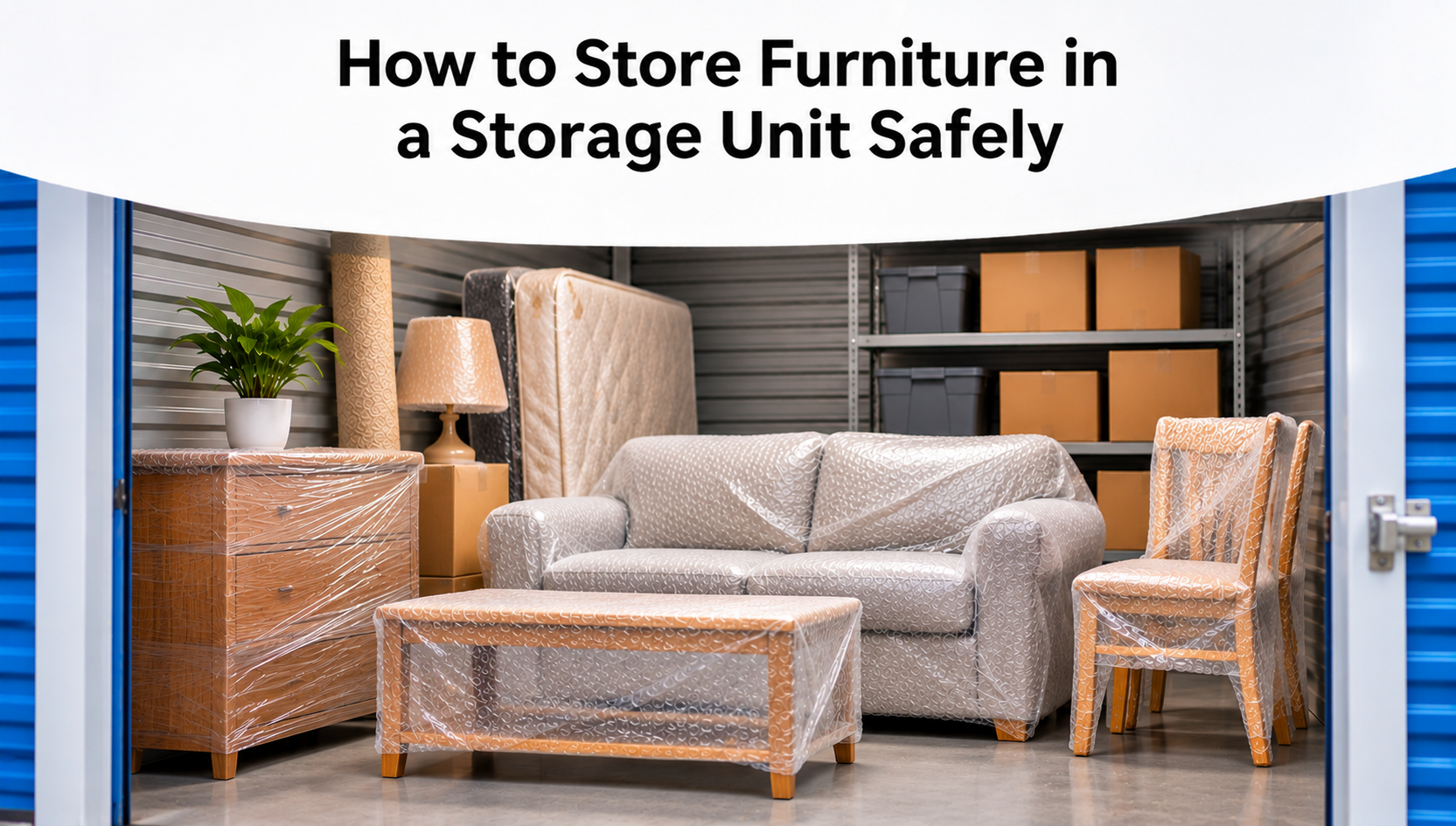
Storing furniture requires more than moving it into an empty space. Without proper preparation, wooden surfaces can warp, upholstery can develop odors, metal components can rust, and delicate finishes can become scratched or damaged. The right storage methods help preserve furniture throughout short-term and long-term storage.
Before moving furniture into a storage unit, clean each piece, disassemble removable components, use suitable protective materials, and plan the arrangement carefully. This guide explains how to prepare, pack, position, and maintain different types of furniture while they remain in storage.
Key Takeaways
- Measure your furniture and estimate the required storage space before choosing a unit.
- Clean and completely dry furniture before packing to reduce dirt, odors, and moisture-related problems.
- Disassemble larger furniture where possible and keep screws, bolts, and fittings labeled in separate bags.
- Use breathable furniture covers, moving blankets, and appropriate cushioning to protect different surfaces.
- Keep furniture elevated from direct floor contact where practical and leave enough space for access and inspection.
- Avoid placing heavy boxes on upholstered furniture, mattresses, or delicate wooden surfaces.
- Consider climate-controlled storage for furniture sensitive to temperature and humidity fluctuations.
- Photograph valuable furniture and maintain an inventory to document its condition and estimated replacement value.
Pro Tip
Take photographs of every furniture piece before covering it. Capture existing scratches, dents, upholstery condition, identifying marks, and detachable components. Keep these photographs with your digital inventory outside the storage unit. This creates a useful record of the furniture's original condition and can help document its value if you need to report a loss.
How to Prepare Furniture Before Moving It Into Storage
Furniture preparation should begin several days before the scheduled move whenever possible. Rushing the process can result in overlooked cleaning, insufficient drying, poorly protected surfaces, and missing hardware. Preparing each item individually makes the loading process more organized and reduces the likelihood of avoidable damage.
1. Measure and Inventory Your Furniture
Start by listing every furniture piece you intend to store. Include sofas, beds, mattresses, dining tables, chairs, cabinets, dressers, desks, bookshelves, and smaller furnishings. Record the approximate dimensions of larger items so you can estimate how much floor space and clearance the storage unit will require.
Measure the height, width, and depth of each item, paying attention to pieces that cannot easily be disassembled. Also consider door openings, hallways, loading access, and the height of the storage unit when planning the move.
An accurate inventory helps prevent selecting a unit that is too small or paying for unnecessary space. You can use this storage unit size guide to compare available dimensions and estimate the space required for your furniture and other household belongings.
2. Clean Every Furniture Piece Thoroughly
Dust, food residue, stains, and accumulated dirt can become more difficult to remove after months in storage. They may also contribute to unpleasant odors and attract pests. Clean furniture before wrapping or covering it, using products appropriate for the material and finish.
- Wipe wooden furniture with a soft cloth and a suitable wood-cleaning product.
- Vacuum upholstered furniture to remove dust, crumbs, and loose debris.
- Clean metal furniture and dry it thoroughly to reduce the risk of corrosion.
- Use suitable leather cleaners and conditioners where recommended by the manufacturer.
- Remove food residue, spills, and dirt from furniture drawers and compartments.
Do not apply excessive water or strong cleaning chemicals to delicate finishes. Allow every cleaned surface to dry completely before adding protective wrapping. Covering furniture while it is still damp can trap moisture and create conditions that encourage mold and mildew.
3. Disassemble Large Furniture Where Possible
Large furniture pieces can be difficult to maneuver through doorways and arrange safely inside a storage unit. Disassembling removable components reduces their overall dimensions, makes transportation easier, and helps prevent unnecessary pressure on joints and frames.
Depending on the design, consider removing:
- Table legs and detachable support frames.
- Bed frames, headboards, and footboards.
- Removable shelves and cabinet components.
- Detachable sofa legs and other removable fittings.
- Loose hardware, handles, and decorative attachments.
Place screws, bolts, and small fittings inside labeled bags and secure them to the corresponding furniture piece where appropriate. Keep assembly instructions and photographs of the original arrangement so reassembling everything later is easier. Avoid dismantling furniture that has fixed construction or delicate joints unless the manufacturer recommends it.
How to Protect Different Types of Furniture in Storage
Not every furniture material responds to storage conditions in the same way. Wood can react to humidity changes, upholstery can absorb odors and moisture, metal components can corrode, and leather can become damaged under unsuitable environmental conditions. Match your protective materials and storage methods to the furniture you own.
| Furniture Type |
Recommended Preparation |
| Wooden furniture |
Clean with suitable products, dry thoroughly, protect finished surfaces, and avoid excessive pressure or moisture. |
| Upholstered furniture |
Vacuum, remove stains with appropriate products, dry completely, and use breathable furniture covers. |
| Leather furniture |
Clean using manufacturer-approved products, condition when appropriate, and cover with breathable material. |
| Metal furniture |
Remove dirt, ensure the surface is dry, inspect for existing corrosion, and protect delicate finishes. |
| Mattresses |
Clean and dry, use a suitable mattress storage cover, and follow the manufacturer's recommended storage position. |
| Glass furniture |
Remove detachable glass panels when safe, wrap individually, and use rigid protective packaging. |
How to Store Wooden Furniture
Wooden furniture can be affected by significant changes in temperature and humidity. Prolonged exposure to unsuitable conditions may contribute to warping, cracking, swelling, shrinking, or changes in its finish. This applies to dining tables, wardrobes, cabinets, desks, bed frames, and other solid or engineered wood pieces.
Clean wooden surfaces with a suitable product and allow them to dry before applying any protective covering. Use furniture blankets to reduce scratches and protect corners. Avoid placing heavy containers on top of wooden furniture, especially when the surfaces or joints are not designed to support additional weight.
Leave reasonable space between pieces and avoid placing furniture directly against damp walls. For valuable wooden furniture or pieces with delicate finishes, consider a climate-controlled environment when the local conditions make temperature and humidity fluctuations a concern.
How to Store Sofas and Upholstered Furniture
Sofas, armchairs, and upholstered furniture require protection from dust, pressure, dirt, and moisture. Begin by vacuuming the upholstery and checking the furniture for stains or damp areas. Clean it according to the fabric manufacturer's recommendations and allow it to dry completely before storage.
Use a breathable furniture cover to protect the upholstery without unnecessarily trapping moisture. Avoid placing heavy boxes or equipment on cushions because prolonged pressure can deform the padding and affect the original shape. Where possible, position sofas as they are normally supported by their frames and follow any manufacturer instructions regarding storage orientation.
How to Store Leather Furniture
Leather can become dry, stiff, discolored, or damaged when exposed to unsuitable environmental conditions or incompatible cleaning products. Wipe the surface using a product designed for the specific leather type and apply a suitable conditioner only when recommended by the manufacturer.
Cover leather sofas and chairs with clean, breathable materials and avoid sealing them tightly inside plastic. Keep them away from direct sunlight, damp surfaces, and sources of excessive heat. For valuable leather furnishings, inspect the material periodically during extended storage.
How to Store Mattresses and Bed Frames
Mattresses should be completely dry before storage. Use a suitable mattress cover that protects against dust and dirt while following the manufacturer's storage guidance. Keep the mattress away from damp floors and avoid placing heavy items on top that could permanently affect its structure.
Disassemble bed frames where possible and wrap the headboard, footboard, rails, and other components separately. Keep the hardware together in a labeled bag so nothing is misplaced when the bed is reassembled.
How to Store Metal and Glass Furniture
Metal furniture can develop corrosion if it remains exposed to moisture, particularly when the protective finish is damaged. Clean and dry metal frames before storage and inspect for existing rust or chipped paint. Wrap vulnerable surfaces to reduce scratches and keep metal components away from damp floors or walls.
Glass tabletops, shelves, and decorative panels require separate protection. Whenever practical and safe, remove detachable glass pieces from their supporting frames. Wrap each panel individually using suitable cushioning and rigid packaging. Clearly label the package and store it where heavier furniture cannot fall against it.
Choose the Right Materials to Cover and Protect Furniture
Protective materials should prevent scratches, dents, dust accumulation, and accidental impact without creating additional storage problems. Choosing the wrong wrapping can be just as damaging as leaving furniture unprotected, particularly when moisture becomes trapped against a surface.
- Moving blankets: Help protect furniture from scratches, friction, and minor impacts during handling and storage.
- Breathable furniture covers: Reduce dust exposure while allowing more air exchange than tightly sealed plastic coverings.
- Bubble wrap: Provides cushioning for detachable hardware, delicate decorative components, and selected fragile surfaces when suitable for the material.
- Cardboard corner protectors: Reduce damage to exposed edges and corners during transportation and placement.
- Mattress covers: Help protect mattresses against dust and dirt during storage.
- Packing paper: Separates delicate surfaces and helps prevent scratches when packing smaller removable components.
Do not apply adhesive tape directly to finished wooden surfaces, leather, or delicate upholstery. Avoid using ordinary plastic sheeting as a tight, long-term covering for furniture that needs to breathe. If stretch wrap is required to secure a moving blanket, keep it around the protective material rather than directly against a sensitive finish.
How to Arrange Furniture Inside a Storage Unit
Once the furniture has been cleaned, prepared, and wrapped, plan where every major item will go before loading the storage unit. An organized layout helps protect furniture against pressure and accidental movement while making it easier to access individual pieces when needed.
Start With Larger Furniture Pieces
Position larger, heavier furniture first, leaving a practical path for loading and future access. Place wardrobes, cabinets, dressers, and tables in stable positions according to their construction and support points. Keep heavy furniture from leaning against fragile belongings or blocking the entrance.
Avoid assuming that every furniture piece can be safely stored upright. A cabinet, mattress, sofa, or table may have specific positioning requirements. Follow the manufacturer's instructions and use its normal support points wherever possible.
Keep Furniture Off Direct Floor Contact Where Practical
Use appropriate pallets or raised platforms to separate vulnerable furniture and containers from the floor where practical. This can reduce direct contact with minor floor-level moisture and makes it easier to inspect underneath stored items.
Make sure the platform is level, stable, and strong enough to support the furniture's weight. Do not use damaged pallets or unstable supports. Elevation should be considered an additional precaution, not a guarantee against leaks or flooding.
Leave Room Between Furniture Pieces
Avoid packing furniture so tightly that surfaces rub against one another or items cannot be inspected. Leave reasonable clearance between larger pieces and avoid forcing furniture against walls, doors, or other stored belongings. This also makes retrieval easier and reduces the risk of accidental scratches during rearrangement.
Avoid Placing Heavy Boxes on Furniture
Do not turn sofas, mattresses, upholstered chairs, or delicate tables into shelves for heavy containers. Sustained pressure can deform cushions, damage frames, scratch finishes, or weaken joints. Keep boxes on appropriate shelving or stable floor arrangements instead of stacking them on furniture.
For more ideas on arranging belongings without creating unnecessary pressure or clutter, see these ways to maximize storage unit space.
Should You Use Climate-Controlled Storage for Furniture?
The storage environment can have a major influence on furniture condition, particularly when items remain stored for several months or longer. Temperature and humidity fluctuations may affect wood, leather, upholstery, adhesives, veneers, and other materials.
Climate-controlled storage can be worth considering for expensive wooden furniture, leather sofas, antique pieces, and furnishings with delicate finishes. It is particularly relevant when the local climate has significant seasonal temperature changes or high humidity.
Ask the facility what temperature and humidity controls are provided, how conditions are monitored, and whether the system operates continuously. Climate control does not guarantee that furniture will never experience damage, so suitable preparation and regular inspections remain important.
How to Prevent Mold, Pests, and Moisture Damage
Moisture and pest activity can cause extensive damage to furniture if problems remain unnoticed. Wooden components may develop mold or deterioration, upholstered furniture can retain unpleasant odors, and insects or rodents can damage fabric, padding, and other materials.
- Check the storage unit for visible leaks, damp walls, water stains, and signs of pest activity before loading furniture.
- Never store furniture while it is damp or cover it immediately after wet cleaning.
- Avoid placing food, perishable materials, or waste in the unit.
- Use clean, breathable furniture coverings and suitable protective materials.
- Leave adequate clearance for inspection and avoid crowding furniture against damp surfaces.
- Report any suspected leaks or pest problems to facility management promptly.
Moisture absorbers may be useful in suitable enclosed areas, but they are not a substitute for a properly maintained facility or appropriate environmental conditions. Inspect furniture periodically and address unusual smells, dampness, or visible changes as soon as possible.
How Often Should You Check Furniture in Storage?
Furniture should not be left unchecked for an extended period, particularly when it is valuable, sensitive to moisture, or stored in a facility with changing environmental conditions. Periodic inspections help identify problems before they affect multiple pieces or become more difficult to resolve.
During an inspection, examine the visible furniture surfaces, protective covers, storage floor, and surrounding walls. Look for damp patches, water stains, unusual odors, pest activity, scratches, displaced coverings, and changes in furniture condition.
The inspection frequency should depend on the storage duration, type of furniture, and environmental conditions. More frequent visits may be appropriate when storing valuable pieces or when there have been previous maintenance concerns. Contact facility management if you identify problems with the building or storage unit.
Does Storage Unit Insurance Cover Furniture?
Furniture can represent a significant portion of the value of a household's stored belongings. Sofas, bedroom sets, dining tables, cabinets, desks, chairs, and other furnishings can be expensive to replace, particularly when several rooms are placed in storage during a relocation or renovation.
Storage unit insurance may cover eligible furniture when loss or damage results from a specifically covered event. However, the actual protection depends on the policy's covered causes of loss, exclusions, limits, deductible, property eligibility, and other conditions. Ordinary wear, gradual deterioration, poor packing, and certain moisture-related problems may not qualify.
Review the policy before moving furniture into storage. This guide explains what storage unit insurance covers and why understanding covered events and exclusions is important before relying on a policy.
Calculate the Value of Your Stored Furniture
Before selecting an insurance amount, estimate the value of the furniture and other eligible belongings you intend to store. Include large pieces such as sofas, beds, cabinets, dining tables, desks, and wardrobes, along with smaller furniture and household items.
Keep photographs, receipts, purchase records, and an inventory outside the storage unit. Separate unusually valuable antiques, artwork, or specialty furnishings from ordinary household furniture when reviewing policy limits and restrictions.
Use this guide to understand how much storage unit insurance you need based on the value of your stored belongings rather than the physical dimensions of the unit.
What Should You Do if Furniture Is Damaged in Storage?
If you discover damaged furniture, make sure the area is safe before entering or moving anything. Photograph the affected pieces and the condition of the storage unit. Record the damage, retain relevant receipts and inventory records, and notify facility management about any suspected building-related problem.
Contact your insurance provider promptly and follow the policy's claim reporting requirements. Avoid discarding damaged property before receiving guidance unless disposal is necessary for safety reasons. You can also review this guide on how to handle a damaged storage unit for further steps after discovering a problem.
Furniture Storage Checklist Before Leaving the Unit
Use this final checklist to confirm that your furniture has been prepared and arranged appropriately before leaving the storage facility.
- Measure and photograph every major furniture piece before moving it.
- Clean and dry all surfaces, upholstery, and removable components.
- Disassemble furniture where appropriate and label all detachable hardware.
- Use suitable moving blankets, breathable covers, and protective materials.
- Place furniture in stable positions that follow the manufacturer's storage recommendations.
- Keep furniture away from direct floor contact where practical.
- Leave sufficient clearance between furniture and surrounding surfaces.
- Avoid stacking heavy boxes on sofas, mattresses, and delicate furniture.
- Check the unit for leaks, dampness, and signs of pest activity.
- Create an inventory and store photographs outside the unit.
- Review insurance eligibility, limits, and exclusions before relying on coverage.
Conclusion: Keep Your Furniture in Good Condition During Storage
Storing furniture successfully requires careful preparation, suitable protective materials, and an organized storage arrangement. Cleaning each piece, disassembling removable components, protecting delicate surfaces, and choosing an appropriate storage environment can help reduce the risk of damage throughout the storage period.
Remember to consider the material and construction of each furniture piece before deciding how it should be wrapped, positioned, and stored. Keep an updated inventory, inspect the unit periodically, and make sure the storage conditions remain suitable for your belongings.
Discount Storage Insurance provides dedicated insurance options for eligible belongings kept in self-storage units. Reviewing the available self-storage insurance coverage can help you understand the financial protection available for qualifying stored furniture and other personal property, subject to the applicable policy terms, limits, and exclusions.
Frequently Asked Questions
Should I Clean Furniture Before Putting It in Storage?
Yes. Clean furniture before storing it to remove dust, dirt, food residue, and stains. Allow all surfaces and upholstery to dry completely before applying protective coverings. Storing dirty or damp furniture can contribute to odors, pest problems, and moisture-related deterioration.
Can I Wrap Furniture in Plastic for Long-Term Storage?
Tightly wrapping furniture directly in plastic for long periods can trap moisture against its surfaces. Breathable furniture covers and moving blankets are generally preferable for long-term storage. Plastic wrap can be used selectively to secure protective blankets, provided it does not seal moisture against sensitive materials.
Should Furniture Be Stored Upright or Flat?
The correct position depends on the furniture's design and manufacturer recommendations. Tables, cabinets, sofas, mattresses, and other furnishings may have different support requirements. Use their intended support points where possible and avoid positioning items in ways that place unnecessary pressure on frames, joints, or cushions.
Is Climate-Controlled Storage Better for Wooden Furniture?
Climate-controlled storage can be beneficial for wooden furniture because significant temperature and humidity changes may affect wood and its finishes. It is particularly worth considering for valuable pieces and longer storage periods. Ask the facility about its actual environmental controls before making a decision.
Can I Store a Sofa in a Storage Unit?
Yes. Clean and dry the sofa, remove detachable components where appropriate, and cover it with a breathable furniture cover. Position it according to the manufacturer's recommendations and avoid placing heavy boxes on the cushions or frame. Choose a storage unit with sufficient space to prevent unnecessary pressure against other belongings.
How Do I Prevent Mold on Furniture in Storage?
Make sure furniture is completely dry before storage, use breathable covers, avoid trapping moisture inside plastic wrapping, and choose a suitable storage environment. Inspect the unit regularly for dampness, leaks, condensation, and unusual odors. Climate control may help manage environmental conditions but does not guarantee mold prevention.
Should I Disassemble Furniture Before Storage?
Disassembling suitable furniture can make transportation and storage easier. Removing table legs, bed frames, detachable shelves, and other removable parts can reduce the required space and protect vulnerable joints. Keep all hardware labeled and together to simplify reassembly. Do not dismantle pieces that are not designed to be taken apart.
Does Storage Unit Insurance Cover Furniture Damage?
Storage unit insurance can cover eligible furniture when loss or damage results from a covered event specified in the policy. Protection is subject to exclusions, coverage limits, deductibles, and other conditions. Damage caused by ordinary wear, gradual deterioration, improper packing, or certain moisture-related circumstances may not qualify.
How Do I Protect Furniture During Transportation to Storage?
Use furniture blankets, corner protectors, suitable cushioning, and appropriate restraints to reduce movement during transportation. Secure detachable components separately, protect glass surfaces, and distribute weight carefully. Also review the transportation and handling arrangements with your moving provider and confirm whether your insurance policy applies while the belongings are being moved.