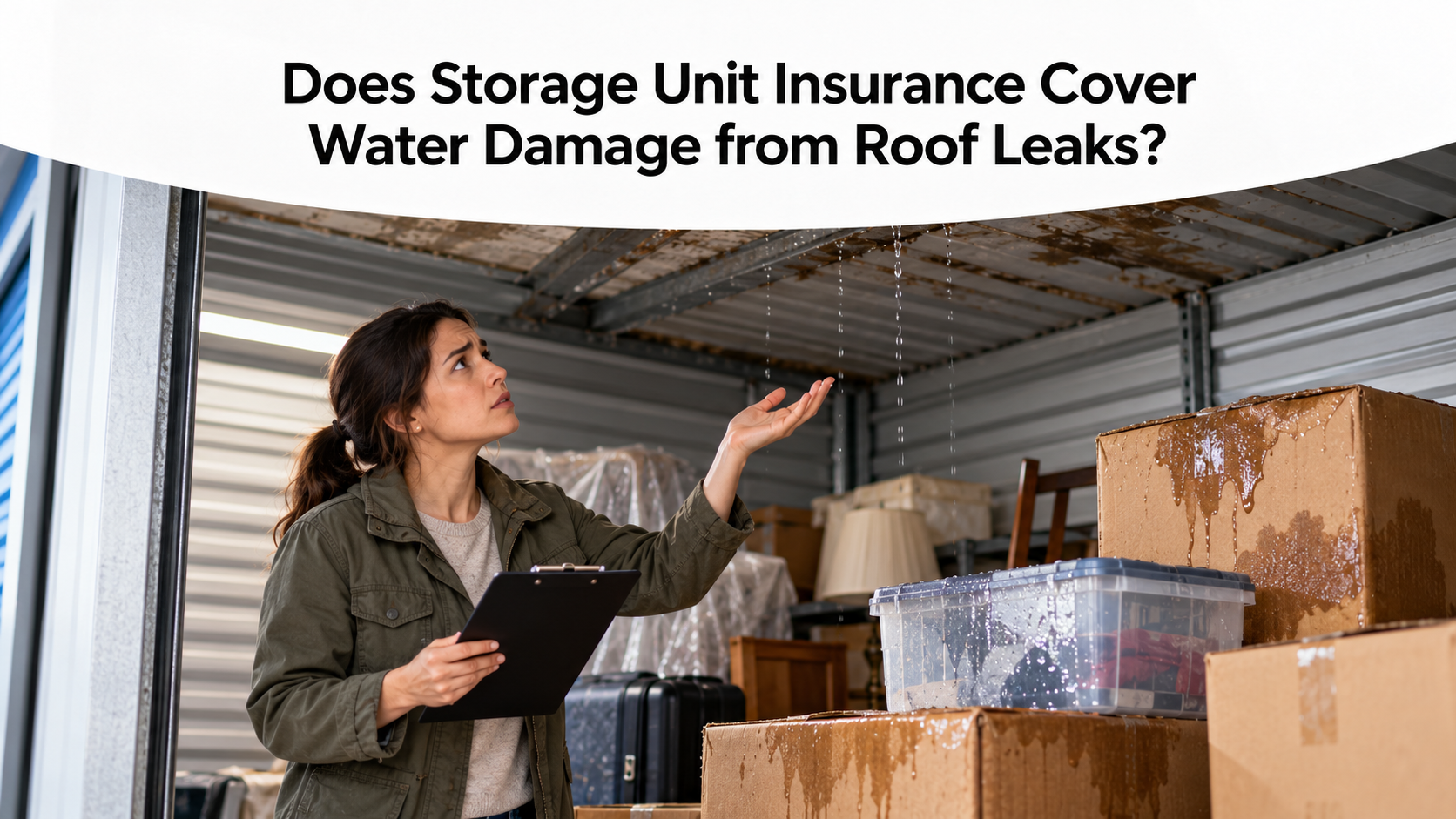
A small leak in a storage facility roof can cause surprisingly extensive damage. Water dripping onto cardboard boxes, wooden furniture, electronics, or important belongings may go unnoticed for days, especially when the storage unit is rarely visited. By the time the problem becomes visible, several items could already be damaged beyond repair.
But does storage unit insurance cover water damage from roof leaks? It may, particularly when the damage results from a sudden, accidental event covered by the policy. However, long-standing roof problems, gradual water seepage, flooding, and moisture-related deterioration may be treated differently. Understanding how insurers evaluate roof leaks, what exclusions apply, and how to document a loss can help you avoid unexpected expenses.
Pro Tip
Before placing belongings in a storage unit, inspect the ceiling for water stains, rust, damaged panels, discoloration, or signs of previous leaks. Photograph anything suspicious and report it to the facility manager. Keep sensitive belongings away from walls and ceilings where possible, and raise boxes slightly above the floor. If a leak occurs later, your initial photographs may help establish the unit's condition before the damage happened.
Key Takeaways
- Storage unit insurance may cover water damage from a roof leak when the incident meets the policy's covered causes of loss and other requirements.
- Sudden roof damage caused by a covered storm or falling object may be treated differently from a roof that has leaked gradually for months.
- Rainwater entering through the roof is not necessarily classified the same way as floodwater entering from ground level.
- Mold, mildew, condensation, long-term seepage, and deterioration may be excluded or restricted under storage insurance policies.
- Storage facility owners are generally responsible for maintaining their buildings, but they are not automatically liable for every loss involving renters' belongings.
- Photographs of the roof, water entry points, damaged belongings, and facility communications can help support a claim.
- Coverage limits, deductibles, property exclusions, and the circumstances of the leak determine whether reimbursement is available and how much may be paid.
Does Storage Unit Insurance Cover Roof Leak Damage?
Storage unit insurance can cover certain water-related losses affecting eligible belongings inside a rented storage facility. However, the presence of water alone does not establish that a claim qualifies. An insurer will generally examine where the water came from, what caused it to enter the unit, how long the problem existed, and whether the policy includes or excludes that type of damage.
For example, imagine that a severe storm damages part of a storage facility roof. Rain enters through the newly damaged section and soaks several boxes of furniture and household belongings. If the policy covers the relevant storm-related damage and resulting water intrusion, the affected contents may qualify for reimbursement.
Now consider a different situation. A storage unit has a small roof leak that develops over several months because of aging materials or deteriorated seals. Stored belongings gradually absorb moisture until mold or significant deterioration appears. A policy may exclude some or all of that damage because of its gradual nature or the applicable moisture-related exclusions.
This distinction is important because storage unit water damage coverage is determined by the policy's definitions and exclusions, not simply by whether the renter noticed the damage suddenly.
When Might Roof Leak Water Damage Be Covered?
Roof leaks can occur for several reasons, and insurance policies may respond differently depending on the circumstances. The following situations illustrate when coverage might be available, subject to the applicable policy.
Sudden Roof Damage During a Storm
Strong winds, hail, or severe weather can damage roof panels, flashing, or other building materials. When this creates an opening that allows rainwater to reach stored belongings, the resulting loss may qualify if the underlying event and the water intrusion are covered.
However, not every policy treats wind-driven rain identically. Some require particular building damage before rain entering through an exterior opening qualifies. Review the coverage wording rather than assuming any storm-related leak is automatically insured.
Roof Damage Caused by Falling Objects
A falling tree branch, sign, or other object can damage the storage building's roof and allow rainwater inside. When falling objects are listed as a covered cause of loss, the resulting damage to eligible stored property may be considered under that coverage, depending on the relevant conditions and exclusions.
Photographs showing the damaged roof and fallen object can be particularly useful. They may help establish how water entered the unit and whether the incident involved a sudden event rather than a long-standing maintenance problem.
Unexpected Water Entry Through a Roof Opening
Some policies may cover particular forms of sudden or accidental water intrusion even when the immediate cause is not a major storm. However, coverage depends on how the policy defines water damage and whether any exclusions for rain, seepage, faulty construction, defective materials, or roof maintenance apply.
A leak discovered after a single rainfall does not automatically prove that the damage was sudden. The insurer may need to determine whether the roof failed recently or whether water had been entering the building for an extended period.
Roof Leak Coverage: Different Situations Compared
| Water Damage Scenario |
Potential Coverage |
Important Consideration |
| Storm damages the roof and rain enters |
May qualify under applicable covered storm and water-damage provisions. |
Check whether the policy requires specific roof damage before rain intrusion is covered. |
| Falling branch creates a roof opening |
May qualify if the falling object and resulting damage meet policy conditions. |
Document the damaged roof, fallen object, and water entry point. |
| Roof slowly leaks over several months |
May be excluded under gradual seepage or deterioration provisions. |
Duration, prior damage, and maintenance-related exclusions matter. |
| Ground-level floodwater enters the unit |
Often excluded unless appropriate flood coverage applies. |
Flood damage is distinct from many other forms of water intrusion. |
| Condensation damages belongings |
Commonly restricted or excluded as gradual moisture damage. |
Humidity and ventilation conditions may be relevant. |
| Mold develops after water intrusion |
Depends on mold exclusions and any resulting-damage provisions. |
Damage directly caused by water may be evaluated separately from later mold growth. |
These examples are general illustrations, not coverage guarantees. Your policy must cover the applicable cause of loss, the affected property, and the circumstances of the incident before any reimbursement can be considered.
When Is Roof Leak Water Damage Not Covered?
Roof leak claims can become complicated when the damage developed slowly or resulted from a condition excluded under the insurance policy. Even if you did not know the roof was leaking, the insurer may still consider how and when the damage occurred.
Gradual Leakage and Long-Term Seepage
A roof that repeatedly allows small amounts of water into a unit can cause slow deterioration. Cardboard may weaken, wood may warp, and fabrics may remain damp without showing obvious damage immediately. Many property insurance policies restrict losses caused by continuous or repeated moisture exposure, although the exact definitions and exclusions vary.
Mold and Mildew Growth
When roof leaks create damp conditions, mold and mildew can develop on fabric, paper, wood, and other porous materials. Insurance providers may exclude mold, limit mold-related payments, or apply special conditions when mold results from another covered event.
Do not assume that coverage for the initial water intrusion automatically includes mold removal, cleaning, or replacement costs. Review the policy provisions for fungi, mold, mildew, contamination, and resulting damage.
Roof Deterioration or Maintenance Problems
Older roofs may develop leaks because of damaged seals, corrosion, loose fasteners, or other maintenance issues. Whether the resulting contents damage is covered depends on the policy wording and the actual cause of loss. A maintenance problem does not establish an automatic outcome in every insurance contract, but wear-and-tear and gradual-damage exclusions may apply.
Flooding and Groundwater Intrusion
If heavy rain causes nearby drains to overflow or surface water to enter the storage building at ground level, the loss may be classified as flooding rather than a roof leak. Floodwater, rising groundwater, and storm surge are commonly treated separately from other water-related losses.
For additional information about covered and excluded situations, read our guide to what storage unit insurance does not cover.
Is Roof Leak Water Damage the Same as Flood Damage?
No. Although both can leave your belongings soaked, roof leak damage and flood damage are not necessarily treated the same way by insurers. The difference often involves where the water originated, how it entered the storage building, and the policy's definitions of the covered and excluded causes.
A roof leak involves water entering through the upper structure of the building. For example, rain may pass through damaged roofing materials and drip directly onto stored property. Depending on the cause, this could fall within certain water-damage or storm-related provisions.
Flooding generally involves water accumulating or flowing over normally dry ground and entering a building. Heavy rainfall, overflowing waterways, storm surge, and drainage failures can produce flooding. These losses may be excluded from standard storage contents insurance or require a different type of protection.
A single storm can cause both situations at the same facility. Rain entering through a damaged roof and water rising through the storage unit doorway may require separate coverage evaluations. This is why documenting the location and source of water is especially important after severe weather.
Who Is Responsible for Water Damage from a Storage Unit Roof Leak?
Responsibility for roof leak damage depends on several factors, including the storage rental agreement, the facility's maintenance obligations, the circumstances of the leak, and applicable state law. Although storage facility operators generally manage building maintenance, they are not automatically required to reimburse renters for every damaged belonging.
The Storage Facility's Responsibility
Facility owners and operators are generally responsible for maintaining the physical storage premises in accordance with applicable obligations. This may include roof inspections, repairing known structural problems, and responding to reported leaks. However, a facility's responsibility for maintaining the roof is different from its legal liability for damage to a customer's contents.
If the facility knew about a serious leak and failed to take reasonable corrective action, those circumstances could become relevant to a negligence claim. Whether the customer can recover damages will depend on the evidence, contract, state law, and any enforceable liability limitations.
The Renter's Responsibility
Renters are generally responsible for following the rental agreement, storing permitted belongings appropriately, and obtaining any insurance required by the facility. They should also report visible leaks or unsafe conditions rather than leave a known issue unaddressed.
Keeping boxes directly beneath a visibly damaged roof or failing to protect belongings after discovering active water intrusion could potentially complicate a claim. However, the renter's obligations depend on the applicable policy and circumstances.
The Insurance Provider's Responsibility
The insurance provider evaluates whether the damage to eligible contents falls within the policy's coverage. A covered claim may be payable even when the facility's legal responsibility has not been established. Conversely, a dispute involving facility maintenance does not automatically make an excluded loss covered by your insurance.
If another party may be responsible, notify your insurer and retain relevant evidence. The insurer may have rights to pursue recovery from a responsible party after paying a claim, depending on the policy and law. Avoid making assumptions about liability before reviewing the available facts.
What Should You Do If Your Storage Unit Roof Is Leaking?
Discovering water dripping from the ceiling or pooling around your belongings requires prompt action. Protecting the remaining property is important, but so is preserving evidence showing how the damage occurred.
Step 1: Document the Leak and Damage
Take photographs and videos of the ceiling, visible water entry points, walls, floor, damaged boxes, and affected belongings. Wide photographs can show the overall condition of the unit, while close-up photographs help document individual damage. Record when you discovered the leak and any details that may help establish when it began.
Step 2: Notify the Storage Facility Immediately
Inform the facility manager about the leak and request that the incident be documented. Ask whether the facility can inspect the roof, arrange repairs, provide temporary protection, or move your belongings to another suitable unit. Keep copies of emails, written notices, incident reports, and any responses from management.
Step 3: Prevent Additional Damage
When it is safe to do so, move unaffected belongings away from the leaking area, protect items from continuing water exposure, and separate wet materials from dry property. Avoid entering areas with electrical hazards, unstable ceilings, or other dangerous conditions. Do not attempt structural roof repairs yourself.
Step 4: Contact Your Insurance Provider
Report the damage promptly using the procedure outlined in your policy. Explain the apparent source of the water, provide the storage facility's details, and identify the affected property. Describe what you observed without speculating about an unconfirmed cause. The insurer may request additional evidence or an inspection.
Step 5: Preserve Damaged Items and Records
Do not immediately discard significantly damaged belongings until you understand the insurer's inspection and documentation requirements. If wet materials must be removed for health or safety reasons, photograph them thoroughly and retain disposal records. Save receipts for reasonable emergency measures and follow the insurer's directions about cleaning, repairs, and replacement.
How to File a Storage Insurance Claim for Roof Leak Damage
A water damage claim generally requires evidence of the incident, the affected property, ownership, and the amount of loss. Because roof leaks can develop gradually or result from several different events, establishing the source and timeline of the damage is particularly important.
Prepare the following information before or during the claim process:
- Your insurance policy number, coverage details, and effective dates.
- The storage facility's name, address, and unit number.
- The date you discovered the leak and any known information about when the incident occurred.
- Photographs or videos showing the damaged roof, water entry points, and affected belongings.
- An itemized inventory describing damaged property, approximate purchase dates, and estimated values.
- Purchase receipts, order confirmations, photographs, or other records supporting ownership and value.
- Written communications, incident reports, maintenance information, or other relevant records from the storage facility.
- Records of reasonable steps taken to prevent additional damage, including relevant expenses.
The insurance provider will review the available evidence against the policy's covered causes of loss, exclusions, limits, deductibles, and valuation provisions. Approval is not guaranteed merely because water entered the unit or the facility confirms a roof problem.
For more detailed guidance on documentation, claim reviews, and reimbursement, read our article explaining how storage insurance claims work.
How Much Will Insurance Pay for Roof Leak Damage?
The amount payable after an eligible roof leak claim depends on the value of the covered belongings, the selected coverage limit, deductible, valuation method, and any applicable restrictions. Insurance does not necessarily reimburse the original purchase price or the full cost of replacing every damaged item.
For example, suppose a covered roof leak damages eligible belongings valued at $3,000 under the policy's valuation rules. If the applicable deductible is $250 and no additional limitations apply, the potential payment could be $2,750. This is an illustrative calculation rather than a statement about any particular insurance plan.
If the loss is excluded, however, a high coverage limit will not make it payable. Similarly, certain electronics, collectibles, artwork, or other valuable property may have special category limits even when the overall contents coverage is sufficient.
When selecting coverage, estimate the value of your eligible belongings and understand how the policy calculates claim payments. Avoid choosing an amount solely because it satisfies the storage facility's minimum insurance requirement.
Does Homeowners or Renters Insurance Cover Storage Unit Roof Leaks?
Homeowners and renters insurance may provide coverage for eligible personal belongings kept away from the primary residence, including some property in a self-storage unit. However, the protection available off-premises can be subject to lower limits, covered-cause restrictions, deductibles, and other conditions.
A homeowners policy that covers certain roof-related water damage at your residence does not necessarily offer identical protection for belongings stored in a separate commercial facility. The insurer may consider the location, the cause of water entry, the applicable off-premises limit, and whether the contents qualify under the policy.
Before relying on existing home insurance, contact the provider and ask whether accidental rainwater intrusion through a storage facility roof is covered. Request clarification about gradual leakage, flooding, mold, claim deductibles, and the maximum amount available for stored belongings.
Dedicated Storage Unit Insurance can provide an alternative for eligible contents when existing coverage is limited or uncertain. The important step is verifying the applicable water-damage protection rather than assuming all roof leaks qualify.
How to Prevent Roof Leak Damage in a Storage Unit
You cannot control every structural problem at a storage facility, but several practical precautions can reduce the amount of damage if a roof leak develops. Preventive measures are especially useful when storing moisture-sensitive belongings for an extended period.
Inspect the Roof Before Moving In
Look for stained ceiling panels, rust, watermarks, damaged seams, peeling materials, or damp patches. Ask the facility manager about any visible problems before signing the rental agreement. A clean, dry-looking unit does not guarantee future protection, but an inspection can identify obvious warning signs.
Keep Belongings Off the Floor
Use appropriate storage racks, shelving, or stable platforms to elevate boxes and other suitable items. Although raising belongings will not prevent direct dripping from above, it can reduce damage if water reaches the floor and spreads across the unit. Follow the facility's safety rules and avoid unstable stacking.
Use Water-Resistant Storage Containers
Sturdy plastic containers with secure lids can offer better protection against splashes and minor leaks than ordinary cardboard boxes. They are particularly useful for clothing, documents, books, and smaller household items. However, water-resistant containers are not necessarily waterproof, and trapped moisture can still damage their contents.
Protect Furniture and Electronics Carefully
Keep electronics in appropriate protective packaging and position them away from areas showing signs of water intrusion. Use breathable furniture covers where suitable, and avoid wrapping potentially damp items in airtight materials that could trap moisture. Do not store irreplaceable property in locations where environmental conditions cannot be adequately controlled.
Check the Unit After Severe Weather
When practical and safe, inspect your storage unit after heavy rain, windstorms, or other severe weather. Look for fresh damp patches, watermarks, pooling, or unusual odors. Report any concerns promptly so the facility can investigate before additional belongings are affected.
What Should You Check Before Buying Storage Insurance for Water Damage?
Not all storage insurance policies handle roof leaks in the same way. Before purchasing protection, review the coverage documents and ask specific questions about the types of water damage most relevant to your storage situation.
- Does the policy cover eligible contents damaged by water entering through a storage facility roof?
- Must a covered storm or other event first damage the roof for rainwater intrusion to qualify?
- Are gradual leakage, seepage, faulty construction, or maintenance-related problems excluded?
- How does the policy distinguish roof leaks from flooding, groundwater, and surface water?
- Are mold, mildew, and secondary moisture-related damage covered, limited, or excluded?
- What deductible, coverage limit, and property-specific restrictions would apply to an eligible water-damage claim?
- What evidence and reporting steps are required if a leak damages the contents of the unit?
Getting clear answers before moving into the unit can help you compare insurance options and understand where a coverage gap may exist. The policy wording and any applicable endorsements should determine the final decision, not a brief marketing description alone.
Why Consider Dedicated Storage Unit Insurance?
Belongings in self-storage face different risks from property kept inside a regularly occupied home. Roof leaks, severe weather, theft, fire, and other incidents may remain undiscovered until the renter returns to the facility. Dedicated storage insurance allows customers to consider protection specifically for eligible property stored at a separate location.
Discount Storage Insurance offers online insurance options for qualifying belongings kept in storage units. Its self-storage product lists water damage among several covered causes of loss, alongside burglary, fire, smoke, lightning, hail, vandalism, and other specified events.
However, a general reference to water damage does not mean every roof leak is covered. Customers should review the complete policy documents and confirm how roof leaks, accidental water intrusion, gradual moisture, and related exclusions are handled before relying on the coverage. For a wider overview, explore what storage unit insurance covers.
Conclusion
Storage unit insurance may cover water damage from roof leaks, but the outcome depends on how the leak occurred and whether the resulting loss falls within the policy. Sudden damage caused by a covered storm or falling object may qualify under certain insurance terms, while gradual seepage, deterioration, flooding, and mold-related losses may be excluded or restricted.
Before storing valuable belongings, inspect the unit, protect moisture-sensitive items, and review the applicable water-damage provisions. If a leak occurs, photograph the source, report it to the facility, preserve relevant evidence, and contact your insurer promptly. Understanding your protection before an incident is the most reliable way to avoid discovering an important coverage limitation after your property has already been damaged.
Frequently Asked Questions
Does Storage Unit Insurance Cover Water Damage from Roof Leaks?
It may. Some storage insurance policies cover eligible belongings damaged by sudden water intrusion, including certain roof leak incidents. However, coverage depends on what caused the leak, the policy's water-damage provisions, and exclusions for gradual seepage, maintenance-related problems, flooding, and other conditions.
Is the Storage Facility Responsible for a Leaking Roof?
Storage facility operators generally have building maintenance obligations, but they are not automatically liable for every loss involving stored belongings. Responsibility depends on the circumstances, rental agreement, applicable state law, and whether the facility failed to meet a relevant legal duty.
Does Storage Insurance Cover Rainwater Entering Through the Roof?
Rainwater entering through a storage facility roof may be covered under certain circumstances, such as when a covered event damages the roof and the policy includes the resulting water intrusion. Other policies may impose additional conditions or exclude particular forms of rainwater entry. Review the specific provisions before assuming protection.
What If My Storage Unit Roof Has Been Leaking for Months?
Long-term roof leaks may fall under exclusions involving gradual seepage, deterioration, or ongoing moisture exposure. However, the claim still requires evaluation under the actual policy and facts. Document the damage, report the problem, and ask the insurer to explain how the relevant provisions apply.
Does Storage Insurance Cover Mold Caused by a Roof Leak?
Mold and mildew are commonly excluded or subject to special coverage limitations. Even when the original water intrusion qualifies as a covered event, resulting mold damage may be evaluated separately. Check the policy for mold, fungi, mildew, contamination, and resulting-damage provisions.
Does Renters Insurance Cover a Storage Unit Roof Leak?
Renters insurance may provide limited off-premises coverage for eligible belongings stored in a self-storage facility. Whether roof leak damage is included depends on the policy's covered causes of loss, off-premises limits, exclusions, deductible, and other conditions. Obtain confirmation from your insurer before relying on that protection.
What Should I Do First If My Storage Unit Is Leaking Water?
When safe, photograph the leaking area and damaged belongings, then notify the storage facility immediately. Take reasonable steps to prevent further damage and contact your insurance provider according to the policy's claim instructions. Preserve damaged property and related records until you understand the documentation requirements.
Can I File a Roof Leak Insurance Claim Without Receipts?
You may be able to support ownership and value using photographs, online purchase confirmations, bank statements, product registrations, serial numbers, or other relevant records. The insurer determines what evidence is sufficient under the circumstances. Missing receipts do not automatically establish that a claim is invalid, but adequate documentation remains important.
Does Storage Unit Insurance Cover Electronics Damaged by a Roof Leak?
Eligible electronics may qualify for reimbursement when they are damaged by a covered roof leak event. However, some policies restrict electronics, impose category limits, or exclude particular causes of damage. Keep purchase records, serial numbers, and photographs, and avoid operating water-damaged electrical equipment before it has been assessed for safety.
Can a Storage Insurance Claim Be Denied Because of Roof Maintenance Problems?
A claim may be denied when the insurer determines that the loss resulted from an excluded cause, such as gradual deterioration or repeated seepage. However, the existence of a maintenance issue does not establish the same outcome under every policy. Request an explanation identifying the applicable coverage terms if your claim is denied.
.png)