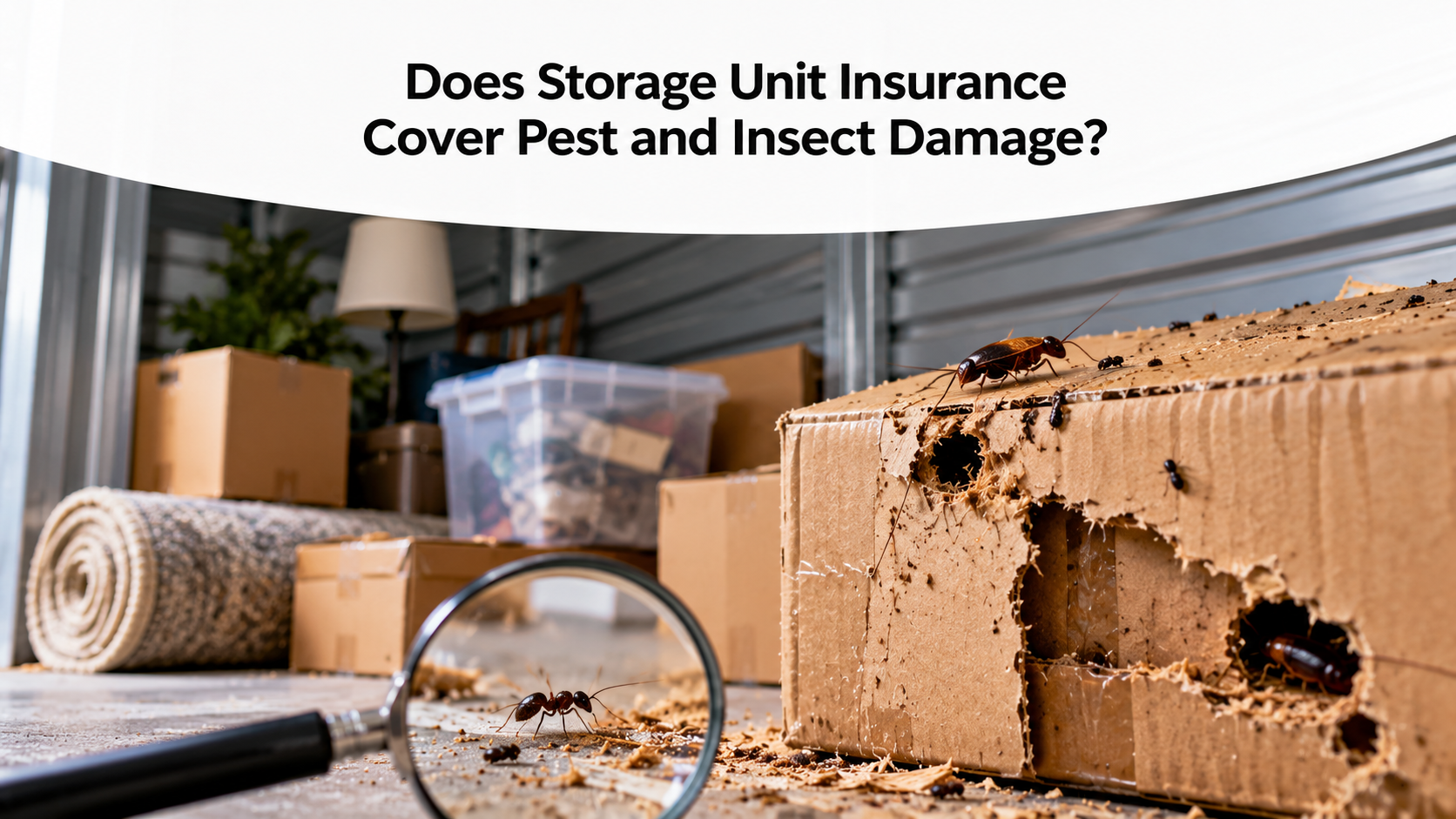
Storage unit insurance generally does not cover damage caused by insects, rodents, or other pests. Most policies distinguish pest infestations from sudden covered events such as fire, burglary, or vandalism. If termites destroy wooden furniture, mice chew through stored clothing, or insects damage documents, the resulting loss may fall under a pest-related exclusion rather than qualify for reimbursement.
However, not every storage insurance policy uses identical exclusions. Coverage depends on the contract, the type of pest, the cause of damage, and any additional protection available. Understanding these distinctions before renting a storage unit can help you avoid unexpected expenses and take practical steps to protect your belongings.
Key Takeaways
- Most standard storage insurance policies exclude damage caused directly by insects, rodents, and pest infestations.
- Termites, bed bugs, cockroaches, moths, rats, and mice can damage furniture, clothing, electronics, documents, and other stored belongings.
- A pest infestation is generally treated differently from a sudden covered event such as fire, smoke damage, or burglary.
- Climate-controlled storage can help manage temperature and humidity, but it does not guarantee a pest-free environment.
- A storage facility may have maintenance or pest-control responsibilities, but an infestation does not automatically establish facility liability.
- Photographs, inspection records, receipts, and written facility reports can help establish the extent and circumstances of pest damage.
- Reviewing insurance exclusions and using appropriate packing methods are important ways to reduce uninsured losses.
Pro Tip
Before moving your belongings into storage, ask the facility about its pest-control schedule and inspect the unit for droppings, insects, damaged seals, and gaps around doors. Use sealed plastic containers for vulnerable belongings and keep everything dry. Most importantly, review the policy's storage insurance exclusions rather than assuming every type of damage is covered.
Does Storage Unit Insurance Cover Pest and Insect Damage?
In most cases, storage unit insurance does not cover pest and insect damage. Policies commonly exclude losses caused by vermin, rodents, insects, infestation, or gradual deterioration. These restrictions can apply even when the damaged belongings would otherwise qualify as insured personal property.
For example, a wooden dresser may be eligible for coverage if it is damaged by a qualifying fire. However, the same dresser may not be covered if termites gradually destroy its internal structure. The difference lies in the cause of damage, not simply the type or value of the furniture.
Some insurance arrangements may contain endorsements or specialized provisions that address particular pest-related circumstances. Such protection should never be assumed. The actual policy wording determines whether any exception applies.
Why Pest and Insect Damage Is Usually Excluded
Storage insurance is generally structured around defined causes of loss. Pest damage often develops through an infestation rather than one identifiable incident. Insects may feed on paper, fabrics, or wood for weeks before the damage becomes visible. Rodents can establish nests inside boxes and gradually destroy stored materials.
Insurers commonly address these risks through specific exclusions because pest activity can involve building maintenance, storage conditions, sanitation, and preventive measures. However, an exclusion does not necessarily require the insurer to prove that the policyholder could have prevented the infestation. The policy language controls how the restriction operates.
The distinction is important when comparing what storage insurance covers and excludes. Insurance against certain sudden events does not automatically provide protection against infestation, poor storage conditions, or long-term material deterioration.
Common Pests That Can Damage Stored Belongings
Different pests create different risks for stored property. Some consume or damage materials directly, while others contaminate belongings through droppings, nesting, or repeated activity. Understanding the type of pest can help you identify vulnerable items and select better packing materials.
| Pest Type |
Potential Damage |
Typical Insurance Treatment |
| Termites |
Wooden furniture, cabinets, frames, and other cellulose-based materials. |
Commonly excluded as insect or infestation damage. |
| Bed Bugs |
Mattresses, upholstered furniture, bedding, and clothing may require treatment. |
Infestation and treatment costs are generally excluded or restricted. |
| Cockroaches |
Contamination of cardboard, fabrics, books, and other stored materials. |
Usually subject to pest-related exclusions. |
| Clothes Moths |
Wool, silk, blankets, upholstery, and natural-fiber clothing. |
Generally excluded when damage results from insect activity. |
| Silverfish |
Books, photographs, paper documents, wallpaper, and certain fabrics. |
Commonly excluded as insect-related damage. |
| Rats and Mice |
Chewed wiring, furniture, boxes, clothing, and contaminated property. |
Rodent damage is commonly excluded. |
Does Storage Insurance Cover Termite Damage?
Termite damage is generally not covered by standard storage unit insurance. Termites feed on cellulose-based materials, making wooden furniture, books, cardboard, and certain decorative items vulnerable to infestation. Their activity can continue unnoticed inside furniture until substantial structural damage becomes visible.
For example, a wooden dining table stored for several months may appear undamaged externally while termites hollow out sections beneath the surface. Even if the table becomes unusable, the damage may not qualify for reimbursement when the policy excludes insects or vermin.
Inspect wooden furniture before storage, avoid placing untreated wood directly against damp surfaces, and check for mud tubes, discarded wings, unusual dust, or hollow-sounding sections. Report suspected termite activity promptly rather than allowing the infestation to spread.
Are Bed Bugs in Storage Units Covered by Insurance?
Bed bug infestations are generally excluded from ordinary storage insurance. Bed bugs can survive in mattresses, upholstered furniture, luggage, and other belongings. They do not consume furniture in the same way termites consume wood, but an infestation can make stored items difficult to use, move, or sell without appropriate treatment.
Professional pest treatment, cleaning, temporary relocation, and replacement expenses may not be reimbursed under a standard contents policy. Finding bed bugs does not automatically mean every affected item must be discarded. Suitable treatment depends on the item, infestation severity, and professional recommendations.
Inspect secondhand furniture and mattresses before placing them in storage. If bed bugs are discovered, avoid moving potentially infested belongings into other spaces without taking appropriate containment precautions.
Does Storage Insurance Cover Rat and Mouse Damage?
Damage caused by rats and mice is commonly excluded from storage insurance. Rodents can chew through cardboard, fabric, wood, plastic, and electrical insulation. Their nesting activity and droppings can also contaminate belongings, potentially creating cleaning and replacement costs.
A separate renters insurance policy may provide some protection for property kept away from home, but that does not mean it covers rodent damage. Both renters and dedicated storage policies can contain similar pest exclusions. Learn more about these distinctions in the guide to renters insurance for rat damage in storage units.
Can Insects Damage Electronics in a Storage Unit?
Certain insects can enter electronic equipment through ventilation openings, gaps, and other small spaces. Insect activity may introduce debris, contamination, or nesting materials around electrical components. Rodents can also damage equipment by chewing cables and insulation.
If a television, computer, gaming console, or appliance stops functioning after pest activity, coverage depends on the actual cause and policy wording. The fact that electronics are eligible stored belongings does not override an exclusion for insect or rodent damage.
Clean equipment before storage, remove batteries where appropriate, use suitable protective packaging, and keep electronics away from obvious pest entry points. Do not power on equipment showing visible signs of infestation or damaged wiring until it has been safely inspected.
Which Stored Belongings Are Most Vulnerable to Pests?
Pest infestations can affect almost any storage unit, but the degree of exposure varies by material, packaging, and storage conditions. Organic materials, textiles, cardboard, and upholstered items are especially vulnerable to certain pests.
- Wooden furniture: Termites and wood-boring insects can weaken frames, cabinets, tables, and decorative woodwork.
- Clothing and blankets: Clothes moth larvae and carpet beetle larvae can damage wool, silk, and other susceptible fibers.
- Mattresses and upholstered furniture: Bed bugs and other pests can shelter within seams, folds, and concealed spaces.
- Books and documents: Silverfish and certain other insects can damage paper, bindings, adhesives, and stored records.
- Cardboard boxes: Some pests shelter inside boxes, while rodents may shred cardboard for nesting.
- Electronics and appliances: Insects and rodents can enter cavities, contaminate components, or damage wiring.
Does Climate-Controlled Storage Prevent Pest Damage?
Climate-controlled storage can help protect belongings from temperature extremes and certain humidity-related problems. More stable environmental conditions may reduce some circumstances that favor particular pests, especially insects associated with damp environments.
However, climate control is not the same as pest control. Bed bugs, rodents, cockroaches, and other pests can still enter a climate-controlled building through stored belongings, structural openings, or neighboring spaces. A regulated temperature does not guarantee that pests cannot survive inside the unit.
Ask how the facility manages pest inspections, sanitation, building maintenance, and reported infestations. Choose storage conditions based on both the environmental needs of your property and the facility's maintenance practices.
Can a Storage Facility Be Responsible for Pest Damage?
A storage facility may have contractual or legal responsibilities concerning property maintenance, sanitation, building conditions, and pest management. However, finding insects or rodents inside a rented unit does not automatically establish that the facility must compensate you for damaged belongings.
Responsibility can depend on the rental agreement, applicable state law, the source of the infestation, whether the facility knew or reasonably should have known about the problem, and whether its conduct contributed to the loss. Rental agreements may also contain liability limitations or other provisions that require legal evaluation.
For example, repeated pest complaints and unresolved structural entry points may raise different questions from an infestation introduced through a customer's already contaminated furniture. The evidence and circumstances matter. Insurance coverage and potential facility liability are separate issues, and one does not automatically determine the other.
What Should You Do After Finding Pest Damage in Storage?
Discovering insects, rodents, or damaged belongings can make it tempting to empty the unit immediately. However, disturbing everything before documenting the conditions may make it harder to establish when and how the damage occurred. Begin by recording the evidence and taking reasonable precautions to prevent further contamination.
Document the Damage Before Cleaning
Photograph the storage unit, damaged boxes, affected items, visible insects, droppings, nesting material, and possible entry points. Capture both close-up photographs and wider images showing where belongings were positioned. Record the date you discovered the problem and any earlier warning signs.
Notify the Storage Facility
Report the suspected infestation to facility management promptly and request written confirmation. Ask whether similar problems have been reported, whether an inspection can be arranged, and what steps the facility plans to take. Keep copies of emails, incident reports, and relevant communications.
Check Your Insurance Policy
Review exclusions for insects, rodents, vermin, infestation, contamination, and gradual deterioration. If the policy wording is unclear, contact the insurer or administrator for guidance. Do not assume the claim is automatically eligible or ineligible based solely on a general online explanation.
Protect Unaffected Belongings
Take reasonable steps to prevent further damage without spreading the infestation. Separate affected property when safe, use suitable containment, and consult a pest professional when necessary. Before disposing of damaged belongings, check whether the insurer needs additional photographs, inspection access, or other documentation.
Can You File a Storage Insurance Claim for Insect Damage?
You can report suspected pest damage to your insurance provider and request a coverage review, but submitting a claim does not guarantee payment. If the policy specifically excludes the type of damage reported, the claim may be denied even when you have clear proof that the belongings were damaged.
The insurer may consider the cause of loss, policy exclusions, eligibility of the affected property, insurance dates, location details, ownership records, and supporting documentation. If another potentially covered event was also involved, the relationship between the events may require closer evaluation under the specific contract.
Understanding the storage insurance claims process can help you prepare an accurate report, identify relevant records, and understand how the insurer reaches a coverage decision.
What Evidence Helps Document Pest Damage?
Detailed evidence can help establish what happened even when coverage is uncertain. Documentation may also be useful when discussing the infestation with the storage facility or seeking professional advice about possible liability.
| Evidence |
What It Can Establish |
| Photographs and Videos |
Visible damage, pest activity, storage conditions, and affected belongings. |
| Purchase Receipts |
Ownership, purchase details, and potentially the original cost of damaged property. |
| Facility Reports |
When the infestation was reported and how management responded. |
| Pest Inspection Reports |
Pest identification, observed activity, possible entry points, and professional findings. |
| Storage Inventory |
Which belongings were stored and which items appear affected. |
| Repair or Treatment Estimates |
The potential cost of restoring, treating, or replacing affected belongings. |
An itemized inventory is particularly useful when numerous belongings are affected. If original receipts are unavailable, photographs, order confirmations, warranty records, and other records may help establish ownership. Review the guidance on proof of ownership for storage insurance claims when organizing your documentation.
Can Pest Damage Lead to a Denied Insurance Claim?
Yes. If pest damage is expressly excluded, the insurer may deny reimbursement even when the infestation was unexpected, the affected belongings were valuable, and the policy was active. The existence of insurance does not eliminate exclusions for specific causes of loss.
A denial may also involve additional questions about the reported cause, eligible property, policy conditions, or supporting documentation. These issues should be evaluated separately rather than assuming every denial has the same explanation.
If your claim is denied, request the relevant policy provision and review whether the decision accurately reflects the reported circumstances. Additional documentation can sometimes correct factual misunderstandings, but it cannot eliminate a valid contractual exclusion.
How to Prevent Pest and Insect Damage in a Storage Unit
Because pest damage is frequently uninsured, prevention is especially important. A well-maintained storage facility and suitable packing practices can reduce exposure, although no storage arrangement can completely eliminate the possibility of infestation.
Inspect the Unit Before Moving In
Look for insects, droppings, damaged weather seals, gaps around doors, nesting material, unusual odors, and signs of moisture. Ask management about pest inspections and any recent infestation concerns before signing the rental agreement.
Use Sealed Storage Containers
Sturdy plastic containers with secure lids can offer better physical protection than ordinary cardboard boxes for many items. They are particularly useful for textiles, documents, and smaller belongings. Make sure the contents are completely dry before sealing them.
Never Store Food or Pest Attractants
Avoid keeping food, pet food, birdseed, food waste, or other prohibited materials in the unit. Clean kitchen appliances, containers, and furniture before storage so crumbs and residue do not attract unwanted pests.
Keep Belongings Off the Floor
Where permitted and practical, use suitable shelving or stable platforms to elevate vulnerable belongings. Leave enough space to inspect stored materials and avoid tightly packing everything against walls or door openings. Elevation may reduce certain exposures, but it will not stop every insect or rodent.
Inspect Stored Property Periodically
Visit the unit periodically when access is available. Examine boxes, furniture seams, wooden surfaces, and areas where pests could shelter. Early identification can help you respond before additional belongings become contaminated or damaged.
Avoid Unapproved Pest Treatments
Do not introduce pesticides, foggers, mothballs, or chemical treatments without checking facility rules and product safety instructions. Some chemicals are unsuitable for enclosed storage areas or may be prohibited by the rental agreement. Ask management about approved treatment procedures.
Does Homeowners or Renters Insurance Cover Pest Damage in Storage?
Some homeowners and renters insurance policies extend limited personal property protection to belongings stored away from the insured residence. However, off-premises coverage does not necessarily expand the types of losses the policy covers.
For example, belongings stored elsewhere may be insured against certain covered events while remaining subject to exclusions for insects, rodents, wear and tear, or gradual deterioration. Off-premises limits and deductibles can also differ from the protection available at your primary residence.
Before relying on an existing home or renters policy, verify whether the storage location is covered, which events qualify, what limits apply, and how pest-related losses are treated. A separate storage policy should be evaluated under the same careful approach.
Can You Purchase Additional Insurance for Pest Damage?
Some specialized insurance arrangements may address risks excluded by standard property coverage, but dedicated pest damage protection should not be assumed to be available with every storage insurance product. Availability, eligibility, covered circumstances, and exclusions depend on the insurer and policy.
Ask the provider whether the policy offers any endorsement or additional protection specifically addressing rodents, termites, bed bugs, or other infestations. If an option exists, review its exclusions, deductibles, limits, and treatment requirements before purchasing it.
Increasing the ordinary contents coverage limit does not automatically remove a pest exclusion. The limit determines the maximum potential reimbursement for eligible losses, while the coverage terms determine which causes of loss qualify in the first place.
What to Check Before Buying Storage Unit Insurance
An affordable policy is only useful when its coverage matches the risks you need to insure. Before buying, review the full policy rather than relying exclusively on a brief description of coverage or an advertised maximum benefit.
- Covered causes of loss: Identify the events that can trigger reimbursement, including any applicable fire, smoke, burglary, or vandalism protection.
- Pest exclusions: Look for wording addressing insects, vermin, rodents, nesting, infestation, or pest-related contamination.
- Gradual deterioration: Check restrictions involving long-term damage, wear, moisture, and material breakdown.
- Property restrictions: Verify eligibility and special limits for furniture, electronics, collectibles, and valuable belongings.
- Deductibles and limits: Understand the maximum protection and the amount you may be responsible for after an eligible loss.
- Claim conditions: Review notification requirements, documentation obligations, and any applicable deadlines.
Reviewing these details before purchasing helps prevent incorrect assumptions about the policy. The guide on what to know before buying storage insurance explains additional considerations when comparing policies and preparing belongings for storage.
Storage Insurance Can Still Protect Against Other Risks
A pest-related exclusion does not mean storage insurance has no value. Qualifying personal property may still be protected against other covered events, depending on the policy. Fire, smoke, burglary, vandalism, and certain other causes of loss may be included, subject to the applicable contract terms.
A dedicated storage unit insurance policy can help protect eligible stored belongings against specified insured events. Compare the policy's covered causes of loss, exclusions, limits, deductibles, and property restrictions to understand the protection being purchased.
Discount Storage Insurance offers insurance options for qualifying storage arrangements. Before selecting coverage, review the applicable policy documents and confirm how the insurance treats the specific belongings and risks relevant to your storage needs.
Conclusion: Protect Your Belongings Against Pest Damage
Storage unit insurance generally does not cover damage caused by termites, bed bugs, cockroaches, moths, rodents, and other pests. These losses are commonly excluded because of the policy's specific treatment of infestations, vermin, insects, and gradual deterioration. However, the final coverage determination depends on the insurance contract and the circumstances of the damage.
The most practical approach combines careful policy review with preventive storage habits. Inspect the facility, use appropriate containers, keep belongings clean and dry, and document their condition before moving in. Knowing what your policy does and does not cover can help you protect stored property without relying on insurance for risks it may exclude.
Frequently Asked Questions
Does Storage Unit Insurance Cover Insect Infestations?
Usually not. Standard storage insurance commonly excludes damage caused by insects, rodents, vermin, and infestations. Even when the damaged belongings are otherwise eligible property, the cause of damage may fall outside coverage. Check the actual policy wording for any exceptions.
Does Storage Insurance Cover Termite Damage to Furniture?
Termite damage is generally excluded under standard storage insurance. Termites can gradually weaken wooden furniture and other cellulose-based materials, but the resulting deterioration typically falls under insect or infestation exclusions rather than a covered sudden loss.
Are Bed Bugs Covered by Storage Unit Insurance?
Bed bug infestations are generally not covered by ordinary storage insurance. Treatment, cleaning, containment, and replacement costs may be excluded. Review the policy for any specialized provisions, and consult a qualified pest professional before discarding affected furniture or mattresses.
Does Storage Insurance Cover Damage Caused by Mice or Rats?
Most storage insurance policies exclude damage caused directly by rats, mice, and other rodents. This can include chewed furniture, contaminated belongings, damaged wiring, and destroyed boxes. Coverage depends on the specific policy and cause of loss.
Can I Sue a Storage Facility for Pest Damage?
Potentially, depending on the facts and applicable law. Facility liability may involve maintenance obligations, prior knowledge of an infestation, negligence, and rental agreement provisions. However, discovering pest damage does not automatically establish that the storage facility is legally responsible.
Who Pays for Pest Damage in a Storage Unit?
When pest damage is excluded from insurance and no other party is legally responsible, the storage renter may have to pay for cleaning, treatment, repair, or replacement. Responsibility can differ if the policy provides applicable coverage or the facility is legally liable for the loss.
Do Climate-Controlled Storage Units Prevent Insects?
No. Climate-controlled storage can help manage temperature and humidity, but insects and rodents may still enter the building or arrive inside stored belongings. Pest inspections, sanitation, building maintenance, and suitable packing remain important.
Can I File a Claim if I Find Cockroaches in My Storage Unit?
You can report the incident and request a coverage determination, but cockroach-related damage is commonly excluded. Document the infestation, notify facility management, and review the insurance policy before assuming that cleaning or replacement expenses will be reimbursed.
Does Homeowners Insurance Cover Pest Damage in Storage?
Homeowners insurance may extend certain personal property coverage to belongings stored away from home, but insect and rodent exclusions can still apply. Off-premises limits, deductibles, and policy conditions should be reviewed before relying on homeowners coverage for storage-related risks.
Does Insurance Pay for Pest Extermination in Storage Units?
Ordinary storage contents insurance generally does not pay for routine pest extermination or infestation treatment. Pest management may instead be addressed through facility maintenance arrangements or the rental agreement. Any available reimbursement depends on the applicable terms and circumstances.
What Should I Do if My Storage Unit Has Termites?
Photograph the affected belongings and visible termite activity, notify the storage facility, and ask about professional inspection procedures. Avoid moving potentially infested furniture into another building without appropriate precautions. Review your insurance and rental agreement before disposing of damaged items.
Can Additional Storage Insurance Cover Insect Damage?
Some specialized insurance arrangements may address additional risks, but pest coverage is not automatically available. Ask whether the insurer offers any relevant endorsement and review its specific terms. Purchasing a higher standard coverage limit alone does not remove an exclusion for insects or rodents.
How Can I Protect Stored Belongings From Insects and Rodents?
Inspect the unit before move-in, clean and dry belongings, use sealed containers where appropriate, avoid storing food, and check the space periodically. Choose a well-maintained facility with established pest-control practices and report signs of infestation as soon as they appear.
.jpg)