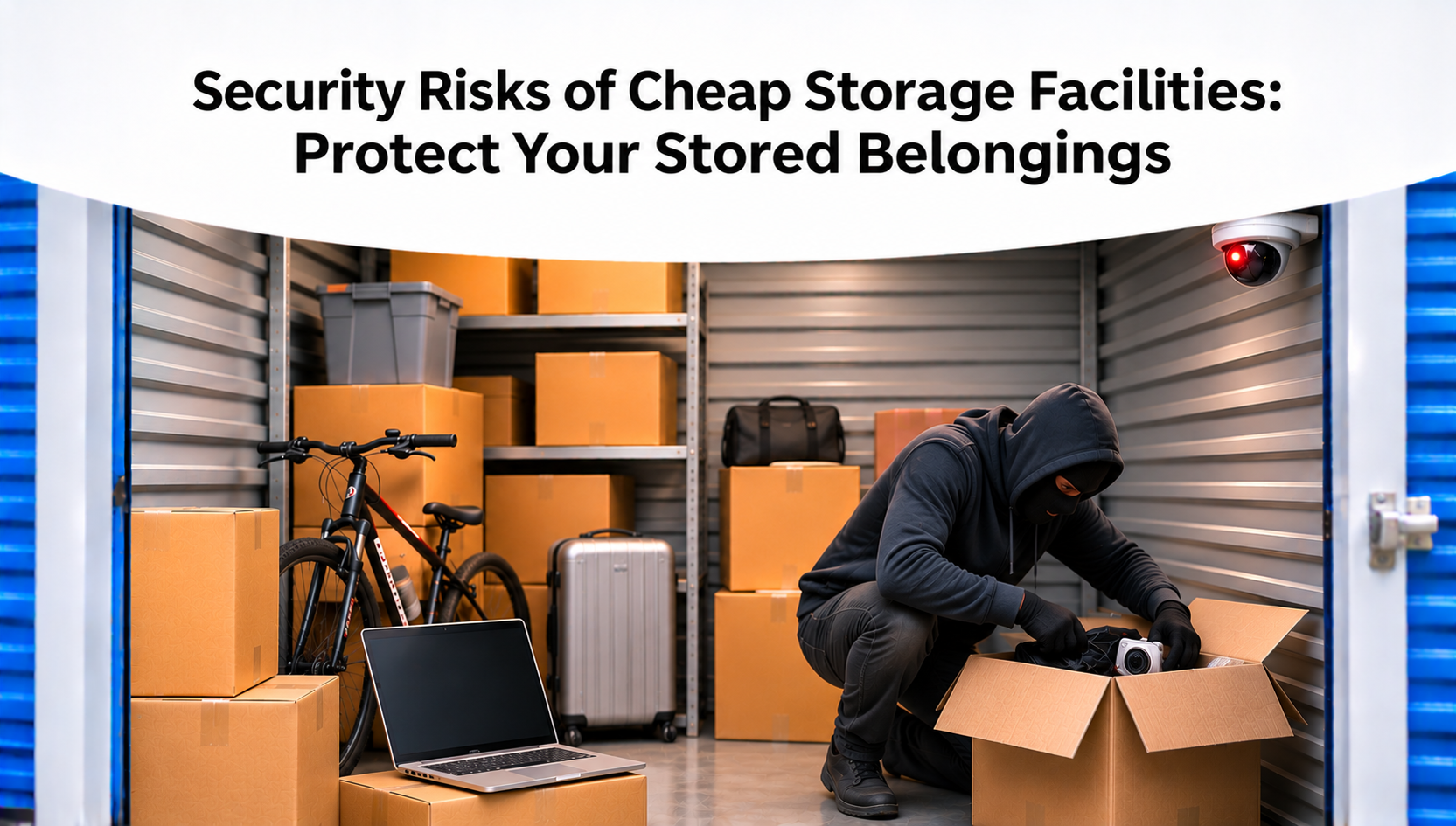
Choosing a cheap self-storage facility may seem like a sensible way to reduce moving or storage expenses. However, a low monthly rental price does not always mean you are getting good value. Poor security arrangements, inadequate maintenance, limited access controls, and neglected building conditions can expose your belongings to unnecessary risks.
Whether you are storing household furniture, electronics, business inventory, seasonal equipment, or personal possessions, the condition and security of the facility matter. A storage unit may look affordable initially, but the financial consequences of theft, fire, water damage, or vandalism can be significant if your belongings are not adequately protected.
This guide explains the common security risks of cheap storage facilities, what warning signs to look for before renting, how to protect your stored belongings, and why security features and storage insurance should both be considered when choosing a facility.
Key Takeaways
- Cheap storage facilities may have inadequate lighting, damaged access points, weak locks, or limited surveillance.
- Poor access control can increase the risk of unauthorised entry, theft, and vandalism.
- Roof leaks, plumbing problems, poor drainage, and inadequate building maintenance can expose stored belongings to water damage.
- Fire safety equipment, emergency procedures, and electrical maintenance are important considerations when evaluating a storage facility.
- A low rental price should not be the only factor when comparing storage facilities. Security, maintenance, access arrangements, and contract conditions also matter.
- Personal storage insurance can provide financial protection against specified covered losses, subject to policy terms, limits, deductibles, and exclusions.
- Photographs, receipts, serial numbers, and an itemised inventory can help document ownership and support an eligible insurance claim.
Pro Tip
Visit a storage facility before signing the rental agreement. Check the condition of the entrance, perimeter fencing, locks, lighting, surveillance cameras, and individual storage areas. Ask how access is monitored, what happens when an alarm is triggered, and how maintenance problems are handled. Take photographs of valuable belongings before placing them in storage and keep your inventory outside the unit.
Why Can Cheap Storage Facilities Be Risky?
Low-cost storage facilities are not automatically unsafe. Some operate efficiently and offer competitive prices without compromising essential security. However, an unusually low rental price can sometimes reflect differences in property condition, available security features, maintenance standards, or customer services.
For example, a facility with limited surveillance, poorly maintained doors, or inadequate lighting may provide fewer safeguards against unauthorised access. Similarly, neglected roofs, drainage systems, and electrical installations can increase the possibility of damage to stored property. These issues do not occur at every budget facility, but they are important factors to investigate before choosing a unit.
The key is to compare the overall value of a storage arrangement rather than focusing exclusively on the advertised monthly price. A slightly more expensive facility with better maintenance, access control, and emergency arrangements may be a more suitable choice for valuable possessions.
7 Common Security Risks of Cheap Storage Facilities
1. Theft and Unauthorised Access
Theft is one of the main concerns when storing valuable belongings outside your home or business premises. Facilities with weak perimeter security, damaged entry doors, poorly managed access codes, or limited monitoring may make it easier for unauthorised individuals to enter restricted areas.
Personal storage unit locks provide an additional layer of protection, but they should not be the only security measure. A facility should also have reasonable procedures for controlling entry, managing visitors, and responding to suspicious activity. Ask whether each customer receives individual access credentials and how the facility prevents unauthorised access after normal operating hours.
Read our guide on whether storage unit insurance covers theft or burglary to understand how qualifying break-ins may be treated under an insurance policy.
2. Poor CCTV Surveillance and Security Monitoring
Security cameras can discourage suspicious activity and provide useful evidence when an incident occurs. However, simply having cameras installed does not guarantee that a facility is properly monitored. Some cameras may cover only entrances, while others may have limited visibility, poor image quality, or areas outside their recording range.
Before renting, ask which areas are monitored, whether cameras operate continuously, and how long recordings are retained. Check whether the facility has staff responsible for responding to security alerts or investigating reported incidents. These details can help you assess whether surveillance is part of a practical security system or simply an advertised feature.
3. Poor Lighting Around Storage Units
Insufficient lighting can make storage corridors, loading areas, entrances, and outdoor access routes difficult to monitor. Dark corners may reduce camera visibility and make it harder for customers to identify damaged locks, suspicious activity, or potential hazards when visiting their units.
Check whether lighting is available throughout the property, particularly around entrances, corridors, stairways, loading bays, and outdoor storage areas. Visit at different times if possible to understand how the facility operates after daylight hours. Report broken lights and ask how quickly maintenance requests are addressed.
4. Water Leaks and Poor Building Maintenance
A low-cost storage facility may have older buildings or maintenance issues that are not immediately obvious during a viewing. Damaged roofs, leaking pipes, blocked drainage systems, and poorly sealed doors can expose belongings to water. Furniture, mattresses, cardboard boxes, clothing, electronics, and documents can all be affected by moisture.
Inspect the ceiling, walls, floor, and corners of the unit before moving anything inside. Look for water stains, damp patches, peeling paint, unpleasant smells, and visible signs of previous leaks. Ask the facility about its maintenance procedures and how it handles reports of water entering storage areas.
You can also read 5 tips to protect your valuables from storage unit water damage for practical steps to reduce moisture-related risks.
5. Fire Hazards and Inadequate Emergency Equipment
Fire can destroy belongings across multiple storage units and affect property even when flames do not directly reach every individual space. Poor electrical maintenance, unsafe storage practices, prohibited flammable materials, and inadequate emergency arrangements can increase the consequences of a fire incident.
Check whether the facility has appropriate fire detection equipment, accessible fire extinguishers, clearly marked emergency exits, and documented emergency procedures. Ask how the facility manages prohibited materials and whether routine safety inspections are carried out. Do not store fuel, fireworks, propane cylinders, or other prohibited hazardous materials inside your unit.
For more information about financial protection following a fire, read does storage unit insurance cover fire and smoke damage?
6. Weak Locks, Damaged Doors, and Poor Unit Conditions
A storage unit may have a strong-looking exterior but still present security concerns if its door, locking mechanism, hinges, or surrounding structure are damaged. Worn fittings and poorly maintained entry points can make it harder to secure the unit properly and may increase the risk of accidental or unauthorised access.
Inspect the door and locking points before signing the agreement. Confirm which types of locks are permitted and whether the facility provides its own locking mechanism or expects customers to supply one. Do not move valuable belongings into a unit with visible structural damage or a lock that does not operate correctly.
7. Pest Infestations and Poor Cleanliness
Poor housekeeping can attract rodents and insects, particularly when storage areas contain food residue, waste, or unsuitable packaging. Pests can damage cardboard boxes, clothing, upholstered furniture, books, and other stored possessions. Their activity may also go unnoticed when units are left unopened for long periods.
Check the cleanliness of shared corridors, loading areas, and the unit itself. Look for droppings, damaged packaging, insect activity, or gaps around doors and walls. Store belongings in clean, suitable containers and avoid placing food or perishable materials inside the unit. Ask whether the facility has an established pest-control and housekeeping schedule.
Warning Signs to Check Before Renting a Cheap Storage Unit
A facility inspection can reveal problems that may not be clear from its website or advertised rental price. Before signing an agreement, look for warning signs that suggest security, maintenance, or management standards may be inadequate.
- Broken perimeter fencing, damaged gates, or entrances that remain unsecured.
- Cameras that appear damaged, poorly positioned, or not operational.
- Dark corridors, poorly lit parking areas, and unmonitored access points.
- Damaged unit doors, broken locks, loose hinges, or visible structural problems.
- Water stains, damp floors, leaking ceilings, or persistent musty smells.
- Poor housekeeping, rubbish accumulation, or visible pest activity.
- Unclear visitor procedures or a lack of individual customer access controls.
- Staff who cannot explain emergency procedures or how security incidents are reported.
- Rental agreements with unclear liability provisions, fees, or insurance requirements.
One issue does not automatically mean that a facility is unsafe, but several warning signs together should prompt further questions. If management cannot explain how problems are addressed, consider comparing other facilities before committing your belongings to long-term storage.
How to Choose a Secure Storage Facility Without Overpaying
Finding affordable storage does not mean you have to ignore security. The best approach is to compare facilities using consistent criteria and identify which features are essential for the type and value of belongings you intend to store.
Compare Security Features
Look for facilities with controlled entry, suitable perimeter protection, working surveillance cameras, adequate lighting, and secure individual units. Ask whether staff monitor the premises and how the facility responds to attempted unauthorised access. The quality and operation of these features matter more than simply seeing them listed in an advertisement.
Inspect the Building and Storage Units
Check the condition of the roof, walls, floors, doors, drainage, and shared areas. A clean and maintained facility is generally easier to assess than one with visible signs of neglect. If you are storing furniture, electronics, documents, or other sensitive possessions, consider whether the environment is suitable for their storage requirements.
Review Rental Agreements and Liability Conditions
Read the rental agreement before making a payment. Understand the facility's responsibilities, customer obligations, access restrictions, prohibited items, payment conditions, and procedures for reporting damage or theft. Pay particular attention to liability limitations because renting a storage unit does not automatically mean the facility will reimburse you for every loss involving your belongings.
Compare the Total Cost, Not Just the Advertised Rent
Check for administration charges, deposits, access fees, lock costs, insurance requirements, and possible price changes after an introductory period. A facility with a slightly higher advertised rate may offer better overall value if it provides suitable security, reliable maintenance, and transparent rental conditions.
Practical Ways to Protect Your Belongings Inside a Storage Unit
Choosing a well-maintained facility is only one part of protecting stored property. Your own storage practices can also reduce avoidable risks and make it easier to identify problems if something happens during the rental period.
- Use a suitable high-quality lock: Choose a lock compatible with the facility's locking system and check that it is secured correctly every time you leave.
- Keep access details private: Do not share gate codes, keys, account information, or entry credentials unnecessarily.
- Raise belongings off the floor where appropriate: Suitable shelving or pallets may help reduce direct contact with the floor, but do not rely on them as protection against major flooding.
- Use appropriate packaging: Protect furniture with suitable covers and place smaller possessions in clean, durable containers.
- Avoid prohibited materials: Never store flammable, hazardous, perishable, or restricted items against facility rules.
- Inspect the unit periodically: Check for damaged locks, dampness, pests, unusual smells, and changes in the condition of stored belongings.
- Maintain an updated inventory: Record what you store and update the list whenever you add or remove possessions.
- Keep evidence outside the unit: Store photographs, receipts, serial numbers, and inventory records digitally or at another secure location.
Does Cheap Storage Facility Security Replace Storage Insurance?
No. Physical security and insurance provide different forms of protection. Security measures such as cameras, access gates, alarms, locks, and perimeter fencing are intended to reduce the likelihood of certain incidents or help investigate them. Insurance provides financial protection for eligible belongings when a loss results from a cause covered by the applicable policy.
Even a well-maintained storage facility cannot eliminate every risk. Fire, burglary, vandalism, certain water-related incidents, and other unexpected events can still affect stored property. At the same time, having insurance does not remove the need to choose a suitable facility and follow its security requirements.
Storage facility agreements may also limit the company's responsibility for customers' personal belongings. Do not assume that the facility's building insurance covers the furniture, electronics, equipment, or other possessions inside your individual unit. Review the rental agreement and arrange suitable contents protection separately where necessary.
For a more detailed explanation, read public storage insurance: everything you need to know before renting. It explains why storage insurance should be considered separately from the security arrangements provided by a facility.
What Can Storage Insurance Protect Your Belongings Against?
Storage insurance can provide protection for eligible belongings against specified unexpected events while they are kept in an insured storage unit. Depending on the policy, covered causes of loss may include burglary, fire, smoke, vandalism, lightning, certain water damage, hail, falling objects, and other listed events.
Coverage is not automatic for every type of damage or disappearance. Flooding, pest damage, gradual deterioration, poor packing, and certain restricted belongings may be excluded or subject to specific limitations. The policy's definitions, conditions, exclusions, deductible, and coverage limit determine whether a particular loss qualifies.
Discount Storage Insurance offers dedicated self-storage insurance options for eligible belongings, with advertised coverage options up to $10,000 per unit. Review the available policy details to understand the covered events, limits, exclusions, and requirements before selecting protection.
You can explore the available options on the Discount Storage Insurance self-storage insurance page. Compare the coverage with the replacement value of the belongings you intend to store rather than choosing a limit based only on the monthly premium.
What Should You Do if Your Stored Belongings Are Stolen or Damaged?
If you discover a break-in, fire, water leak, or other incident affecting your storage unit, prioritise safety and notify the storage facility. Do not enter an unsafe or damaged area until the facility or appropriate authorities confirm that access is permitted. Avoid moving or disposing of damaged belongings before documenting the incident, unless immediate action is necessary for safety.
If your belongings are insured, contact your insurance provider promptly and follow the applicable claim instructions. The insurer may need evidence of the incident, an inventory of affected property, proof of ownership, photographs, and information about the storage facility.
Important Steps After a Storage Unit Incident
- Contact the storage facility and report the incident as soon as possible.
- Take photographs and videos of the unit, entry points, and affected belongings when it is safe to do so.
- Request an incident report and retain relevant communications from facility management.
- Contact the appropriate authorities when theft, burglary, or suspected criminal damage is involved.
- Prepare an itemised list of missing, damaged, or destroyed belongings.
- Collect receipts, purchase records, photographs, and serial numbers where available.
- Notify your insurer and follow its instructions about inspections, evidence, and claim submission.
For a complete explanation of the process, read how storage insurance claims work. Understanding the reporting process and keeping suitable records can help you prepare the information required for an eligible claim.
Conclusion: Do Not Let a Cheap Storage Price Compromise Your Belongings
Cheap storage facilities are not necessarily unsafe, but choosing one based entirely on its rental price can lead to overlooked security and maintenance problems. Theft, unauthorised access, inadequate surveillance, poor lighting, water leaks, fire hazards, and pest infestations are all risks worth considering before storing valuable possessions.
Inspect the property, check its security arrangements, review the rental agreement, and compare the overall value of different facilities. Use suitable locks, maintain an inventory, protect your belongings with appropriate packaging, and keep ownership records outside the storage unit. These precautions can help reduce avoidable risks during the storage period.
Security measures cannot eliminate every unexpected loss. Consider suitable storage insurance to protect eligible belongings against specified covered events, subject to the policy's limits, deductibles, exclusions, and conditions. Visit Discount Storage Insurance to review available self-storage insurance options before placing your belongings into storage.
Frequently Asked Questions About Security Risks of Cheap Storage Facilities
Are Cheap Storage Facilities Less Secure?
Not necessarily. Some affordable facilities maintain good security and building standards, while others may offer fewer security features or have maintenance problems. Inspect the property, check access controls, surveillance, lighting, and unit conditions before deciding whether it is suitable for your belongings.
What Are the Biggest Security Risks of Self-Storage Facilities?
Common risks include theft, unauthorised access, vandalism, fire, water damage, pest infestations, and poorly maintained storage units. The level of risk depends on the facility's security arrangements, building condition, location, maintenance practices, and how customers store their belongings.
Do Storage Facilities Have Security Cameras?
Many storage facilities use CCTV cameras to monitor entrances, corridors, loading areas, and other parts of the property. However, camera coverage and monitoring arrangements vary. Ask whether the cameras operate continuously, which areas they cover, and how long recordings are retained.
Can Items Be Stolen from a Locked Storage Unit?
Yes. A lock can make unauthorised access more difficult, but it cannot guarantee that belongings will never be stolen. Damaged doors, compromised locks, or unauthorised access to the facility can still create security risks. Use a suitable lock and choose a facility with appropriate access controls and monitoring.
Does Storage Insurance Cover Theft from a Cheap Storage Facility?
Storage insurance may cover qualifying burglary or theft-related losses if the incident meets the policy requirements and the affected belongings are eligible. The insurer will consider the evidence, coverage limit, deductible, exclusions, and other applicable conditions. The facility's rental price alone does not determine whether a claim is covered.
Are Storage Facilities Responsible for Stolen or Damaged Belongings?
Responsibility depends on the rental agreement, applicable law, the facility's obligations, and the circumstances of the incident. Many storage agreements contain liability limitations, so customers should not assume the facility will automatically reimburse them for stolen or damaged property. Review the contract and consider separate contents insurance.
How Can I Check if a Storage Facility Is Safe Before Renting?
Visit the facility and inspect its gates, fencing, cameras, lighting, unit doors, locks, cleanliness, and building condition. Ask about access procedures, emergency arrangements, maintenance, and incident reporting. Read the rental agreement carefully and check customer feedback for recurring complaints about security or property maintenance.
Should I Avoid Storing Valuable Items in Cheap Storage Units?
If a facility has significant security or maintenance concerns, it may be better to choose another location for valuable belongings. For items that are appropriate for self-storage, select a facility with suitable security, use proper packaging, maintain ownership records, and review whether your insurance covers the property and storage location.