Whether storage insurance covers belongings during a move depends on the type of insurance, where the property is located, and what the policy says about transportation. Coverage for possessions while they are sitting inside a storage unit does not automatically mean the same protection applies when those belongings are being loaded, transported, or unloaded at another location.
This distinction becomes especially important when you are moving between homes, transferring belongings to another storage facility, or using a portable storage container. Before moving the contents, confirm when coverage starts, where it applies, whether transportation is covered, and whether the policy has conditions related to packing, loading, unloading, or the storage location. Reviewing these details before the move can help prevent an unexpected gap in protection.
Key Takeaways
- Coverage while belongings are inside a fixed storage unit does not automatically mean those belongings are covered during transportation.
- Portable storage container insurance can be designed to protect eligible contents while the container is at your property, in transit, or at a storage facility, subject to policy terms.
- Moving between storage units can require an insurance update because the insured facility, address, unit number, or effective dates may change.
- Damage caused by poor packing, shifting contents, overloading, or improper handling may be treated differently from damage caused by a covered event.
- Homeowners or renters insurance may provide some off-premises protection, but the limits, deductible, exclusions, and transportation provisions need to be checked.
- Photographs, an itemized inventory, receipts, and other records can help document the condition and value of belongings before a move.
Pro Tip
Before your belongings leave the storage unit, photograph the major items and the condition of the unit, then make sure you know exactly where the insurance coverage applies during the move. If the contents are moving inside a portable container, verify that the policy covers the container while it is being transported. If you are moving between traditional storage units, confirm that the new address and unit details have been updated before transferring the contents.
Are Items Covered While Being Transported?
Transportation coverage depends on the insurance arrangement. A standard policy for a fixed self-storage unit may be focused on property while it is stored at the listed facility. That does not automatically establish that the same protection continues when the belongings are removed from the unit and placed in a moving truck or another vehicle.
Portable storage containers are different because the container itself can move from one address to another while the contents remain inside. Dedicated mobile storage coverage can be structured to address the belongings at different stages, but the actual policy terms determine which locations, causes of loss, and transportation circumstances qualify.
When a mobile container is damaged while moving, the physical container and the belongings inside it can involve different responsibilities. The storage provider may address the container itself, while the insurer evaluates eligible property under the insurance policy. More information about moving damage can help you understand what to document if an incident occurs.
Does a Moving Truck Automatically Have Coverage for Your Belongings?
No. The insurance carried by a moving company, rental truck company, or transportation provider is not necessarily the same as insurance covering your personal belongings. The type of protection available can depend on the contract, provider, vehicle, and applicable terms. Before the move, confirm separately how your own belongings are insured during transportation.
Does Storage Insurance Cover Loading and Unloading?
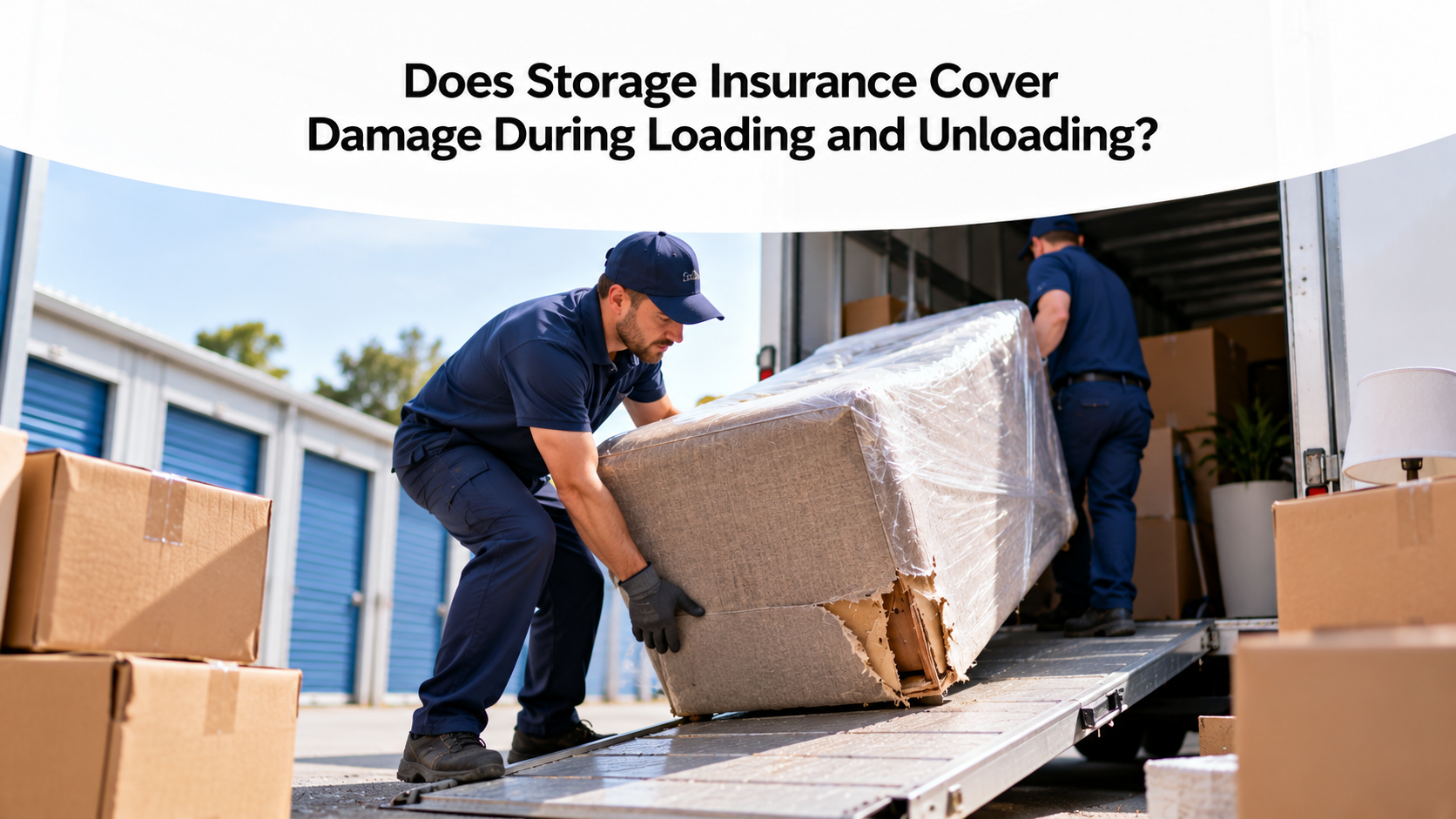
Loading and unloading are important stages to check because belongings are being handled and moved rather than remaining stationary inside a storage unit. Whether damage occurring during these activities is covered depends on the policy wording and the type of storage arrangement.
For portable storage containers, coverage can be designed around the entire storage journey, but that does not mean every type of handling damage is automatically covered. Damage caused by improper packing, shifting contents, overloading, or poor weight distribution may be excluded or treated differently from a sudden covered event.
If you are changing storage locations, review your policy before moving anything. The existing guidance on loading damage and storage-unit transfers explains why changes to the insured location and timing should be addressed before the move.
How Can You Reduce Handling Damage During a Move?
- Use appropriately sized boxes and protective materials for fragile belongings.
- Distribute weight carefully instead of concentrating heavy items in one area.
- Protect televisions, glass, mirrors, electronics, and other fragile property against movement and impact.
- Follow the storage provider's requirements for loading and securing the container or unit.
What Happens to Coverage When You Move Between Storage Units?
Moving between storage units can require an insurance update even when the move occurs within the same storage facility. A policy may identify a specific facility address, unit number, storage provider, effective date, or other location information. If those details change, the insurer should be notified before the property is transferred.
Moving to a different storage company can involve additional changes. The new provider may have different insurance requirements, and the insurer may need the new facility address, unit number, move-in date, and updated value of your belongings. Do not assume that continuing to make monthly payments means your new storage location is automatically listed on the policy.
Before transferring your belongings, confirm the last date of coverage at the old location, the effective date at the new location, and whether any transportation period between them is insured. If the new storage arrangement requires revised documentation, obtain it before moving the contents.
Should You Update Your Coverage Amount When Moving?
Yes, especially if the contents change during the move. You may add new furniture, remove belongings, combine property from different locations, or store additional items. Recalculate the replacement value of the contents and confirm that the selected coverage remains suitable for the property actually being stored.
Is a Portable Storage Container Covered During a Move?
Portable storage containers are specifically designed to move between locations while the customer's belongings remain inside. Because the container can be at your home, in transit, or at a storage facility, insurance needs to address more than one physical location.
Discount Storage Insurance's dedicated mobile storage product states that eligible contents can remain protected while the container is at your location, in transit, or at the storage facility, subject to the applicable policy terms. It also describes coverage for sudden and accidental events such as fire, theft, vandalism, water damage, lightning, smoke, falling objects, and certain other listed risks.
Before the container is collected, confirm that the policy applies to your pickup and destination locations and that the dates of the move fall within the active policy period. Review the product information for container insurance and check the policy documents for the conditions that apply to your particular move.
Is Transportation Coverage the Same as Coverage for Improper Packing?
No. Transportation coverage addresses whether an insured loss can be covered while the container or property is moving. It does not necessarily remove exclusions related to how belongings were packed or loaded. A policy can cover a sudden event during transit while still excluding damage caused by inadequate packing, shifting contents, overloading, or improper handling.
Does Homeowners Insurance Cover Items While Moving?
Your homeowners or renters insurance may provide some protection for personal property away from your home, but you should not assume it provides complete coverage throughout a move. Off-premises limits, deductibles, covered causes of loss, exclusions, and transportation provisions vary by policy.
This becomes especially important when belongings are placed in storage between residences. A policy may provide some protection while property is stored away from home but still have limitations on the amount covered or the circumstances under which a loss is reimbursed. The policy may also distinguish between property at a storage facility and property being transported.
Before relying on existing coverage, check how your policy treats belongings stored away from home and during a move. The discussion of homeowners insurance and storage units can help explain why off-premises protection may not always equal the coverage available at your residence.
What Questions Should You Ask Your Homeowners Insurer?
- Does my policy cover belongings while they are stored at a separate storage facility?
- What off-premises coverage limit applies to my stored belongings?
- Does coverage apply while the belongings are being transported between locations?
- What deductible applies to a storage or moving-related loss?
- Are valuable categories or particular causes of damage subject to special limits or exclusions?
What Damage During a Move May Not Be Covered?
Not every type of moving-related damage is necessarily an insured loss. Policies can contain exclusions for specific causes and circumstances, and these exclusions can be particularly important when belongings are being transported. Damage associated with poor packing, inadequate protection, shifting contents, gradual deterioration, mold, pests, or other excluded conditions may not receive the same treatment as a sudden event that the policy specifically covers.
A common mistake is to interpret the phrase “covered during transit” as meaning every form of transportation damage is insured. In practice, transportation protection remains subject to the policy's definitions, exclusions, conditions, coverage limits, and deductible.
When using a portable container, review the guidance on coverage gaps before the container leaves the original location. Pay particular attention to the pickup date, destination, transit period, and any conditions relating to packing and handling.
How Can You Keep Your Belongings Insured During a Move?
Start by identifying every stage of your move. Your belongings might be removed from a storage unit, loaded into a vehicle or container, transported to another location, temporarily stored, and finally unloaded. Each stage can create different insurance considerations.
For a portable container, confirm that the policy covers the container at the starting address and destination as well as during transportation. For a traditional storage-unit transfer, notify the insurer before changing facilities and coordinate the effective dates so that the old and new locations are handled correctly.
Also review the amount of coverage. Moving often causes the contents of a storage unit to change, so an old estimate may no longer reflect the value of the property. The dedicated guide on transit coverage explains why location, transportation, contents value, deductible, and policy conditions all need to be considered.
Create a Move-Specific Inventory
Prepare an updated inventory immediately before the move. Photograph important items, record serial numbers for electronics, and keep receipts or purchase records for higher-value belongings. Note any existing damage before transportation so that you can distinguish pre-existing condition from damage associated with the move.
What Should You Do Before Moving Stored Items?
Before moving anything, confirm the insurance arrangement and the storage provider's requirements. Make sure the policy information matches the actual storage location, check whether transportation is included, and verify the effective dates. If the destination is another storage facility, provide the new facility and unit information to the insurer before the transfer.
Next, inspect and document the belongings. Take clear photographs of furniture, electronics, appliances, tools, artwork, collectibles, and other property where condition may matter. Make a written inventory and save copies of relevant receipts, purchase records, and identifying details outside the storage unit.
Finally, obtain the documentation needed for the move. If the receiving storage facility requires proof of coverage, arrange that documentation before you arrive. The guide on proof of coverage explains why accurate facility information and effective dates matter when submitting insurance documents.
Moving Checklist for Stored Belongings
| Before the Move |
What to Check |
| Insurance location |
Confirm the current facility and destination information are correct. |
| Transit coverage |
Confirm whether belongings remain insured while being transported. |
| Inventory |
Update the list of belongings and estimate the current replacement value. |
| Condition records |
Photograph important belongings and existing damage before handling them. |
| Facility requirements |
Confirm proof-of-insurance and move-in requirements at the destination. |
| Effective dates |
Make sure protection is active for the relevant storage and transportation period. |
What If Your Belongings Are Damaged During the Move?
If belongings are damaged during a move, document the condition as soon as it is safe to do so. Photograph the affected items, the container or vehicle where relevant, the surrounding packaging, and any visible damage. Make a list of the affected property and preserve receipts or other records that can help establish ownership and value.
If a portable storage container is involved, notify the container provider as well as the insurance provider when appropriate. The two organizations may have different responsibilities for the physical container and its contents. Follow the applicable instructions before discarding damaged property or making substantial repairs.
For insurance purposes, the cause of the damage matters. Damage caused by a covered event may be handled differently from damage caused by poor packing, improper handling, gradual deterioration, or another excluded circumstance. The policy terms should guide the claim rather than assumptions about what happened during the move.
How Can You Avoid a Coverage Gap Between Locations?
A coverage gap can occur when the old storage location is removed from the policy before the new location is properly added, or when transportation falls outside the coverage arrangement. To reduce this risk, contact the insurer before the move and provide the new facility, address, unit number, and expected transfer date.
Ask specifically about the period between leaving the old unit and arriving at the new location. Do not rely on the fact that your policy remains active in a general sense. The insured location and the circumstances of the move can affect how coverage applies.
If you are transferring a policy to another traditional storage unit, request confirmation once the change has been completed. If you are moving to a portable container, confirm that you are using the appropriate form of coverage for a mobile storage arrangement.
What About Moving Between Homes Without a Storage Facility?
A move directly between homes is different from moving belongings between storage facilities. Homeowners or renters insurance may apply to personal property under the policy's terms, but transportation coverage should still be confirmed rather than assumed. If belongings are temporarily placed in a storage unit or portable container during the move, the storage arrangement introduces another location that may have separate insurance considerations.
For a move involving temporary storage, identify exactly where the belongings will be at each stage. Then confirm which policy applies at each location and whether the contents remain insured while they are being transported from one location to another.
Does the Type of Storage Insurance Matter During a Move?
Yes. A policy designed for a fixed self-storage unit and a policy designed for a portable storage container address different storage arrangements. A fixed unit generally remains in one facility, while a mobile container can move between your property, a storage center, and another destination.
This distinction matters because the location of the property can change during the move. A renter transferring belongings from a fixed unit into a mobile container should not assume that the old policy automatically follows the contents into the new arrangement. The insurance provider should confirm what policy applies to the new storage method.
How Can You Prepare Your Belongings for Insured Transportation?
Insurance does not replace careful packing. Use sturdy boxes, appropriate cushioning, protective covers, and suitable restraints for furniture and fragile property. Heavy items should be positioned so they do not crush lighter belongings, and fragile electronics or glass should be protected against movement.
Follow the instructions provided by the storage or container company regarding maximum weight, loading, prohibited items, door clearance, and placement. Even when transportation is covered, damage arising from improper loading or packing may be subject to policy exclusions or conditions.
Which Items Need Extra Protection During a Move?
Electronics, glass, mirrors, artwork, delicate furniture, appliances, and other fragile belongings are especially sensitive to impact and movement. Use appropriate protective materials and document the condition of these items before they are loaded. For particularly valuable or unusual property, review the policy for category-specific limits or eligibility conditions before transportation.
Conclusion: Does Storage Insurance Cover Items During a Move?
Storage insurance may cover belongings during a move, but the answer depends on the type of policy and where the property is located at each stage. Coverage inside a fixed storage unit does not automatically establish coverage during transportation. Portable storage container insurance can be specifically structured to address contents while the container is at your property, in transit, and at a storage facility, subject to the applicable policy terms.
Before moving stored belongings, confirm transportation coverage, update the insured location when necessary, verify the effective dates, review coverage limits and exclusions, and check whether the storage facility requires updated proof of insurance. Document the contents and their condition before the move, and keep your records outside the storage unit.
Taking these steps helps you understand where your protection applies before the belongings leave the storage unit. For storage renters reviewing insurance options for a move, Discount Storage Insurance provides dedicated storage insurance options for eligible stored property.
Frequently Asked Questions
Does Storage Insurance Cover Items While Moving?
It depends on the policy and the type of move. Coverage for a fixed storage unit does not automatically mean your belongings are covered during transportation. Check the policy specifically for transit protection.
Are Belongings Covered During Transportation?
Some storage insurance arrangements provide coverage during transportation, particularly for portable storage containers. The exact protection depends on the policy, covered causes of loss, exclusions, locations, and applicable conditions.
Does Storage Insurance Cover Loading and Unloading?
Loading and unloading coverage depends on the policy and storage arrangement. Even when transportation is covered, damage resulting from improper packing, loading, shifting, or handling may be restricted or excluded.
Is a Portable Storage Container Covered in Transit?
Dedicated mobile storage insurance can protect eligible contents while a portable container is in transit, subject to the policy terms. Confirm that the pickup location, destination, dates, and type of container are covered before transportation begins.
Does Homeowners Insurance Cover Items During a Move?
It may provide some protection for personal belongings, but the coverage depends on the specific homeowners or renters policy. Check off-premises limits, deductibles, covered causes of loss, exclusions, and transportation provisions before relying on existing insurance during a move.