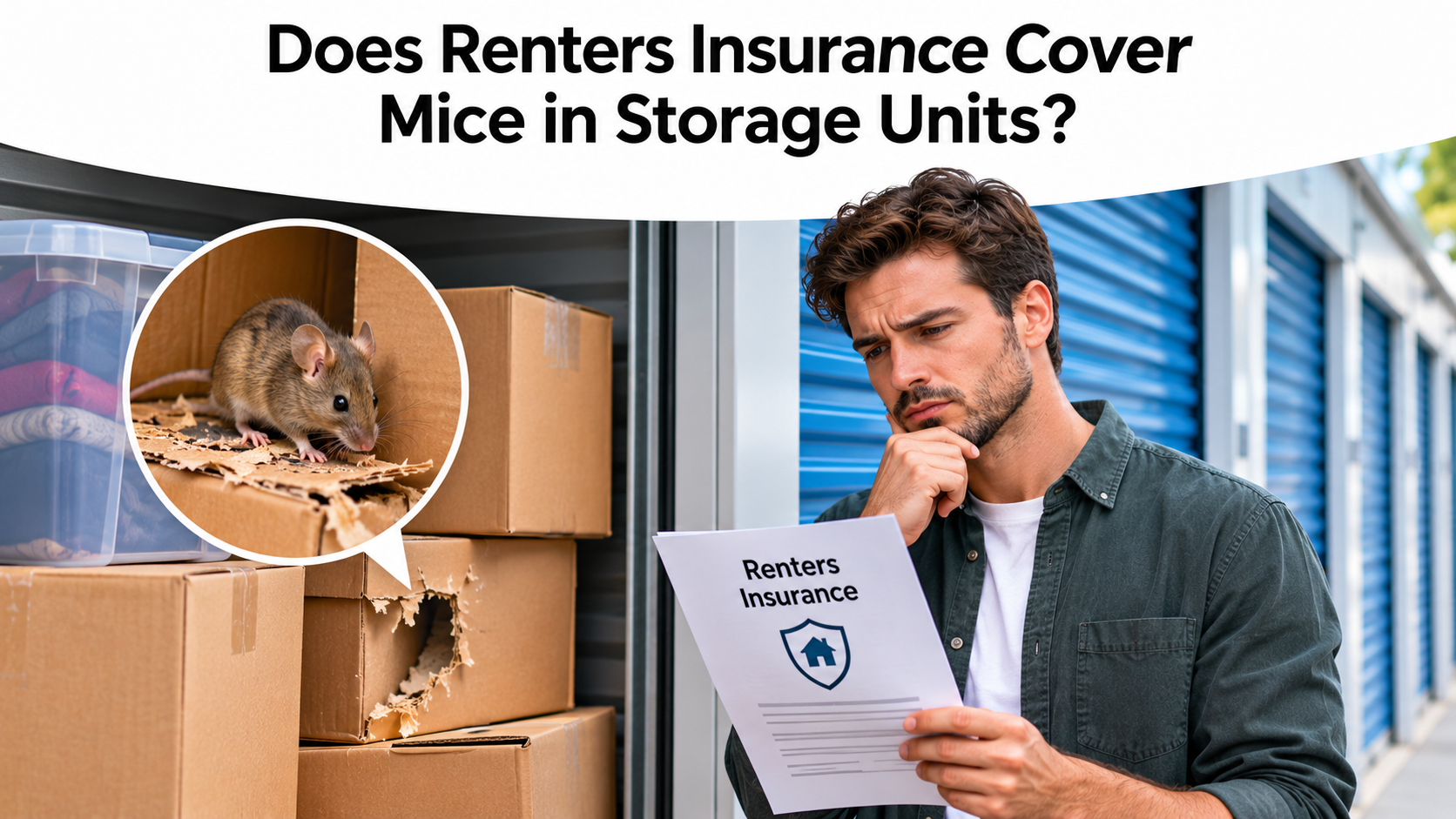
Finding mouse damage inside a storage unit can be frustrating, especially when you have renters insurance and expect your belongings to be protected. Mice can chew through cardboard boxes, clothing, furniture, electrical wiring, and other stored possessions. Their droppings, urine, and nesting materials can also contaminate items, making some belongings difficult or unsafe to use.
Unfortunately, renters insurance generally does not cover damage caused by mice or other rodents. Although your policy may extend personal property protection to belongings kept outside your home, pest-related damage is commonly excluded. Understanding the difference between off-premises coverage and rodent exclusions can help you avoid unexpected expenses and determine what options may be available after discovering an infestation.
Pro Tip
Before storing belongings, avoid leaving food, pet supplies, or other materials that could attract rodents inside your unit. Use sealed plastic containers instead of relying entirely on cardboard boxes, and inspect the storage space regularly for droppings, nesting materials, and signs of chewing.
Key Takeaways
- Renters insurance generally excludes damage caused by mice, rats, and other rodents.
- Off-premises personal property coverage does not automatically protect belongings against every type of damage in storage.
- Mouse damage may include chewed furniture, contaminated clothing, damaged wiring, and destroyed cardboard boxes.
- Separate storage insurance policies commonly have similar pest-related exclusions.
- A storage facility is not automatically responsible for rodent damage simply because an infestation occurs inside a rented unit.
- Proper packaging, regular inspections, and prompt pest reporting can help reduce the risk of property damage.
- Always review your policy exclusions before expecting reimbursement for damaged belongings.
Does Renters Insurance Cover Mice Damage in Storage Units?
In most cases, renters insurance does not cover damage directly caused by mice. Rodent activity is generally treated as an infestation or maintenance-related problem rather than a sudden and accidental insured event. Consequently, belongings damaged by chewing, nesting, droppings, or contamination may fall under a pest or vermin exclusion.
For example, imagine storing a sofa, several boxes of clothing, and household furniture in a rented storage unit. After several months, you discover that mice have chewed through the boxes, damaged the upholstery, and contaminated some belongings. Even if your renters insurance covers personal property away from your residence, the rodent exclusion may prevent reimbursement for this particular damage.
The exact outcome depends on your policy wording, including its definitions, exclusions, and any applicable exceptions. Read the provisions dealing with rodents, vermin, infestation, and property stored away from your residence before assuming a loss qualifies for coverage.
Does Renters Insurance Cover Belongings Kept in Storage Units?
Many renters insurance policies provide some off-premises personal property coverage. This means eligible belongings may remain protected against certain covered events even when they are stored outside your rented home. However, the protection is not necessarily identical to the coverage available at your residence.
Off-premises coverage may be subject to a separate percentage limit, deductible, location requirements, and exclusions. More importantly, it does not expand the list of insured events to include damage that the policy specifically excludes.
| Type of Loss |
Typical Insurance Treatment |
| Mouse and rat damage |
Generally excluded under pest or vermin exclusions. |
| Fire and smoke damage |
May be covered if the event and stored property qualify. |
| Qualifying theft |
May be covered subject to policy conditions and limits. |
| Vandalism |
May be covered depending on the circumstances and policy. |
| Gradual deterioration |
Generally excluded or restricted. |
| Certain accidental water damage |
Coverage depends on the source of water and policy exclusions. |
Understanding how renters insurance applies to belongings in storage units can help you identify coverage limitations before moving your possessions into a facility.
Why Do Insurance Companies Exclude Mouse Damage?
Insurance policies are generally designed to address specified unexpected losses, rather than every form of deterioration or maintenance-related problem. Rodent infestations often develop gradually, allowing mice to enter a storage unit, establish nesting areas, and repeatedly damage belongings over time.
Because pest activity can often be reduced through sanitation, suitable packaging, inspections, and facility maintenance, insurers commonly treat rodent damage differently from sudden events such as fire, lightning, or qualifying burglary.
A renters insurance policy may therefore cover eligible belongings against certain events inside a storage facility while excluding damage caused by mice. The distinction is important because having personal property coverage does not mean every cause of loss is insured.
What Types of Damage Can Mice Cause in Storage Units?
Mice can damage several types of stored belongings because they chew materials, build nests, and leave droppings and urine in areas where they settle. The resulting damage may affect both the appearance and usability of your possessions.
| Stored Belongings |
Possible Mouse Damage |
| Furniture |
Chewed upholstery, wooden surfaces, foam, and cushioning. |
| Clothing and fabrics |
Torn fabric, nesting material, urine, and droppings. |
| Cardboard boxes |
Chewed packaging, nesting holes, and contamination of contents. |
| Electronics and wiring |
Damaged electrical insulation, cables, and components. |
| Books and documents |
Chewed paper, nesting damage, and contamination. |
Mouse damage can occur alongside other pest problems. For a broader explanation of how different infestations affect stored property, read whether storage unit insurance covers pest and insect damage.
Does Storage Unit Insurance Cover Damage Caused by Mice?
Purchasing a separate storage insurance policy does not automatically provide protection against rodent damage. Many standard storage insurance policies also exclude losses caused by mice, rats, insects, and other pests.
This means that switching from renters insurance to storage insurance may not resolve the specific problem if your main concern is a mouse infestation. You need to review the actual exclusions rather than assuming that a separate policy covers risks excluded under your renters insurance.
For example, a storage insurance policy may protect eligible furniture against a covered fire or burglary while excluding damage caused by rodents. Understanding the differences between storage insurance and renters insurance can help you decide which protection is appropriate for your stored belongings.
Can a Storage Facility Be Responsible for Mouse Damage?
A storage facility may have responsibilities relating to building maintenance, sanitation, pest management, and the conditions described in its rental agreement. However, discovering mice inside your unit does not automatically make the facility financially responsible for your damaged belongings.
Responsibility can depend on how the infestation started, whether the facility knew about the problem, whether it responded appropriately to complaints, the condition of the building, and the applicable rental agreement and state law.
For instance, evidence of repeated pest complaints, unsealed building openings, or unresolved maintenance issues may be relevant when assessing a potential dispute. Keep written communications, inspection records, photographs, and any incident reports. Insurance coverage and the facility's potential liability are separate questions and should be evaluated independently.
What Should You Do If You Find Mice in Your Storage Unit?
If you discover droppings, nesting material, or chewed belongings, take the following steps to document the issue and limit further damage.
1. Photograph the Damage
Take clear photographs of affected furniture, packaging, clothing, and other belongings. Record visible droppings, nesting areas, entry points, and any other signs of rodent activity. Avoid disturbing contaminated materials unnecessarily.
2. Notify the Storage Facility
Inform facility management as soon as possible. Request an inspection, report the suspected infestation, and ask what pest-control measures will be taken. Keep a record of the date and details of your communication.
3. Review Your Insurance Policy
Check your renters or storage insurance documents for terms such as rodents, vermin, infestation, and pest damage. Contact the insurer to clarify whether any part of the incident may qualify under your policy.
4. Document Affected Belongings
Prepare a list of damaged items with descriptions, approximate ages, purchase information, and estimated values. Keep receipts, photographs, and other available ownership records. Do not discard items before documenting them and checking the facility's or insurer's instructions.
Even when the specific damage appears excluded, proper documentation can be useful when discussing the incident with the storage facility or assessing whether another covered event was involved. Learn more about how storage insurance claims are investigated and processed.
How Can You Prevent Mice from Damaging Stored Belongings?
Preventive storage practices can reduce the likelihood of attracting rodents and limit the damage they can cause. Consider these precautions before moving your possessions into a storage unit:
- Use airtight, durable plastic containers for clothing, documents, and other vulnerable belongings.
- Never store food, pet food, birdseed, or perishable products in the unit.
- Inspect furniture, mattresses, and appliances for signs of pests before storing them.
- Avoid placing belongings directly against walls where inspections become difficult.
- Keep the unit clean, dry, and free from loose packaging or unnecessary clutter.
- Check doors, seals, and visible gaps that could allow rodents to enter.
- Ask the facility about its pest-control procedures and inspection schedule.
- Visit the unit periodically to check for droppings, nesting material, and unusual odors.
Climate-controlled storage may help manage temperature and humidity, but it does not guarantee a pest-free environment. Rodents can enter buildings regardless of whether the units have temperature controls.
Understand Your Storage Insurance Before a Loss Occurs
Renters insurance can provide valuable protection for eligible personal belongings kept outside your home, but it should not be treated as comprehensive protection against every storage-related risk. Mouse and rodent damage is commonly excluded, and a separate storage insurance policy may have similar restrictions. Review the covered causes of loss, exclusions, off-premises limits, and deductibles before relying on any policy.
Explore the available self-storage insurance coverage options from Discount Storage Insurance to understand how eligible stored belongings may be protected against covered events such as fire, burglary, and other specified losses. Review the applicable policy exclusions carefully so you know which risks require separate preventive measures.
Visit Discount Storage Insurance to explore storage contents protection and make a more informed decision about safeguarding your belongings.
Frequently Asked Questions
Will Renters Insurance Pay for Furniture Damaged by Mice in Storage?
Generally, no. Mouse damage to furniture is commonly excluded under pest or vermin provisions, even when your renters policy provides off-premises personal property coverage. Check your specific policy for applicable exclusions and exceptions.
Does Renters Insurance Cover Mouse Droppings and Urine Damage?
Damage or contamination caused by mouse droppings and urine is generally treated as rodent-related loss and may be excluded. Reimbursement depends on the policy wording and circumstances.
Does Storage Insurance Cover Rats and Mice?
Most standard storage insurance policies exclude damage caused by rats, mice, and other rodents. Review the pest and vermin exclusions before purchasing coverage.
Can a Storage Facility Be Held Responsible for Mouse Damage?
Potentially, depending on the circumstances, rental agreement, applicable law, and evidence of the facility's responsibility. An infestation alone does not automatically establish liability. Document the damage and report the problem to management promptly.
Does Climate-Controlled Storage Prevent Mice?
No. Climate-controlled storage regulates environmental conditions but does not guarantee protection against rodents. Mice can enter through structural openings or be introduced through stored belongings.
What Is the Best Way to Protect Belongings from Mice in Storage?
Use sealed plastic containers, avoid storing food, inspect belongings before packing, and choose a facility with appropriate pest-control procedures. Regular inspections can also help identify rodent activity before extensive damage occurs.
Should I File an Insurance Claim for Mouse Damage?
Review your policy and contact the insurer to confirm whether the damage is eligible for coverage. Even if rodent damage is excluded, documenting the incident and notifying the storage facility are important steps.
.jpg)