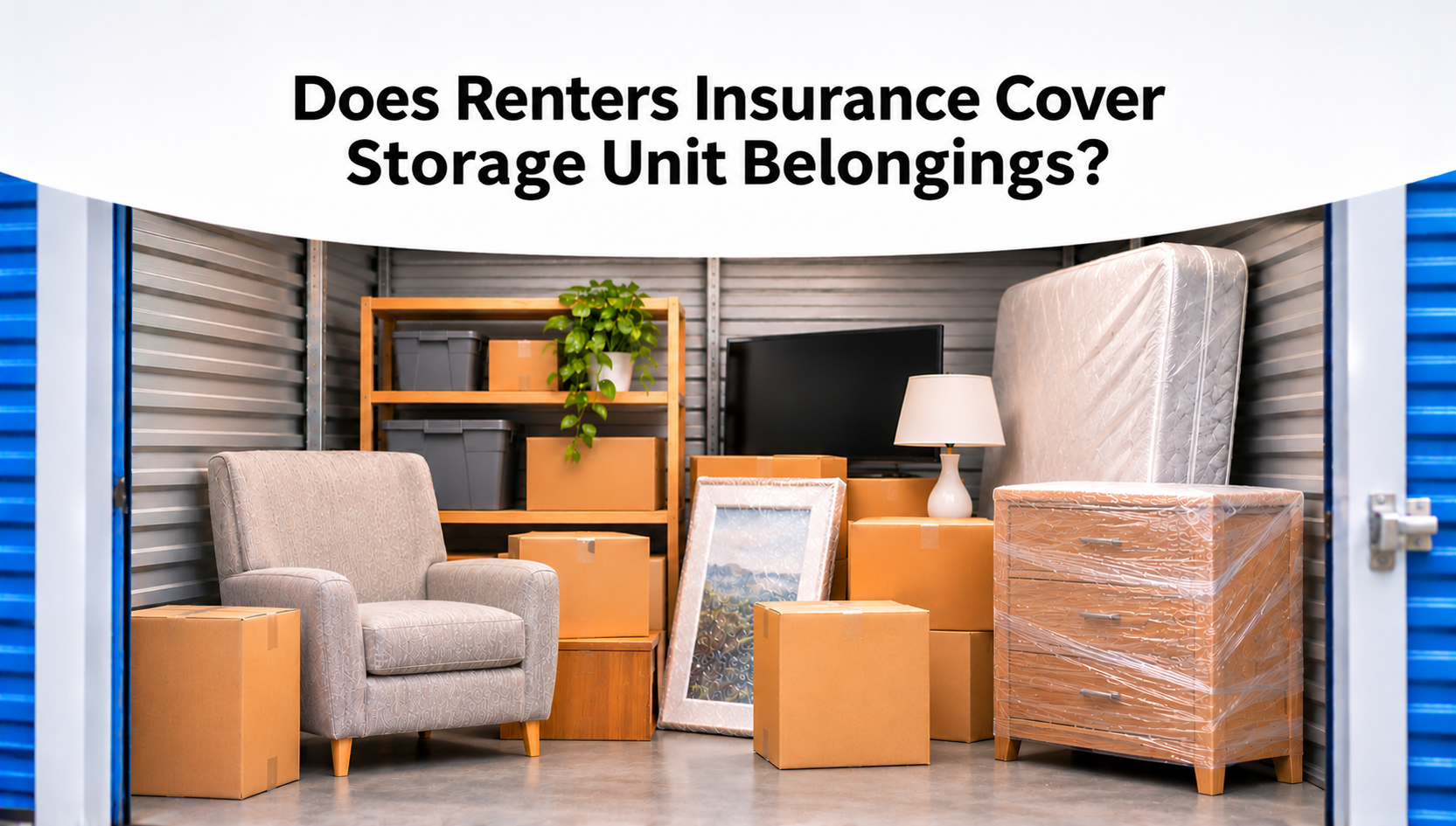
Renters insurance is designed to protect personal belongings inside a rented home or apartment, but what happens when those possessions are moved into a self-storage unit? Whether you are relocating, decluttering your apartment, travelling for an extended period, or keeping seasonal belongings outside your home, understanding how your existing insurance applies to stored property is important. Many renters assume their entire personal property coverage automatically follows their belongings into storage, but this is not always the case.
Some renters insurance policies include off-premises personal property protection, which may cover eligible belongings kept inside a storage facility. However, separate coverage limits, deductibles, covered causes of loss, and exclusions can affect the amount you receive after an incident. This guide explains how renters insurance works for storage unit belongings, which items may qualify, when additional protection is worth considering, and how to avoid potential coverage gaps.
Key Takeaways
- Renters insurance may cover eligible personal belongings stored outside your rented residence through off-premises personal property protection.
- The full personal property coverage limit may not apply to belongings kept inside a self-storage unit.
- Furniture, clothing, household appliances, and electronics may qualify for coverage against specified insured events, subject to policy conditions.
- Flooding, mold, pest infestations, gradual deterioration, and other excluded causes of damage can leave stored belongings unprotected.
- Deductibles and special limits for valuable belongings can reduce the amount available after an insurance claim.
- Storage facilities may require proof of insurance before allowing customers to move their belongings into a unit.
- Dedicated storage unit insurance provides a separate option for eligible belongings kept inside self-storage facilities without requiring an existing renters or homeowners insurance policy.
- Reviewing both policies and calculating the value of stored belongings can help identify insufficient coverage before a loss occurs.
Pro Tip
Before relying on renters insurance for your storage unit, ask your insurer for the exact off-premises coverage limit rather than checking only your total personal property limit. Compare that amount with the current value of everything you intend to store. Also confirm whether the policy covers burglary at a self-storage facility, which documentation is required, and whether special limits apply to electronics, jewellery, collectibles, or other valuable belongings. Keep written confirmation of the relevant policy conditions for future reference.
Does Renters Insurance Cover Storage Unit Belongings?
Yes, renters insurance may cover personal belongings kept inside a self-storage unit, but the protection depends on the specific policy. Many renters insurance providers include off-premises personal property coverage, which extends certain protections to belongings located away from the insured rental property.
For example, if you move furniture, clothing, kitchen appliances, or electronic equipment into a storage facility, these items may remain eligible for coverage against specified events such as fire, smoke damage, or qualifying theft. However, the insurer may apply a separate limit to belongings stored outside your apartment or house.
The location of your belongings is only one consideration. The cause of damage, type of property, security arrangements, policy exclusions, and applicable deductible can all influence whether a claim is accepted. Therefore, having renters insurance does not automatically mean every item inside a storage unit is fully protected.
To understand the differences between these two insurance options, read our guide on storage insurance versus renters insurance, including how their coverage purposes, limits, and policy conditions compare.
What Is Off-Premises Personal Property Coverage?
Off-premises personal property coverage is a provision that may protect eligible belongings when they are located somewhere other than the insured residence. It is particularly relevant to renters who temporarily move their possessions into a storage facility, take valuables while travelling, or keep household items at another location.
Unlike coverage for belongings inside your rented property, off-premises protection may have a separate maximum reimbursement amount. The applicable percentage or limit is determined by your individual insurance contract, not a universal industry rule.
How Does Off-Premises Coverage Work?
Suppose your renters insurance provides $40,000 in personal property coverage. Your policy also specifies that belongings stored away from your residence are subject to a separate limit of 10% of that amount. In this hypothetical example, the maximum off-premises coverage would be $4,000, subject to the remaining policy conditions.
If the total value of your stored belongings is $9,000, the available off-premises limit could leave a substantial portion of your possessions without sufficient financial protection. The insurer would still assess the actual circumstances, covered cause of loss, deductible, and applicable property restrictions before determining a claim payment.
This is why you should never calculate storage protection using the total personal property amount alone. Check the specific off-premises provision and ask your insurer how it applies to belongings kept in a commercial self-storage facility.
Does Off-Premises Coverage Apply to Long-Term Storage?
Some renters insurance policies may protect eligible property kept away from the residence for an extended period, while others can impose restrictions based on the storage duration or circumstances. Temporary storage during a move may be treated differently from keeping possessions in a commercial storage unit for several months or years.
Ask your insurer whether long-term storage is permitted under your existing policy. Confirm whether the storage facility must meet particular security requirements and whether your coverage remains active if you change your residential address or move to another apartment.
Which Belongings May Be Covered by Renters Insurance in Storage?
Renters insurance generally focuses on personal possessions rather than the storage unit itself. Depending on the policy, different household belongings may qualify for protection when kept inside a storage facility. However, coverage is determined by the property's classification, the insured event, and any restrictions included in the insurance contract.
| Belonging Type |
Potential Coverage Considerations |
| Furniture |
Sofas, beds, tables, chairs, and other household furniture may qualify against covered events, subject to off-premises limits. |
| Electronics |
Televisions, computers, gaming equipment, and other electronic devices may qualify, although special limits or exclusions can apply. |
| Clothing and footwear |
Everyday clothing, shoes, and seasonal wardrobes may qualify as personal property under the policy. |
| Kitchen appliances |
Microwaves, coffee machines, mixers, and other household appliances may be eligible when the loss involves a covered event. |
| Books and household decorations |
Books, lamps, decorative accessories, and ordinary household possessions may qualify under applicable personal property provisions. |
| Jewellery and collectibles |
Valuable items may have individual category limits, special security requirements, or additional eligibility restrictions. |
The table provides general examples rather than a guarantee of coverage. Your policy wording determines which belongings qualify and how much protection is available. For a more detailed explanation, explore what insurance for belongings in a storage unit covers and excludes.
What Does Renters Insurance Usually Not Cover in Storage Units?
Having off-premises coverage does not mean all types of damage or loss are insured. Renters insurance typically protects against specified causes of loss rather than every possible incident that can affect belongings. Certain environmental conditions, maintenance problems, and property categories may be excluded or subject to special restrictions.
Flooding and Groundwater Damage
Flooding can cause extensive damage to furniture, electronic equipment, clothing, documents, and other stored possessions. However, standard renters insurance generally does not provide coverage for every type of flood-related loss. Water entering a facility through rising groundwater or widespread flooding may be treated differently from a sudden accidental water discharge covered by the policy.
Check whether flood coverage is excluded or requires separate insurance. Do not assume that a policy covering certain forms of water damage automatically includes flood protection.
Mold and Mildew
Mold and mildew can develop when belongings remain exposed to excessive moisture, poor ventilation, or unsuitable storage conditions. Fabric furniture, clothing, mattresses, cardboard boxes, and wooden possessions can be particularly vulnerable to prolonged dampness.
Insurance policies commonly restrict coverage for gradual moisture-related deterioration and mold. The treatment of mold caused by a sudden covered event may differ, so check the relevant policy provisions rather than assuming all mold-related claims are handled in the same way.
Rodent and Insect Damage
Mice, rats, insects, and other pests can damage stored belongings by chewing materials, contaminating fabrics, or nesting inside boxes and furniture. Such damage is commonly excluded under renters insurance and dedicated storage policies because it is generally treated as an infestation or maintenance-related problem.
Before moving possessions into storage, inspect the facility for signs of pest activity and avoid placing food, unsealed packaging, or other materials that could attract insects or rodents. Read our explanation of renters insurance and rat damage in storage units for more information about this commonly misunderstood exclusion.
Gradual Deterioration and Improper Packing
Belongings can deteriorate over time because of unsuitable environmental conditions, poor maintenance, inadequate packaging, or ordinary wear and tear. For example, furniture may develop surface damage, clothing may become discoloured, and electronic equipment may deteriorate after prolonged exposure to moisture.
Insurance is not a substitute for appropriate packing, environmental management, or routine maintenance. Prepare belongings correctly and review the policy exclusions before assuming that gradual deterioration will qualify for reimbursement.
High-Value and Special-Category Belongings
Jewellery, watches, antiques, artwork, collectibles, and other valuable possessions may have individual coverage restrictions. Even when these belongings are eligible, their reimbursement may be limited to a specific amount rather than the full value of the item.
Review the exclusions and special conditions before storing expensive belongings. Our guide to common storage unit insurance exclusions explains why certain items and causes of damage may not qualify for protection.
Renters Insurance vs Dedicated Storage Unit Insurance
Renters insurance and dedicated storage unit insurance serve different purposes. Renters insurance is primarily designed to protect personal belongings and address other risks associated with a rented residence. Dedicated storage insurance focuses on eligible possessions kept inside a self-storage facility.
The appropriate option depends on the value of your stored belongings, the available off-premises limit, the storage facility's requirements, and the specific protection provided by each policy.
| Comparison |
Renters Insurance |
Storage Unit Insurance |
| Primary purpose |
Protects eligible personal property associated with a rented residence and may include other protections. |
Designed specifically around eligible belongings kept inside a self-storage unit. |
| Off-premises protection |
May include off-premises protection with separate limits and conditions. |
Focuses on qualifying property kept in the insured storage location. |
| Coverage limits |
Stored belongings may be subject to a percentage-based or separate off-premises limit. |
Coverage limits can be selected according to available plans and eligible stored property values. |
| Deductibles |
Uses the deductible specified in the renters insurance contract. |
Uses the deductible specified in the selected storage insurance plan. |
| Liability protection |
May include personal liability protection and other residential insurance benefits. |
Primarily focuses on eligible stored contents rather than residential liability protection. |
| Existing home insurance required |
The policy is specifically associated with an insured rental residence. |
A standalone storage insurance option can be purchased without existing renters or homeowners insurance under the Discount Storage Insurance program. |
Neither option should be selected based on its name alone. Compare the actual policy wording, covered events, exclusions, limits, and deductibles. The right choice is the one that provides suitable protection for your stored belongings while meeting the storage facility's insurance requirements.
When Should You Consider Separate Storage Unit Insurance?
Separate storage insurance may be worth considering when your renters insurance does not provide sufficient protection for the belongings you intend to store. It can also be useful when you do not have an existing renters or homeowners policy or when your storage facility requires specific proof of coverage.
Your Off-Premises Coverage Limit Is Too Low
If the value of your stored belongings exceeds the off-premises limit in your renters insurance, you could face a significant financial gap after a covered incident. This is particularly relevant when storing the contents of an entire apartment, multiple rooms of furniture, or expensive electronic equipment.
Compare your existing limit with the actual replacement value of your stored possessions. If the difference is substantial, consider whether a separate storage policy can provide a more appropriate coverage amount.
You Are Storing Belongings for an Extended Period
Long-term storage can create additional insurance considerations, especially when you are keeping valuable possessions outside your residence for several months. Your renters insurance may have conditions relating to the duration or location of stored property.
A dedicated policy can offer a separate arrangement for qualifying storage contents. Review the effective dates, monthly payment requirements, renewal conditions, and the location covered by the policy before enrolling.
Your Storage Facility Requires Proof of Insurance
Many self-storage facilities require customers to demonstrate that their belongings have acceptable insurance protection. Some facilities allow customers to use an existing renters or homeowners policy, while others provide their own protection arrangements or require specific documentation.
Before signing a storage rental agreement, confirm the minimum coverage amount, accepted insurance providers, and documentation requirements. Our guide explains whether storage unit insurance is required and what renters should check before moving their possessions into a facility.
You Want Insurance Specifically Designed for Stored Belongings
Renters insurance is primarily connected to your rented residence, whereas a dedicated storage policy is structured around qualifying property kept inside a storage unit. This distinction can make separate coverage easier to evaluate when your main requirement is protecting possessions outside your home.
Discount Storage Insurance offers standalone coverage options for eligible belongings kept in self-storage units. You do not need an existing renters, homeowners, or commercial insurance policy to use the program. Review the policy conditions and available coverage limits to determine whether the option suits your storage requirements.
How to Calculate the Insurance Coverage Needed for Stored Belongings
Choosing an appropriate insurance limit starts with understanding the total value of the possessions inside your storage unit. Many renters estimate their belongings based on what they originally paid, but the amount needed for insurance purposes may depend on the policy's valuation method and the current value of eligible items.
Create an Itemised Inventory
Start by listing the major possessions you plan to store. Include furniture, electronic devices, appliances, clothing, household equipment, and other valuable items. Record the quantity, approximate value, purchase information, and identifying details where available.
Take photographs of valuable possessions and retain receipts, invoices, and serial numbers. This information can help establish what was inside the storage unit and provide supporting evidence if a claim becomes necessary.
Compare the Total Value With Your Available Limit
Once your inventory is complete, calculate the combined value of the belongings you intend to store. Compare this figure with the off-premises limit in your renters insurance and account for any individual property restrictions.
For example, if your belongings are valued at $12,000 but your available off-premises limit is $5,000, your existing policy may not provide sufficient protection for the entire collection. You should also consider the deductible and the insurer's method of valuing damaged or lost possessions.
For additional guidance, use our article on how much storage unit insurance you need to understand how to select a coverage amount based on your stored property.
Understand the Deductible and Valuation Method
The coverage limit is not necessarily the amount you will receive after every claim. A deductible is the amount you are responsible for before insurance contributes towards an eligible loss. The policy may also use actual cash value, replacement cost, or another specified valuation method when calculating reimbursement.
Consider these provisions together rather than focusing exclusively on the maximum coverage amount. A policy with a higher limit may still provide less suitable protection if its deductible, exclusions, or valuation conditions do not match your requirements.
What to Check Before Relying on Renters Insurance for Storage
Before moving belongings into a storage unit, review the relevant sections of your renters insurance contract. Do not rely solely on a general statement from an insurance representative that your personal property is covered away from home. Ask specific questions about storage facilities, covered events, and the circumstances under which a claim may be accepted.
- What is the exact off-premises personal property coverage limit?
- Does the policy specifically include belongings kept inside commercial self-storage facilities?
- Which causes of loss are covered when possessions are stored outside the rented residence?
- Are burglary, fire, smoke damage, and vandalism included under the applicable provisions?
- Are there restrictions based on how long the belongings remain in storage?
- Does the policy impose additional limits on electronics, jewellery, antiques, or collectibles?
- Are flooding, mold, pests, and gradual deterioration excluded?
- What deductible applies to a claim involving stored possessions?
- What photographs, receipts, inventory records, or other evidence will be required?
- Will the policy provide proof of insurance acceptable to the storage facility?
These questions help identify whether your existing insurance is suitable for the storage arrangement. If you are comparing providers or evaluating separate coverage, our guide on choosing the right storage unit insurance for your belongings explains the important factors to consider before purchasing a policy.
How to Protect Your Belongings Before Moving Them Into Storage
Insurance is only one part of protecting stored possessions. Proper preparation, packing, transportation, and facility selection can help reduce the possibility of damage before an insurance claim becomes necessary.
Photograph Your Belongings Before Storage
Take clear photographs of valuable possessions before packing them. Capture identifying marks, serial numbers, existing damage, and the general condition of furniture and electronic equipment. Keep purchase receipts and other ownership documents where available.
Create a digital inventory and store copies outside the storage facility. This makes it easier to access the information if your belongings are damaged or stolen.
Use Suitable Packing Materials
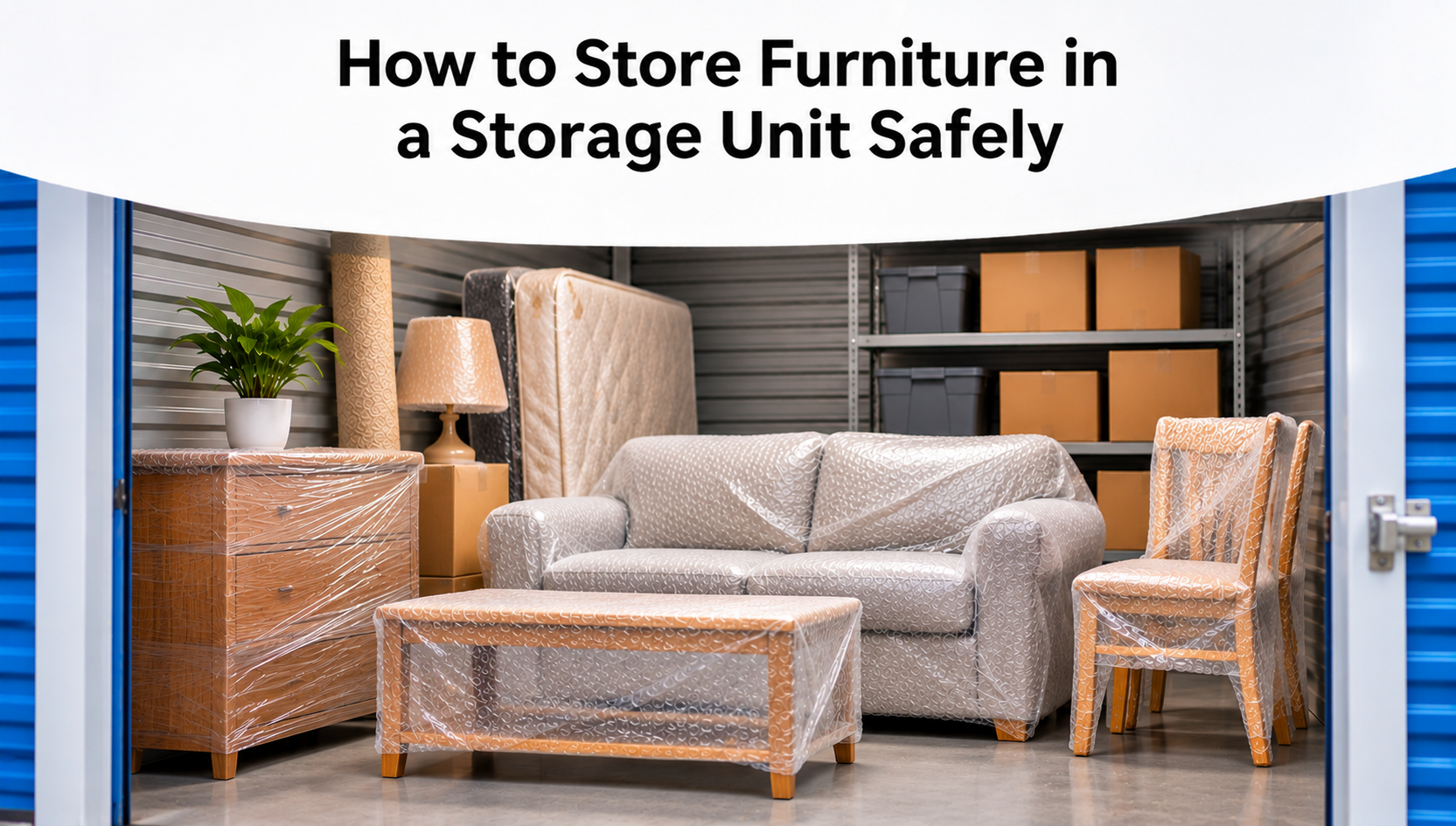
Choose sturdy boxes, appropriate padding, protective covers, and suitable containers for different belongings. Wrap fragile items individually and avoid placing heavy objects on top of delicate possessions. Electronics should be packed securely, with their accessories and components organised separately where appropriate.
Do not use damp boxes or store belongings while they are wet. Avoid packing materials that can trap moisture around sensitive items during extended storage.
Choose a Secure and Well-Maintained Facility
Inspect the storage facility before committing to a rental agreement. Look for controlled access, suitable lighting, maintained doors and locks, security cameras, clean common areas, and visible maintenance standards. Ask how the facility handles water leaks, pest activity, and unauthorised access.
A secure facility can reduce certain risks, but it does not replace insurance. Security systems cannot guarantee that a covered incident will never occur, and the storage operator's rental agreement does not automatically insure the value of your personal possessions.
Maintain Your Insurance Throughout the Storage Period
Check that your insurance remains active for the entire period your belongings are stored. If you move to another residence, change storage facilities, increase the value of your possessions, or transfer items to a different unit, contact the insurer to confirm whether your policy details need updating.
If you are moving belongings between locations, remember that coverage inside a storage unit does not automatically mean the same protection applies during loading, unloading, or transportation. Review the applicable provisions before arranging the move.
Can You Purchase Storage Insurance Without Renters Insurance?
Yes. You do not necessarily need an existing renters or homeowners insurance policy to purchase dedicated storage unit insurance. Standalone storage insurance programs are available specifically for eligible personal and business belongings kept inside self-storage facilities.
This can be useful for people who are between homes, students storing possessions during a break, individuals relocating to another state, or customers who simply do not maintain a separate residential insurance policy.
Discount Storage Insurance provides a standalone storage insurance program with flexible coverage options for qualifying belongings. The program does not require customers to have an existing home, renters, or commercial insurance policy. Coverage options, deductibles, eligibility conditions, and exclusions should be reviewed before enrollment.
You can explore our self-storage insurance coverage options to learn more about protecting eligible belongings kept inside a storage unit.
What Happens if Your Stored Belongings Are Damaged or Stolen?
If you discover that belongings inside your storage unit have been damaged or are missing, contact the relevant insurance provider as soon as possible. The claims process will depend on the policy, the circumstances of the incident, and the type of loss involved.
For a suspected burglary, notify the storage facility and local law enforcement where appropriate. Obtain an incident or police report if required, and preserve photographs and other evidence of the affected belongings.
- Document the damage or missing possessions with clear photographs and videos.
- Record when the incident occurred or when you first discovered the problem.
- Notify the storage facility and request a copy of its incident report where applicable.
- Contact your insurer and follow the required claim notification procedure.
- Provide receipts, photographs, inventory records, and other evidence of ownership and value.
- Keep damaged belongings and avoid repairs or disposal until the insurer provides instructions if an inspection may be required.
Remember that a claim is not automatically approved simply because the belongings were insured. The insurer will assess the cause of loss, applicable coverage, exclusions, evidence, and other policy conditions. Read your contract carefully and provide the requested documentation within the required timeframes.
Renters Insurance and Storage Unit Belongings Checklist
Before moving your belongings into a self-storage facility, use this checklist to review your existing insurance and identify any additional protection you may need.
- Read the off-premises personal property section of your renters insurance policy.
- Confirm the exact amount of coverage available for belongings in storage.
- Check whether long-term storage is permitted under your policy.
- Review covered events, deductibles, exclusions, and special item restrictions.
- Calculate the combined value of your stored belongings.
- Create an inventory and photograph valuable possessions before packing.
- Check the storage facility's security, maintenance, and insurance requirements.
- Compare your existing protection with available standalone storage insurance options.
- Obtain acceptable proof of insurance before your storage move-in date.
- Keep your insurance documents and ownership records outside the storage unit.
Conclusion: Do Not Assume Renters Insurance Fully Covers Storage Unit Belongings
Renters insurance may extend protection to belongings kept inside a self-storage unit through off-premises personal property coverage. However, the amount available and the types of incidents covered depend on the individual insurance contract. Separate coverage limits, deductibles, high-value item restrictions, and exclusions can create gaps that renters may overlook when moving their possessions away from home.
Before relying on an existing policy, calculate the value of your stored belongings and confirm the exact protection available for property kept in a storage facility. If your current renters insurance does not provide sufficient coverage, a standalone storage insurance policy may offer a more suitable alternative for eligible possessions.
Discount Storage Insurance offers dedicated insurance options for eligible belongings stored in self-storage units, without requiring an existing renters or homeowners policy. Review the available coverage, deductibles, and policy conditions to find an option that matches the value and type of property you intend to store.
Frequently Asked Questions
Does Renters Insurance Cover Belongings in a Storage Unit?
Renters insurance may cover eligible personal belongings kept inside a storage unit through off-premises personal property protection. However, the available amount may be lower than your main personal property limit, and the policy's covered events, exclusions, and storage-related conditions will determine whether a claim qualifies.
Is My Full Renters Insurance Coverage Available for Storage Units?
Not necessarily. Some renters insurance policies impose a separate limit on personal property stored away from the insured residence. This limit may be calculated as a percentage of the total personal property coverage or specified as a separate amount. Check your policy for the exact figure.
Does Renters Insurance Cover Theft From a Storage Unit?
A burglary or theft involving belongings in a storage unit may qualify if the relevant incident is covered under your renters insurance policy. However, off-premises limits, security conditions, deductibles, exclusions, and documentation requirements can affect the claim. Contact your insurer to confirm the circumstances covered.
Does Renters Insurance Cover Fire Damage in Storage Units?
Fire damage may be covered when the policy includes fire as an insured cause of loss and the stored belongings qualify for off-premises protection. The applicable coverage limit, deductible, and other policy conditions will determine the amount available after a covered incident.
Does Renters Insurance Cover Flood Damage in a Storage Unit?
Standard renters insurance generally does not cover every type of flood damage. Water entering a storage facility through rising groundwater or widespread flooding may be excluded. Certain sudden and accidental water losses may receive different treatment, depending on the policy wording and the source of the damage.
Does Renters Insurance Cover Mold in Storage Units?
Mold caused by gradual moisture exposure, poor ventilation, or unsuitable storage conditions is commonly excluded or restricted. Some policies may treat mold resulting from a sudden covered event differently. Review the specific mold and water damage provisions before storing moisture-sensitive belongings.
Can I Use Renters Insurance to Meet a Storage Facility's Insurance Requirement?
Some storage facilities accept an existing renters insurance policy if it meets their coverage and documentation requirements. Others may require specific evidence or a different protection arrangement. Confirm the facility's rules and provide proof that your policy meets its requirements before moving in.
Do I Need Separate Storage Insurance if I Already Have Renters Insurance?
Not in every situation. If your renters insurance provides sufficient off-premises protection and meets the storage facility's requirements, additional coverage may not be necessary. However, separate storage insurance may be worth considering when your existing policy has insufficient limits, restrictive conditions, or exclusions that affect your stored belongings.
Can I Purchase Storage Unit Insurance Without Renters Insurance?
Yes. Standalone storage unit insurance is available without an existing renters or homeowners insurance policy. Discount Storage Insurance offers a dedicated program for eligible belongings kept in self-storage facilities, with coverage options subject to the applicable policy terms and conditions.
What Documents Do I Need to Make a Storage Insurance Claim?
Depending on the incident and policy requirements, you may need photographs, purchase receipts, an inventory, serial numbers, ownership records, a storage rental agreement, and a police or facility incident report. Keep copies of important documents outside the storage unit so they remain accessible when required.