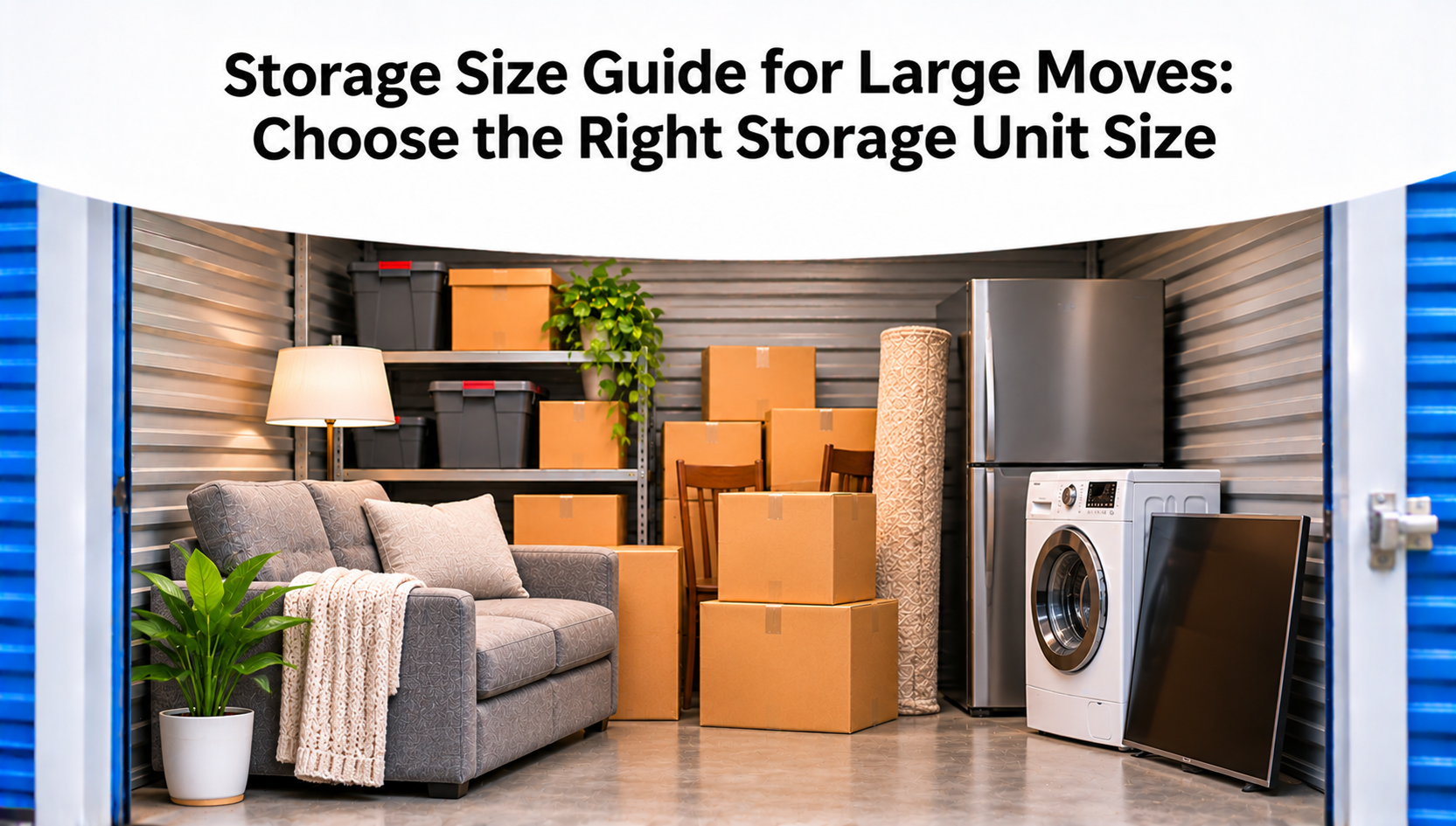
Moving an entire household involves more than transporting furniture from one property to another. Beds, wardrobes, sofas, dining tables, kitchen appliances, clothing, and dozens of moving boxes can quickly occupy a substantial amount of space. If your new home is not ready, you are downsizing, or you need somewhere to keep belongings during renovations, a self-storage unit can provide a practical temporary solution. However, choosing the wrong unit size can create unnecessary expenses and make the moving process more difficult.
Selecting the right storage unit requires an accurate estimate of the belongings you intend to store. A unit that is too small may leave you struggling to fit large furniture and boxes, while an oversized unit can mean paying for space you do not need. This guide explains common storage unit dimensions, how much furniture different sizes may accommodate, how to calculate your storage requirements, and how to organise belongings during a large move.
Key Takeaways
- The right storage unit size depends on the total volume of your belongings, not just the number of bedrooms in your current property.
- Common storage sizes include 5 x 5 ft, 5 x 10 ft, 10 x 10 ft, 10 x 15 ft, 10 x 20 ft, and 10 x 30 ft units.
- A one-bedroom apartment may require less space than a fully furnished two-bedroom property, depending on furniture and belongings.
- Measuring large furniture, appliances, and moving boxes before booking helps prevent inaccurate storage estimates.
- Dismantling furniture, using stackable boxes, and organising items carefully can help maximise available storage space.
- Ceiling height, entrance width, internal dimensions, and accessibility are important considerations when comparing storage units.
- Fragile belongings, electronics, and upholstered furniture may require additional packing and suitable storage conditions.
- Storage insurance should be selected according to the value of eligible belongings rather than the physical size of the storage unit.
Pro Tip
Before booking a storage unit for a large move, create a complete inventory of everything you intend to store. Measure bulky furniture, count your moving boxes, and include appliances, garage equipment, and outdoor belongings. Compare these measurements with the unit's actual internal dimensions rather than relying exclusively on advertised floor area. If you expect to retrieve items regularly, leave enough room for practical access instead of filling every available space.
Why Is Choosing the Correct Storage Unit Size Important?
When moving an entire household, the amount of storage space required can be difficult to estimate without proper planning. Furniture has different dimensions, appliances take up considerable room, and smaller belongings can occupy more space when packed into multiple boxes. Selecting a suitable unit before moving day helps you organise these possessions without unnecessary complications.
A correctly sized storage unit also makes it easier to protect furniture and maintain access to important belongings. Overcrowding can make it difficult to position items safely, while unused space can increase your rental costs. Understanding your storage requirements helps you balance available space, accessibility, and affordability.
Avoid Paying for Unnecessary Storage Space
Choosing a storage unit that is significantly larger than your belongings require can increase your monthly expenses. If you are storing selected furniture and boxes rather than the entire contents of your home, a smaller unit may provide sufficient room. Estimating the volume of your possessions before booking helps you avoid paying for unused capacity.
Prevent Overcrowding and Furniture Damage
Trying to fit too many belongings into a small unit can create unstable stacks and make furniture difficult to position. Heavy boxes may place pressure on delicate possessions, while tightly packed furniture can become scratched or damaged during loading and unloading. Choosing adequate space makes it easier to arrange belongings safely.
Maintain Access to Stored Belongings
If you are using storage while waiting for a property purchase, completing renovations, or arranging a relocation, you may need to retrieve certain possessions before moving everything into your new home. Leaving practical access space can prevent you from having to unload several boxes or move large furniture whenever you need something.
Storage Unit Size Guide: Common Dimensions and Capacity
Storage facilities offer different unit dimensions to accommodate everything from a few personal belongings to the contents of a large family home. The following table explains common sizes and their potential uses during a household move. These are general estimates, not guaranteed capacities, because the actual amount you can store depends on ceiling height, entrance dimensions, furniture shape, and packing arrangements.
| Storage Unit Size |
Floor Area |
Potential Storage Capacity |
| 5 x 5 ft |
25 sq. ft. |
Small boxes, seasonal belongings, and compact household possessions. |
| 5 x 10 ft |
50 sq. ft. |
Belongings from a small room, including boxes and selected furniture. |
| 10 x 10 ft |
100 sq. ft. |
Furniture and boxes from a smaller apartment or several rooms. |
| 10 x 15 ft |
150 sq. ft. |
Belongings from multiple rooms, including larger furniture and appliances. |
| 10 x 20 ft |
200 sq. ft. |
Contents of a smaller house, including furniture, appliances, and boxes. |
| 10 x 30 ft |
300 sq. ft. |
Larger household moves involving substantial furniture and numerous boxes. |
These measurements describe floor area rather than total storage volume. A unit with greater ceiling height may provide additional usable space, but only when its layout and safety conditions allow suitable stacking. Always confirm the internal dimensions, door clearance, and access arrangements before making a reservation.
What Size Storage Unit Do You Need for a One-Bedroom Apartment?
A one-bedroom apartment typically contains a bed, mattress, wardrobe, sofa, television stand, dining furniture, kitchen appliances, and personal belongings. If you are storing only selected possessions, a 5 x 10 ft unit may provide enough room. However, a 10 x 10 ft unit may be more suitable when storing most of the apartment's furniture and household contents.
The actual requirement depends on the size of your furniture and the number of boxes. A large sectional sofa, additional wardrobes, or bulky appliances can quickly increase the amount of floor space required. Measure these items before choosing a unit rather than assuming every one-bedroom apartment will fit into the same dimensions.
What Size Storage Unit Do You Need for a Two-Bedroom Property?
A two-bedroom property generally contains more furniture and household possessions than a smaller apartment. Two beds, mattresses, wardrobes, a living room set, dining furniture, kitchen equipment, and multiple boxes may require a 10 x 10 ft or 10 x 15 ft unit, depending on the amount being stored.
If you are moving the complete contents of a furnished property, consider whether a larger unit would provide better access and more practical space. Remember to include items from cupboards, storage rooms, balconies, and garages because these smaller possessions can add considerably to the total volume.
What Size Storage Unit Do You Need for a Three-Bedroom House?
A three-bedroom house can contain several bedroom sets, larger sofas, dining tables, appliances, garage equipment, garden belongings, and a considerable number of moving boxes. A 10 x 20 ft or 10 x 30 ft unit may be worth considering when storing a substantial portion of the household, but the final choice depends on the actual inventory.
For a large family move, separate your belongings into room-by-room categories and identify the largest items first. If you are keeping only essential furniture and a limited number of boxes, a smaller unit may be sufficient. If the entire house needs to be stored, compare larger dimensions and consider whether you need additional room for safe access.
How to Calculate the Storage Space Required for a Large Move
Estimating storage requirements becomes easier when you assess each category of belongings separately. Instead of selecting a unit based on guesswork, create an inventory and measure the items that will occupy the most space. This gives you a more realistic understanding of the storage capacity required.
1. Create a Room-by-Room Inventory
Begin by listing everything you intend to move into storage. Divide your inventory into bedrooms, living areas, kitchens, bathrooms, garages, and outdoor spaces. Record the number of furniture pieces, appliances, boxes, and smaller belongings in each category.
This process helps identify items that are easy to overlook, such as spare mattresses, office chairs, tools, bicycles, decorative accessories, and seasonal equipment. A complete inventory is more reliable than estimating storage requirements from the number of rooms alone.
2. Measure Large Furniture and Appliances
Measure the length, width, and height of bulky belongings such as sofas, wardrobes, beds, refrigerators, washing machines, and dining tables. These measurements help you determine whether items will fit through the unit entrance and how they can be positioned inside.
Pay particular attention to furniture that cannot be dismantled. A large wardrobe or sectional sofa may require more practical floor space than several smaller items combined, especially if its dimensions restrict how it can be positioned.
3. Estimate the Number of Moving Boxes
Count the boxes required for clothing, books, kitchenware, toys, decorations, documents, and other smaller possessions. Group boxes according to their dimensions because uniform containers are generally easier to arrange and stack than irregularly shaped packages.
Do not underestimate the combined space required for boxed belongings. A large household can accumulate dozens of containers, and their total volume may significantly affect the storage unit size you need.
4. Include Garage and Outdoor Equipment
Bicycles, garden tools, lawn equipment, outdoor furniture, tool cabinets, and exercise machines can take up considerable room. Include these possessions in your calculations if they will be stored alongside your household furniture. Their irregular shapes can also make it harder to use every available section of the unit.
5. Allow Space for Accessibility
The total floor area of your belongings is not the only consideration. If you need to retrieve boxes, documents, seasonal items, or furniture during the rental period, allow room to reach them. A unit packed from wall to wall may technically hold your possessions but can make individual items difficult to access.
How to Organise Furniture and Boxes to Maximise Storage Space
The way you arrange your belongings can make a significant difference to the amount of storage space you use. A carefully planned layout helps accommodate more possessions while keeping furniture stable and fragile items protected. Before loading the unit, decide which belongings should be placed at the back and which items may need to remain accessible.
- Dismantle removable furniture parts: Remove table legs, bed frames, and detachable shelves where possible to reduce the space required.
- Use uniform moving boxes: Containers with similar dimensions are easier to stack and arrange in organised rows.
- Position heavy items carefully: Place heavier, stable boxes at the bottom and lighter containers above them, without creating unstable stacks.
- Protect furniture surfaces: Use suitable moving blankets and protective covers to reduce scratches and impact damage.
- Keep essential belongings accessible: Place frequently needed boxes near the entrance instead of behind large furniture.
- Use vertical space safely: Take advantage of the available height without placing excessive weight on fragile belongings or creating unstable arrangements.
For additional organisation ideas, read our guide on 9 simple hacks to maximise space in a storage unit. It explains practical ways to arrange containers, use available height, and organise stored possessions more efficiently.
Common Storage Unit Size Mistakes to Avoid During a Large Move
Incorrect storage estimates can create problems before and after moving day. Some people focus only on the floor area, while others forget to include appliances, garage belongings, and boxes. Understanding these common mistakes can help you select a more suitable unit and avoid unnecessary changes to your storage arrangements.
Choosing a Unit Based Only on Its Floor Area
Floor area does not provide a complete picture of storage capacity. Ceiling height, door width, entrance clearance, and internal layout can affect how furniture and boxes fit inside the unit. Always check the actual measurements, especially when storing tall wardrobes, large appliances, or oversized furniture.
Forgetting Appliances and Additional Belongings
Storage estimates often focus on beds, sofas, and boxes while overlooking refrigerators, washing machines, bicycles, garden equipment, and garage tools. These items can occupy substantial space and should be included in the initial inventory.
Packing Everything Too Tightly
Trying to fit every possession into the smallest available unit can make access difficult and increase the risk of damage. Heavy boxes may become unstable, delicate furniture can be scratched, and fragile containers may be crushed under excessive weight. Leave enough room for suitable positioning and retrieval.
Ignoring the Duration of Storage
A unit used for a few days during a move may have different accessibility requirements from one used for several months. If your belongings will remain in storage while renovations or property arrangements are completed, plan for longer-term organisation and consider whether you will need regular access to certain items.
If you are storing larger furniture pieces, read our guide on the dos and don'ts of storing furniture in a self-storage unit to understand how to prepare and position these belongings correctly.
How to Protect Fragile Belongings During a Large Move
A large household move can involve more than furniture and ordinary moving boxes. Glassware, mirrors, televisions, computers, artwork, ornaments, and delicate household equipment require additional preparation. These items should be packed separately using suitable protective materials and placed where heavier objects cannot fall onto them.
Label fragile containers clearly and avoid placing them underneath heavy boxes. Protect electronics from dust and moisture, and check whether temperature-controlled storage is appropriate for sensitive belongings. If fragile items need to remain separately positioned rather than stacked with general household possessions, account for the additional space when choosing your unit.
For more detailed packing guidance, read our article on 10 tips for storing fragile items in a storage unit, including suitable packaging, cushioning, and safer stacking methods.
Should You Consider Storage Insurance When Moving House?
Choosing the correct storage unit helps organise your belongings, but it does not eliminate the possibility of unexpected loss or damage. Furniture, electronics, appliances, clothing, and other household possessions can represent considerable replacement value, particularly when you are storing the contents of an entire home.
Storage insurance is designed to provide financial protection for eligible belongings against specified covered events, subject to the policy's coverage limits, exclusions, deductibles, and conditions. Before selecting a policy, calculate the replacement value of the items you intend to store and check whether the available coverage is sufficient. The physical size of your unit does not determine how much insurance you need.
Discount Storage Insurance offers dedicated self-storage insurance options for eligible belongings kept inside storage facilities, with advertised coverage options up to $10,000 per unit. Review the available policy details, coverage limits, and exclusions to understand which protection is suitable for your stored property.
Storage Unit Booking Checklist Before a Large Move
Before confirming a storage unit, review the following checklist to make sure you have considered the important details involved in storing an entire household.
- Prepare a complete inventory of belongings from every room.
- Measure large furniture, appliances, and oversized equipment.
- Estimate the number and dimensions of moving boxes.
- Include garage, garden, and outdoor belongings in your calculations.
- Compare the internal dimensions of available storage units.
- Check entrance width, ceiling height, and access arrangements.
- Decide whether you need a clear access path inside the unit.
- Confirm whether special storage conditions are appropriate for sensitive belongings.
- Photograph valuable possessions and retain relevant purchase records.
- Review storage insurance options and calculate the total value of eligible belongings.
Conclusion: Choose the Right Storage Unit Size for a Large Move
Selecting the right storage unit for a large move starts with understanding exactly what you need to store. Measure bulky furniture, estimate the number of boxes, include appliances and additional household belongings, and compare the available internal dimensions before booking. These steps can help you avoid overcrowding, unnecessary rental expenses, and difficulties accessing your possessions.
After selecting a suitable storage space, consider how your belongings will be protected throughout the storage period. Prepare an inventory, pack items carefully, and review appropriate contents insurance before moving everything into the unit. Choosing suitable storage arrangements and understanding your insurance options can help you manage a large move more effectively.
Discount Storage Insurance offers dedicated insurance options for eligible belongings kept in self-storage units. Review the available coverage limits, exclusions, and policy conditions to find an option that matches the value of the possessions you intend to store.
Frequently Asked Questions About Storage Unit Sizes for Large Moves
What Size Storage Unit Do I Need for a Three-Bedroom House?
A 10 x 20 ft or 10 x 30 ft unit may be suitable for some three-bedroom household moves, depending on the amount of furniture, appliances, and boxed belongings. Measure your larger items and confirm the unit's internal dimensions before booking.
Is a 10 x 10 Storage Unit Big Enough for a House Move?
A 10 x 10 ft unit may accommodate selected furniture and boxes from a smaller household, but it may not be sufficient for the complete contents of a fully furnished property. The actual capacity depends on furniture dimensions, box quantities, and stacking arrangements.
How Do I Know if My Storage Unit Is Too Small?
If large furniture cannot fit through the entrance, boxes cannot be arranged safely, or you cannot reach belongings without moving several other items, the unit may be too small. Compare your inventory with the internal measurements and consider whether a larger unit would provide more practical access.
Should I Rent a Larger Storage Unit Than I Initially Estimated?
A slightly larger unit may be useful when your inventory is incomplete, your furniture is bulky, or you need regular access to stored belongings. However, compare the additional rental cost with your actual space requirements instead of automatically selecting the largest available option.
Can I Store Furniture and Appliances in the Same Unit?
Furniture and appliances can generally be stored together when the facility permits these items and they are prepared correctly. Clean and dry appliances, secure loose components, protect furniture surfaces, and avoid placing heavy objects on fragile possessions. Check the facility's restrictions before moving items into the unit.
Does Storage Unit Size Determine How Much Insurance I Need?
No. Insurance requirements should be based on the value of eligible belongings stored inside the unit rather than its physical dimensions. A small unit containing expensive electronics may require more coverage than a larger unit holding lower-value household possessions.
Can I Change My Storage Unit Size After Moving In?
Many storage facilities allow customers to transfer to a different unit, but availability, rental terms, and possible fees vary. Contact the facility before making a change and check whether your insurance details or coverage need updating if the storage location or unit number changes.